
Review · MALLORCA
Shore Excursion: Coasteering in Mallorca
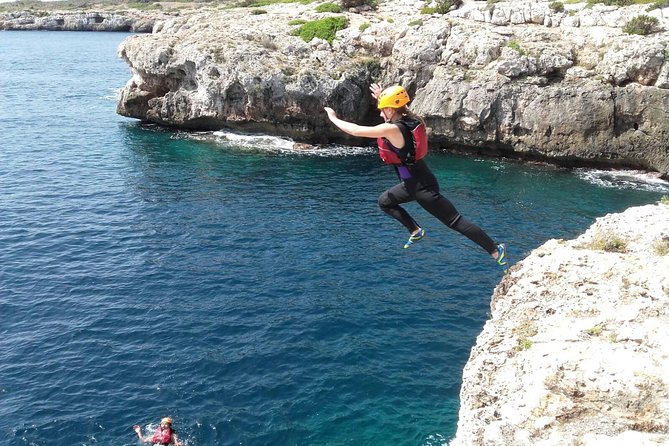
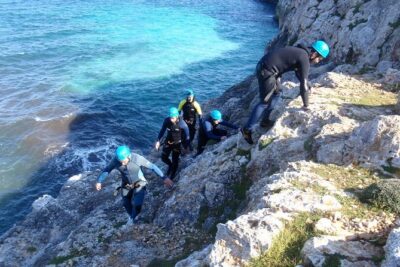
Mallorca’s coast is not just something to admire from a tour bus. On this active four-hour outing, you scramble along sea cliffs, jump into clear water, climb back up rough rock, and finish with a short zip line across a cove. The route begins gently, then builds toward jumps as high as about 10 meters.
I like the simple logistics: port pickup by marked minivan and all the main gear supplied. I also like the way guides such as Jose, Mario, Oscar, Juan, and Rafael have encouraged nervous participants without forcing anyone into a jump. The catch is clear: climbing out of the water can be hard, and this is not a relaxed sightseeing trip.
Key points at a glance
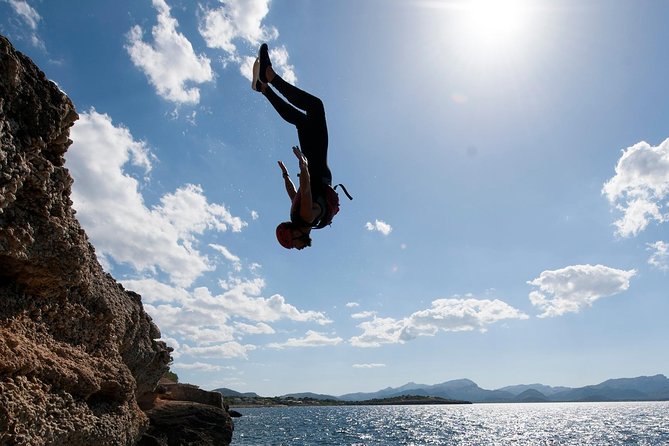
- Cliff jumps build from about 1 or 2 meters to roughly 10 meters, so you can gain confidence before attempting the higher platforms.
- A short zip line crosses a small cove, adding a different kind of thrill to the jumps and rock scrambling.
- Wetsuit, helmet, flotation vest, and water shoes are included, though a rash guard or old shoes may help protect your arms and feet.
- Pickup from Palma’s west sea wall is about a 7 to 10 minute walk from the ship, followed by a minivan ride to Cala Fornells.
- You can skip the higher challenges, but you still need to swim, climb, and manage uneven, sharp rock.
- The group limit is 16 people, with a minimum age of 8 and a moderate fitness requirement.
Why this Mallorca shore trip feels different
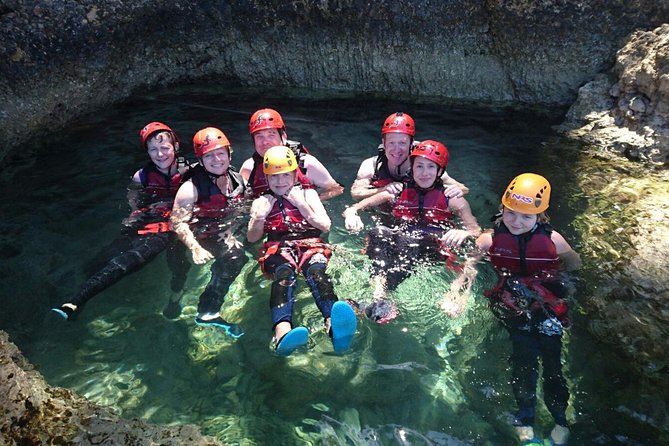
Coasteering is a good match for anyone who wants more than a beach stop. You move through the edge of the sea rather than simply looking at it. That means swimming short sections, climbing over rock, jumping from ledges, and using fixed adventure features such as a zip line or abseil section when available.
The setting near Cala Fornells is a major part of the appeal. The coast combines bright water, rugged rock, and small coves that are hard to appreciate from Palma. The transfer itself also gives you a look at Mallorca beyond the cruise port.
This is best understood as a guided outdoor challenge, not a gentle family boat ride. The guide controls the pace and explains each activity, but you still need enough strength to pull yourself out of the water and enough comfort in the sea to keep moving.
More Coasteering Tours in Spain
- Mallorca: Half-Day Coasteering Experience
★ 4.7 · 447 reviews - Coasteering experience in Gran Canaria
★ 5.0 · 112 reviews - Coasteering Gran Canaria: The Atlantic Mountains Adventure Route
★ 5.0 · 91 reviews
From Palma port to Cala Fornells
The pickup instructions are detailed, but you should read them carefully before leaving your ship. For ships docked at the west sea wall, or Dique del Oeste, the meeting point is near the Escola de Formació Professional Nauticopesquera de Palma at Carretera Dique del Oeste.
From the ship, walk through the dock gate and look for the large ship anchor on the grass. You should see cannons on the right and a white school building on the left. The guide waits beside a marked van and wears a bright yellow shirt. If you reach the fort, you have gone too far.
The walk is usually described as about 7 to 10 minutes, but port access can vary. I would allow extra time, especially if your ship has a large group leaving at once. One party arrived late after misunderstanding the instructions and was still collected, but you should not plan on that kind of rescue.
The minivan ride to the coast takes roughly 25 to 30 minutes according to the timing reported on the excursion. That is a reasonable trade for reaching a much more rugged section of Mallorca. Transport is included both ways, so you do not need to arrange a taxi or figure out a local bus connection.
Changing gear and walking to the sea
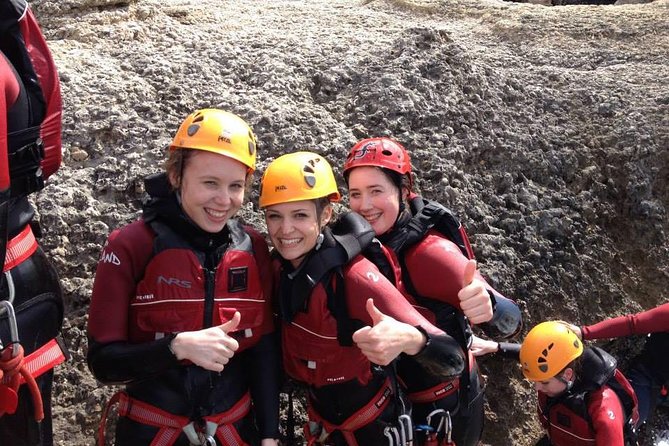
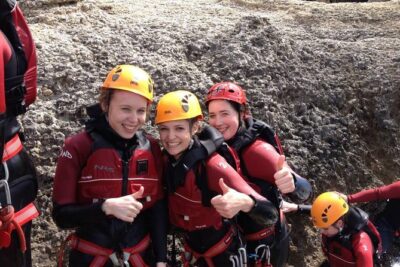
At the activity site, you change into the supplied equipment. The standard setup includes a wetsuit, helmet, flotation vest, and water shoes. Bring your bathing suit underneath, along with a towel and dry clothes for afterward.
The changing area is described as a gravel parking area, not a full changing room. That is practical rather than polished. You can leave dry clothing, regular shoes, water, and towels in the van, but keep valuables with you unless you are comfortable leaving them behind.
From the van, expect a short walk of about 10 minutes toward the water. Wear comfortable clothes and hiking shoes for the approach. You may change into the provided water shoes before setting off, although some people prefer old shoes with thicker soles for the rough rock.
The shoes supplied are useful in the water and on wet surfaces. Still, the rock can be sharp. A rash guard or long-sleeved swim top is a smart extra layer because forearms can get scratched during the climbing sections. Gloves were suggested by one participant as a possible help for hands, but gloves are not listed as supplied equipment.
The activity builds from small jumps to higher cliffs
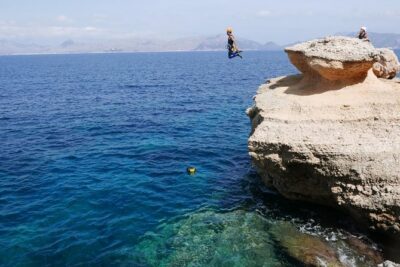
The guides generally start with lower jumps, perhaps around 1 or 2 meters, then work upward. Reported jump heights include about 2, 4, 6, 8, and 10 meters. That progression matters. You get a chance to learn how to enter the water and regain your nerve before facing the larger drops.
The higher jumps are optional in practice. Guides have allowed people to skip a jump, remain in the water, or watch from a safe position while others continue. That makes the outing workable for a mixed group, such as parents and teenagers with different comfort levels.
Do not mistake optional jumps for an easy overall experience. Even if you never leave a low ledge, you still need to swim and move over uneven rock. Some exits require pulling your body from the water onto a rocky shelf. Upper-body strength and balance matter more than polished climbing technique.
The guides are a key part of the day. Jose, Mario, Oscar, Juan, Antonio, Patrick, and Rafael have all been singled out for patience, humor, encouragement, and safety. Names may vary by departure, but the company’s guides speak Spanish and English at minimum, with other requested languages handled when possible.
One serious caution deserves attention. A single account described a guide making inappropriate comments about a participant’s weight and applying pressure around the activity. The provider apologized and asked for the guide’s name. That does not match the much more common picture of supportive instruction, but it is still a reason to speak up immediately if you feel unsafe or uncomfortable.
Same rock and river, another way down:
- From Marbella: Guadalmina River Guided Canyoning Adventure
★ 4.9 · 1,486 reviews - From Marbella: Canyoning Tour in Guadalmina Canyon
★ 5.0 · 778 reviews - Benahavís: Guided Canyoning Adventure (Benahavís River Walk)
★ 4.9 · 540 reviews - Gran Canaria: Canyoning Trip
★ 4.5 · 527 reviews
Rock scrambling, abseiling, and the zip line
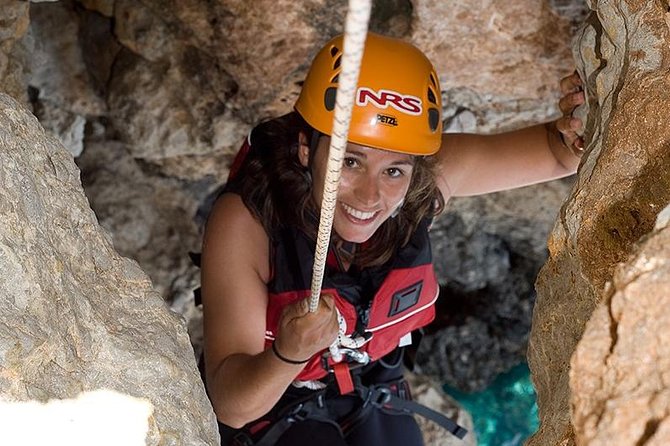
The coasteering route is not only a series of jumps. You also move along the rock, climb around the waterline, and in some versions of the session use an abseil section. The rock is attractive but unforgiving, with sharp edges and awkward footholds.
Take your time. The guides can help with hand and foot placement, but you should not rush because the group is moving on. This is one of those activities where careful movement saves energy and protects your hands.
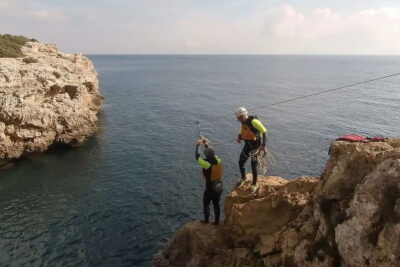
The zip line across a small cove is a memorable change of pace. You travel out over the water and drop into the sea. It is not a giant theme-park ride, but after climbing and jumping, it feels like a fitting finale.
You might expect the guides to take photographs, but that is not guaranteed. Several people chose to leave phones behind because waterproof pouches may not survive a high jump or water entry. A floating action camera in a hard-shell waterproof case is the safest option if recording the activity matters to you. Sunglasses can also be damaged or lost, so leave them in the van unless they are secure and expendable.
Water temperature, sun, and what to pack
A wetsuit is included, and that helps in cooler conditions. One late-May outing had cold water, while an early-October session found the water comfortable in the wetsuit. Conditions can vary, so do not count on warm water simply because Mallorca is sunny.
Bring sunscreen, bottled water, and a small snack or lunch. The official advice includes your own lunch, though you may not need a full meal during the active portion. There is no food or drink included.
A small backpack can hold valuables, but keep it light. You will be carrying it over rock, and anything that cannot get wet or be dropped may be better left secured in the van. Pack:
- Swimsuit and towel
- Dry clothes and comfortable shoes for afterward
- Sunscreen and water
- A small snack
- A rash guard or long-sleeved top
- A secure, floating camera if you want pictures
You must provide each participant’s height, weight, and shoe size at booking. That information helps the operator prepare equipment and is not a formality, so have it ready for everyone in your party.
Is $89.87 a fair price?
At $89.87 per person, the cost is reasonable for a four-hour shore activity if you value convenience and equipment. The price includes cruise pickup and drop-off, minivan transport, a local guide, insurance, wetsuit, helmet, flotation vest, water shoes, and the guided activity itself.
You are not paying only for a jump into the sea. You are also paying to reach the site without arranging transport, receive safety instruction, use specialized gear, and have guides nearby during the climbs and water entries. For a cruise stop, that reduction in planning is worth something.
The value is weaker if you are not sure you can swim or climb. You may choose to skip the biggest jumps, but the basic route still demands physical effort. If your ideal shore day means a café, beach chair, or scenic drive, this is not the best use of your money.
The small maximum of 16 people helps. It is not a private tour, but a group of that size gives the guide a fair chance to watch the action and offer personal help. Group discounts may be available, which could make this appealing for families or friends traveling together.
Who should book this excursion?
I would choose this for active families, teenagers, couples, and adults who like a clear challenge. It suits people who want a memorable coastal experience and do not mind getting wet, scraped, tired, and a little nervous.
The minimum age is 8, but age alone does not decide suitability. Some children around 9 to 11 have taken part successfully, while the activity can be too demanding for someone who lacks swimming ability or confidence on rock. The practical test is simple: can you swim, climb, and pull yourself up from the water?
This is also workable for mixed-ability groups. You can take the lower jumps and skip the higher ones. Still, everyone should understand that sitting out the major jumps does not turn the trip into a sightseeing cruise.
People with a strong fear of heights or water should think carefully. The guides can encourage you, but they cannot remove the basic nature of the activity. You will be close to cliffs, entering the sea, and climbing over uneven rock.
Timing, cancellation, and cruise-day planning
The experience lasts about four hours, including transport and preparation. It is often booked around 42 days ahead, so reserve early if your ship schedule is fixed or you need a particular date.
Pickup is offered from the port, but confirm your exact ship location. The detailed instructions apply to the west sea wall and Estacion Martima 5. Other docking arrangements may require different directions.
Free cancellation is available up to 24 hours before the start time. Changes or cancellations inside that window are not refunded. The activity also depends on suitable weather and a minimum number of participants. If the operator cancels for either reason, you can choose another date or receive a full refund.
For a cruise, leave a generous buffer before all-aboard time. The drive back to Palma is included, but road conditions and port procedures are outside the guide’s control. I would not book a late-running version of this excursion if your ship has an unusually tight departure schedule.
Should you book Mallorca coasteering?
Book it if you want the most active option in this review and you can swim, climb, and accept a few scrapes. The mix of small-to-high cliff jumps, rock movement, a zip line, clear water, and supportive instruction gives you a far more memorable look at Mallorca’s coast than a standard bus tour.
Skip it if you want a quiet day, dislike heights, cannot manage upper-body climbing, or need a fully predictable schedule. For everyone else, the included transport and equipment make $89.87 a fair price, and the option to leave out the highest jumps gives you room to set your own limit.
FAQ
How long does the Mallorca coasteering experience last?
The activity lasts approximately four hours.
Where does the coasteering take place?
The activity takes place near Carrer Cala Fornells in Cala Fornells, Mallorca.
Is pickup available from the cruise port?
Yes. Pickup and drop-off are included. For ships at the west sea wall, the meeting point is near the Escola de Formació Professional Nauticopesquera de Palma, about a 7 to 10 minute walk from the ship.
How do I find the port meeting point?
After leaving the dock gate, look for cannons on the right and walk toward the white school building on the left. A large ship anchor is on the grass. The guide waits beside a marked van and wears a bright yellow shirt. If you reach the fort, you have gone too far.
What equipment is included?
Wetsuit, helmet, flotation vest, water shoes, and the other required activity equipment are included. Insurance, a qualified local guide, and minivan transport are also included.
Do I need to bring food and drinks?
Yes. Food and drinks are not included. Bring bottled water, sunscreen, and your own lunch or snack.
What should I wear?
Wear a bathing suit, comfortable clothes, and hiking shoes for the walk. Bring a towel and dry clothes. A rash guard or long-sleeved swim top may help protect your arms from the rock.
Is the activity suitable for children?
The minimum age is 8. Participants should also have moderate physical fitness and be able to swim and manage climbing over rocky terrain.
Can I skip the high jumps?
Yes. You can choose not to attempt the higher jumps. The guides can adapt the activity, but you still need to handle swimming, climbing, and uneven rock.
What happens if the weather is poor?
The activity may be canceled if weather conditions are unsuitable. You will then be offered another date or a full refund.
Newly roped up around Spain
- Barranquismo Anaga Tenerife★ 4.8 · 12 reviews
- Anna: Guided Canyoning Tour★ 5.0 · 5 reviews
- Anna: Gorgo de la Escalera Water Canyoning★ 4.8 · 34 reviews
- Alicante: Coasteering Adventure on Torres de la Villajoyosa★ 5.0 · 10 reviews
- Anna: amazing water canyoning experience near Valencia★ 4.8 · 33 reviews
- Ronda: Buitreras Canyoning Tour in “The Cathedral”★ 4.0 · 16 reviews
- Agaete: Gran Canaria Coasteering. Marine Ferrata and Zipline★ 5.0 · 38 reviews
- Kayak & Coasteering★ 5.0 · 38 reviews
Mallorca Canyoning Tours, descent by descent.
This trip also sits on these lists