
Review · GRAN CANARIA
Agaete: Gran Canaria Coasteering. Marine Ferrata and Zipline
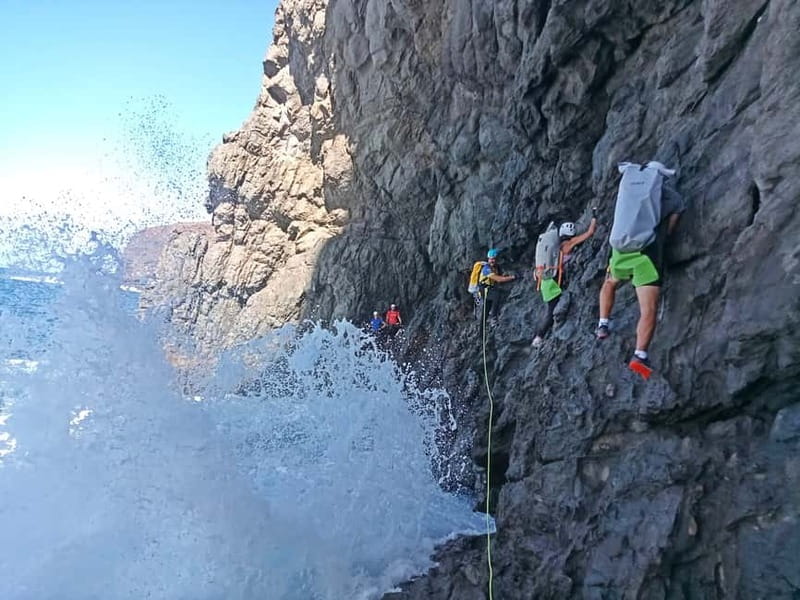
Gran Canaria’s Agaete coast is the setting for a serious half-day adventure: you hike to an ancient cave, rappel down a cliff, climb above the Atlantic, then fly 35 meters over the waves on a zipline. This is not a gentle sightseeing trip. It is a physical route with real heights, exposed rock, ropes, and water.
I like the combination of local history and active travel, especially the stop at an old aboriginal cave and Pablo’s habit of explaining the island as you move. I also like the small group of no more than eight, which matters when a guide needs to check harnesses, explain rope work, and give each person time on the rock.
The main drawback is clear: this is not suitable for people with vertigo, a low fitness level, limited mobility, or little comfort in the water. Bad weather can also cancel the marine via ferrata and zipline, so you need to accept that the exact route depends on conditions.
Key points to know before booking
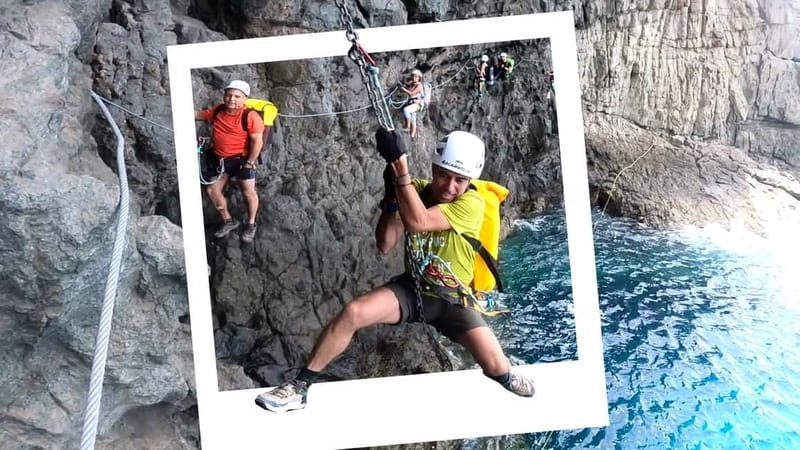
- A 35-meter zipline crosses above the sea, making this the tour’s big adrenaline moment.
- The route begins with hiking and abseiling, so save energy for the climb back up.
- Pablo guides the activity in English or Spanish, adding safety instruction and stories about Agaete.
- Snorkeling follows the coastal climbing section, with a wetsuit and snorkel kit supplied.
- A professional mountain guide belays you during the rappel, but you still need to manage your nerves and follow instructions.
- The $81 price includes equipment, insurance, snacks, and photos, but not transport to Playa de Caleta.
From Playa de Caleta to Agaete’s high cliffs
You meet the RockNatour team in the parking area near the roundabout at Playa de Caleta in Agaete. There is no hotel pickup, so you need to arrange your own way to the meeting point and arrive ready for a five-hour outing.
The group is capped at eight people. That is a useful limit here, not just a marketing detail. Rope activities move at the pace of the least confident person, and a smaller party gives the guide more time to explain each stage without turning the day into a queue.
You receive a helmet, harness, wetsuit, snorkel kit, and the other safety equipment before setting off. The guide also gives a safety briefing. Listen closely, even if you have climbed or rappelled before, because the route combines several different activities rather than repeating one simple challenge.
The opening hike takes you along the cliff and upward to a high point. This first stretch sets the tone: you are not walking straight to a beach and jumping into the water. You must climb under your own power before reaching the technical sections.
At the high point, the guide shows you an ancient aboriginal cave and explains its place in Gran Canaria’s past. This is one of the tour’s best touches. The history is tied to the actual ground beneath your feet, rather than added as a detached talk after the adventure.
The route then continues toward a striking rock formation above Agaete and a secluded beach. From here, you get broad views over the coast and the route below. It is also where you begin to understand the shape of the day: a descent to sea level, a coastal traverse, and then a climb back toward the top.
More Coasteering Tours in Spain
- Mallorca: Half-Day Coasteering Experience
★ 4.7 · 447 reviews - Coasteering experience in Gran Canaria
★ 5.0 · 112 reviews - Coasteering Gran Canaria: The Atlantic Mountains Adventure Route
★ 5.0 · 91 reviews
The rappel down to the Atlantic
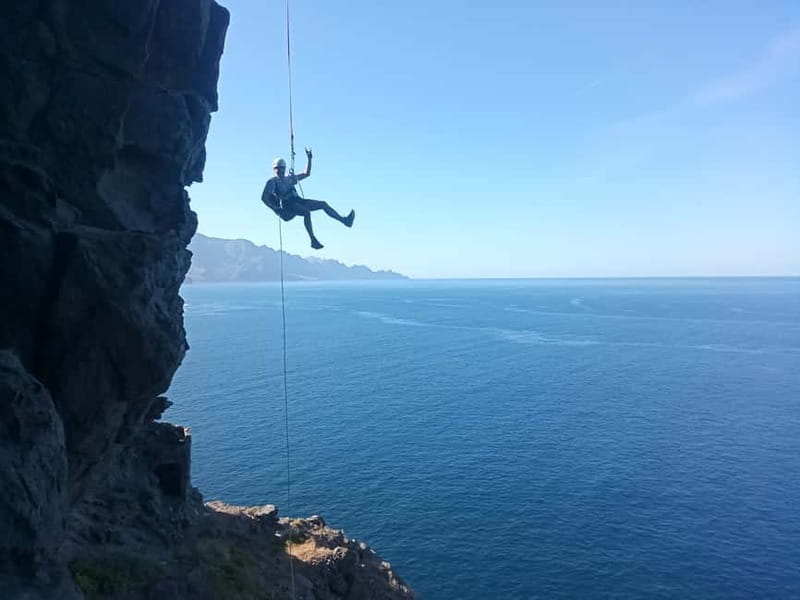
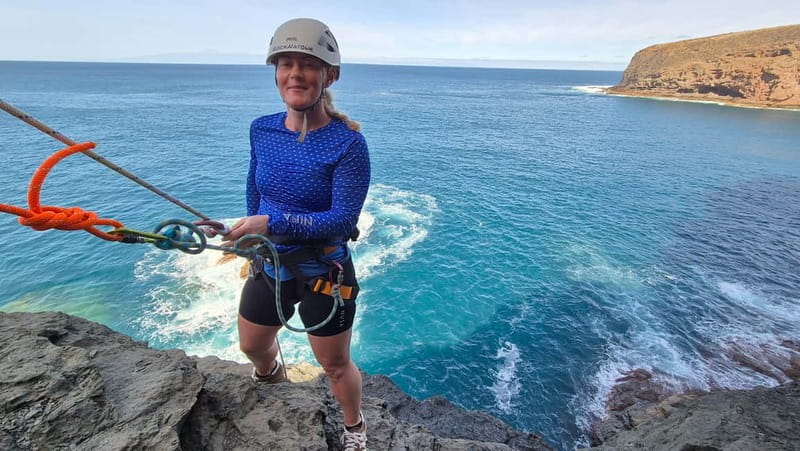
The descent by rope is the first major test. You abseil from the rock formation toward the coastline while a professional mountain guide controls a safety rope and belays you. You are taught the techniques and shown how to use the equipment before moving down.
That support is important, but it does not make the descent passive. You still need to trust your feet, keep your body position, and follow instructions. People who are frightened by heights may find the first step difficult, even with the rope system in place.
Wear proper sports shoes or hiking boots with a good grip. The organizers specifically advise against shorts because the rocks can scratch your legs. Breathable sports clothing is sensible, and tight clothes are easier to pack into the dry bags used during the water portion.
The hike and rappel come before the sea activities, so pacing matters. One person described the route as requiring exceptional bravery and taking more than five hours. That is useful context: the listed duration is five hours, but you should not plan another fixed appointment immediately afterward.
The marine via ferrata and chain pass
Once you reach the coastal level, the route follows the rock beside the sea. You climb using installed protection and a chain section known as the chain pass. This is the marine via ferrata, one of the more unusual parts of the activity.
A via ferrata is not the same as ordinary hiking. You use a harness and attachment system while moving along a protected climbing route. The setting makes it more memorable, with the Atlantic immediately beside you, but also more exposed. Keep your attention on each handhold and foothold rather than rushing to admire the view.
The guide teaches the required techniques and provides the equipment. That makes the activity possible for newcomers, and several participants have completed it without previous coasteering experience. Still, the route calls for a reasonable level of fitness, steady movement, and comfort with height.
I like this section because it connects the mountain and the ocean in one route. You are not simply looking at Agaete’s cliffs from a viewpoint. You are moving through them, using ropes and chains to reach places ordinary walkers cannot access.
The route can change with the weather. In poor conditions, the guide may leave out the marine via ferrata and zipline rather than take unnecessary risks. That may disappoint you if those are the main reasons you booked, but it is the correct call for a technical coastal activity.
The 35-meter zipline over the water
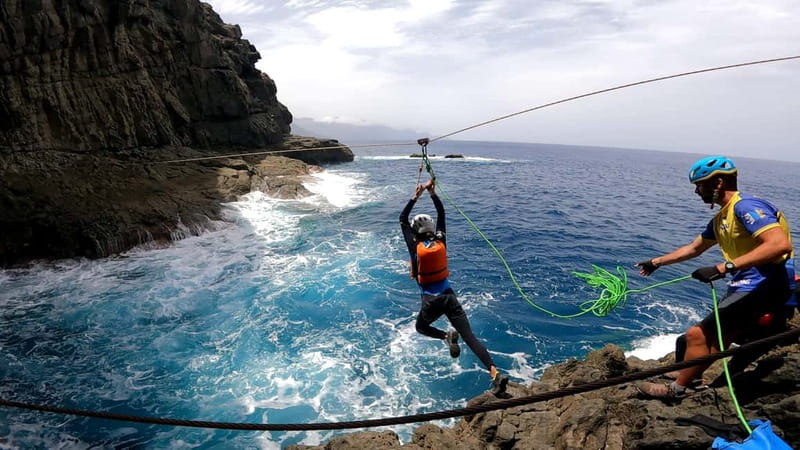
The zipline is the tour’s signature moment. You fly 35 meters above the waves and cross back toward the rock, turning the return into a brief flight over the Atlantic.
This is not a small park zipline attached to a platform. It is part of the coastal route, with the sea below and a large Atlantic rock rising above you. After crossing, you use straightforward climbing techniques to reach the top of the rock, more than 125 meters above sea level.
The height makes the zipline exciting, but it also explains why this tour is not for anyone with vertigo. The guide can provide equipment and instruction, but no safety briefing can remove the personal challenge of stepping out over open space.
Weather again matters. Wind and sea conditions may prevent this section from going ahead. You should book the tour for the full combination of hiking, climbing, and coastal scenery, not only for the promise of the zipline.
Same rock and river, another way down:
- From Marbella: Guadalmina River Guided Canyoning Adventure
★ 4.9 · 1,486 reviews - From Marbella: Canyoning Tour in Guadalmina Canyon
★ 5.0 · 778 reviews - Benahavís: Guided Canyoning Adventure (Benahavís River Walk)
★ 4.9 · 540 reviews - Gran Canaria: Canyoning Trip
★ 4.5 · 527 reviews
Snorkeling and a quieter change of pace
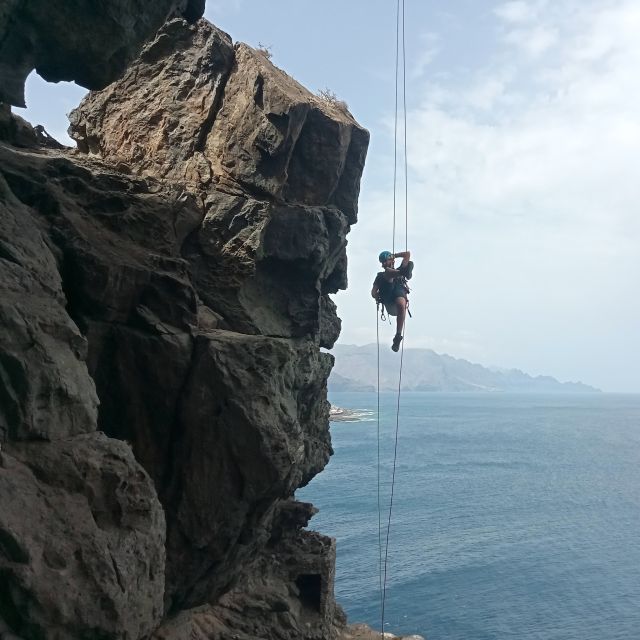
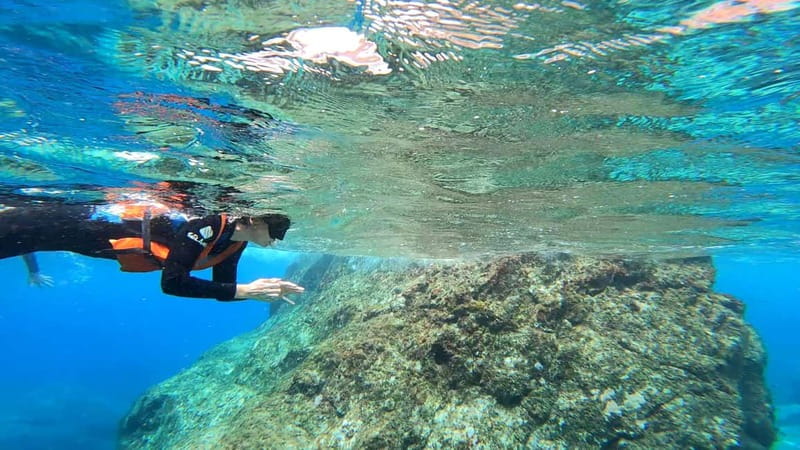
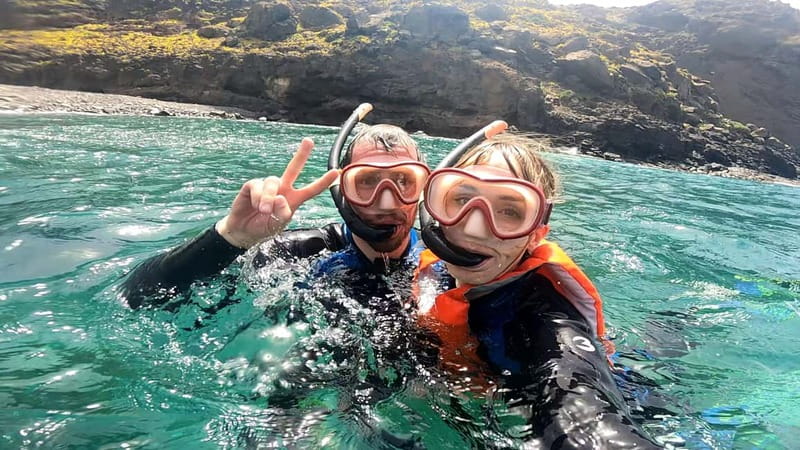
After the more demanding rope and climbing sections, the water portion gives the day a welcome change of rhythm. You use the supplied wetsuit and snorkel equipment to enter the sea and look beneath the surface.
Snorkeling is described as a relaxing part of the route, especially after the tension of the via ferrata. The contrast works well: one moment you are clipped to a rock route above the Atlantic, and later you are floating in the water and taking in the coast from a lower, calmer angle.
You must be able to swim. Non-swimmers cannot join this activity, and the water section is not optional in the same way as choosing to skip a viewpoint. Bring swimwear and a towel, plus sunscreen and water for the day.
The sea can also make the experience feel more exposed. You are combining climbing, open water, and rock surfaces, so follow the guide’s timing and instructions. The equipment list includes a wetsuit and snorkel kit, but you should still bring your own basic personal items.
Pablo’s guiding style and the free photo report
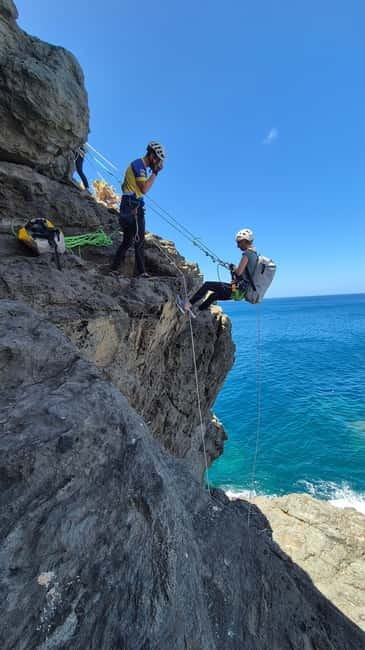
Pablo is the guide named most often in the supplied information, and his role goes beyond clipping people into ropes. He explains the techniques, checks that you understand them, and keeps the mood light with humor and stories about the island.
That balance matters on a route where nerves can take over. A calm guide can help you focus on the next movement instead of the height below. The direct comments about Pablo describe him as supportive, professional, entertaining, and attentive to safety.
He also adds historical stops during the hike. The cave and the coastal rock are not just backdrops for photographs. You get a better sense of how the area’s geology and volcanic past shaped the cliffs you are crossing.
The tour includes a free photo report. You can focus on the activity rather than trying to protect your phone or camera while handling ropes and water. Ask how the photos will be delivered before or after the route if you need the practical details, since the supplied information does not specify the format.
Snacks, views, and the walk back
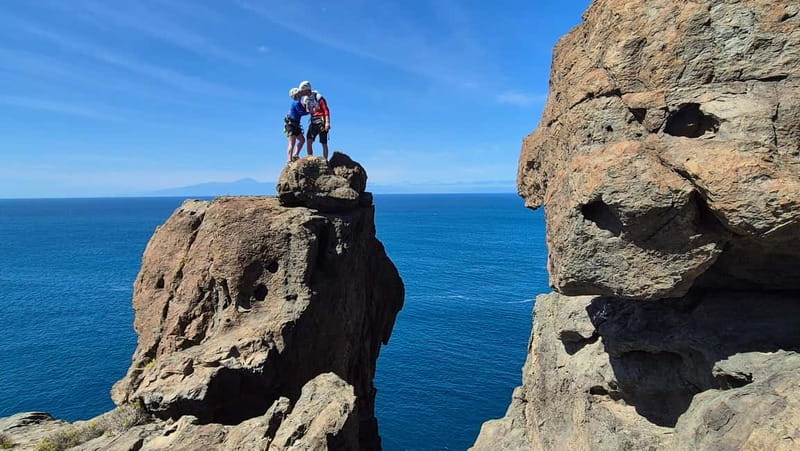
The adventure ends back at the starting point, where you can have a snack and look across the full route from above. This final pause gives you time to see the day as a whole: the upper cliffs, the descent, the sea-level traverse, and the rock used for the return.
A snack is included, but I would still carry water and consider an extra snack if you often need food during active outings. One participant specifically advised bringing plenty of water and snacks, and the activity information also lists water as something to bring.
Do not assume the five-hour schedule means five easy hours. The route includes hiking, technical rope work, climbing, a zipline, and snorkeling. The overall effort has been described as medium by one participant, but the height and adrenaline can make it feel harder than the raw distance suggests.
What the $81 price really covers
At $81 per person, this is not the cheapest way to see the Agaete coast. It is a strong value if you would otherwise pay separately for climbing instruction, rope equipment, a guided coastal route, photos, and water gear.
The price includes a professional guide, insurance, harness, helmet, wetsuit, snorkel kit, snack, and pictures. Those inclusions matter because buying or hiring this equipment independently would add cost and require you to organize a route and qualified supervision.
The value is less convincing if you mainly want a scenic coastal walk. You are paying for a technical activity, not a standard sightseeing excursion. If the zipline and marine via ferrata are cancelled because of weather, ask yourself before booking if the hike, rappel, history, and snorkeling would still make the day worthwhile.
The small group improves the value, too. With no more than eight participants, the guide can spend time on instruction and safety rather than delivering a quick talk to a large crowd.
Who should book this Agaete coasteering trip?
I would recommend it to fit adults and older teenagers who enjoy active days, have a reasonable fitness level, can swim, and are willing to manage heights. It works especially well for someone who wants more than a beach day and likes the idea of combining geology, local history, climbing, and water time.
You do not need previous rock-climbing experience, since the guide teaches the techniques. But first-time participants should be honest about their comfort with exposure. Being new to climbing is one thing. Being unable to approach a cliff edge or open water is another.
The activity is not suitable for children under 16, pregnant women, people with back problems or mobility impairments, non-swimmers, people over 110 kilograms, or anyone with a low fitness level. The stated upper age limit is 55, so older participants should not assume that general fitness alone overrides the operator’s conditions.
Bring sports shoes, sports clothing, swimwear, a towel, sunscreen, water, and a jacket if the day looks cool. Avoid shorts. A jacket can be useful because coastal weather may change, and you will be exposed during the upper sections.
Should you book it?
Book this tour if you want a demanding, varied day and the thought of rappelling down a cliff, climbing over the sea, snorkeling, and crossing a 35-meter zipline sounds exciting rather than stressful. The combination is unusual, the group is small, and the guide-led format gives beginners a way into technical outdoor activities.
Skip it if you want a relaxed outing, dislike heights, cannot swim, or need a guaranteed zipline and via ferrata. Weather can remove the most dramatic sections, and the route still requires a good level of effort.
For the right person, $81 is fair value for a five-hour guided route with equipment, insurance, snacks, and photos. Arrive prepared, wear protective footwear, carry water, and treat the safety briefing as part of the experience, not a delay.
FAQ
Where does the Agaete coasteering tour meet?
You meet in the parking area near the roundabout at Playa de Caleta in Agaete. Hotel pickup and drop-off are not included.
How long does the activity last?
The experience lasts about five hours. The main guided route in Agaete includes hiking, a safety briefing, rope work, climbing, and the zipline.
What languages does the guide speak?
Instruction is available in English and Spanish.
How large is the group?
The tour is limited to eight participants.
Is previous climbing experience required?
Previous rock-climbing experience is not stated as a requirement, and the guide teaches the necessary techniques. You still need a good fitness level and comfort with heights.
What equipment is included?
The tour includes a harness, helmet, wetsuit, snorkel kit, insurance, and a professional guide. A free photo report and snack are also included.
What should I bring?
Bring swimwear, a towel, sunscreen, water, breathable clothing, sports shoes or hiking boots, and sportswear. A jacket may also be useful. Do not wear shorts because the rocks can scratch you.
Can the marine via ferrata or zipline be cancelled?
Yes. Poor weather can prevent the marine via ferrata and zipline from going ahead. The guide makes the final safety decision based on conditions.
More Zip Lines in Spain
- Cebu: Kawasan Falls Canyoneering Tour with Ziplining & Lunch
★ 4.8 · 259 reviews - Antalya: Canyoning, Rafting, Quad, Jeep & Zipline with Lunch
★ 4.7 · 258 reviews - DaLat Canyoning & Experience 1500m Zipline
★ 5.0 · 59 reviews - Antalya, Belek, Side: Rafting, Buggy, Zipline, Canyoning
★ 4.9 · 53 reviews
Newly roped up around Spain
- Barranquismo Anaga Tenerife★ 4.8 · 12 reviews
- Anna: Guided Canyoning Tour★ 5.0 · 5 reviews
- Anna: Gorgo de la Escalera Water Canyoning★ 4.8 · 34 reviews
- Alicante: Coasteering Adventure on Torres de la Villajoyosa★ 5.0 · 10 reviews
- Anna: amazing water canyoning experience near Valencia★ 4.8 · 33 reviews
- Ronda: Buitreras Canyoning Tour in “The Cathedral”★ 4.0 · 16 reviews
- Kayak & Coasteering★ 5.0 · 38 reviews
- Coasteering Mallorca★ 5.0 · 40 reviews
Gran Canaria Canyoning Tours, descent by descent.
Canyoning with Waterfalls in the Rainforest – Small Groups ツ
Read our review →
Canyoning Experience in Gran Canaria (Cernícalos canyon)
Read our review →
CANYONING aquatic and fun route in Gran Canaria
Read our review →
Canyoning in Gran Canaria: The Hidden Waterfalls and Magic Pools
Read our review →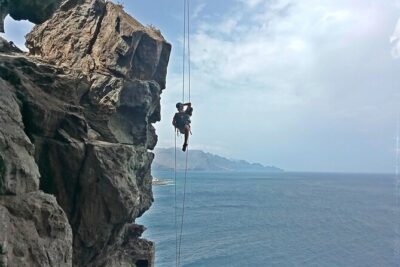
Coasteering Gran Canaria: The Atlantic Mountains Adventure Route
Read our review →
Gran Canaria: Adrenaline-Filled Coasteering Experience
Read our review →This trip also sits on these lists