
Review · UK
Cornwall: Coasteering & Cliff Jumping Adventure
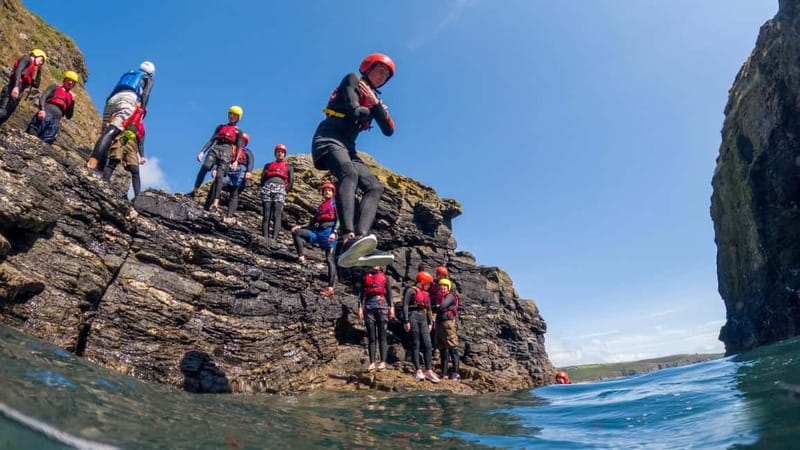
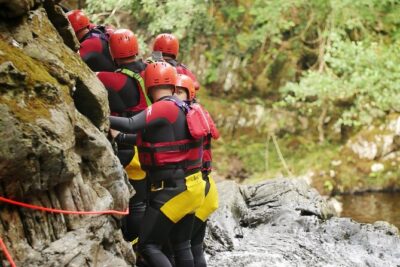
Cornwall’s Atlantic coast is best seen from the water, and this coasteering adventure takes you into places walkers cannot reach. You’ll scramble over barnacle-covered rocks, swim through gullies, pass beneath arches, and choose from cliff jumps ranging from gentle ledges to bigger leaps.
I like the calm, careful instruction and the freedom to skip any jump. I also like that the route changes with sea conditions and the group, so this is not a rigid race from one stunt to the next. The main drawback is simple: you need to be comfortable in open water, and the Atlantic can make a long session feel strenuous.
Key points
- Optional cliff jumps: Every leap is your choice, with alternatives offered at each point.
- 2 to 2.5 hours in the water: Allow up to 3.5 hours for meeting, changing, briefing, and the activity.
- Caves and sea arches: You reach coastal features accessible only from the water.
- Full safety kit provided: Your winter wetsuit, helmet, and buoyancy aid are included.
- Flexible route planning: Your guide adapts the route to sea conditions and group ability.
- Bring proper trainers: Lace-up sports shoes are essential. Slip-on water shoes are not suitable.
Why Cornwall Coasteering Works So Well
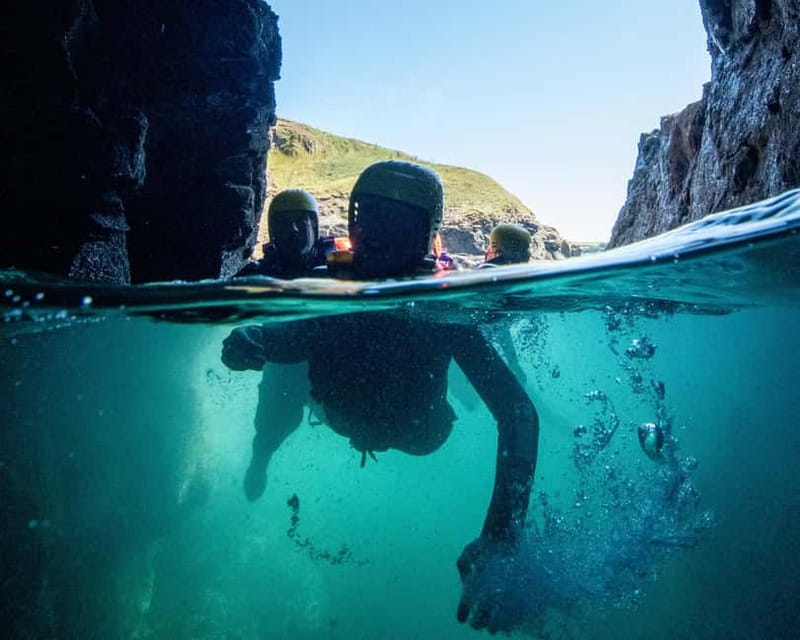
Coasteering is part swim, part rock scramble, and part controlled adventure. You are not simply walking beside the sea and you are not spending the whole session launching yourself from cliffs. The appeal comes from moving with the coast, using the water to reach narrow inlets, and taking challenges at a pace that suits you.
That flexibility matters. One person in your group may want every available jump, while another may prefer swimming through a cave and climbing around the rocks. The guide offers both people a useful day without turning the session into a test of nerve.
The activity costs $84 per person. That is not a cheap way to spend a morning or afternoon, but the price includes the wetsuit, helmet, buoyancy aid, instruction, safety briefing, and guided time on the coast. You also get access to parts of Cornwall that would be impossible to reach on foot. For an active half-day outing, the price is reasonable if you plan to take part fully rather than watch from the shore.
The session has a five-star score from five recorded bookings, with especially strong praise for the instructors’ effort to make the activity both fun and challenging. One participant also highlighted the freedom to decide what to do and what to leave out. That is exactly the feature I would value most here.
More Coasteering Tours in the UK
- Coasteering Experience in Newquay
★ 5.0 · 465 reviews - Newquay Coasteering x Cornish Wave | Original Since 2012
★ 5.0 · 342 reviews - Half-Day Coasteering in Newquay Cornwall
★ 5.0 · 239 reviews
Meeting at Sydeny Cove
You meet at the Sydeny Cove car park, where you should look for a white van with coasteering signs. The meeting point is practical rather than scenic or polished, so give yourself enough time to find the van, complete the participation form, and get changed.
Transport to the meeting point is not included. You’ll need to arrange your own way there, and food and drinks are also your responsibility. Bring a towel, swimwear, shorts, and sturdy sports shoes before you leave your accommodation.
The footwear rule deserves attention. You need lace-up trainers or similar shoes that can stay on during swims, scrambles, and jumps. Slip-on beach shoes, reef shoes, and loose sea shoes are not suitable because waves or movement can pull them away. Old trainers are a sensible choice if you have them.
Once you meet the guide, you’ll be fitted with a winter wetsuit, helmet, and buoyancy aid. The wetsuit helps with warmth, while the helmet and buoyancy aid provide protection and flotation as you move through the rocks and water.
The Safety Briefing Sets the Pace
Before entering the sea, you’ll complete a detailed safety briefing and a short skills introduction. This is not filler. Coasteering asks you to make small decisions constantly: where to place your feet, when to enter the water, how to move with the swell, and how to get out again.
Your guide explains the basics clearly and keeps the first section manageable. You start by scrambling across rocks, swimming short stretches, and learning how the equipment feels. The aim is to build confidence before the route asks more of you.
I appreciate this gradual start. A wetsuit can feel tight, a buoyancy aid can alter your movement, and wet rocks demand care. Getting used to all three before the first proper jump makes the session more enjoyable and less rushed.
Sea conditions also shape the day. Your guide assesses the water and chooses a route suited to the group. That means the exact coastal features and jumps cannot be guaranteed in advance, but it is a good safety practice and keeps the activity grounded in real conditions rather than a fixed script.
First Scrambles and Short Swims
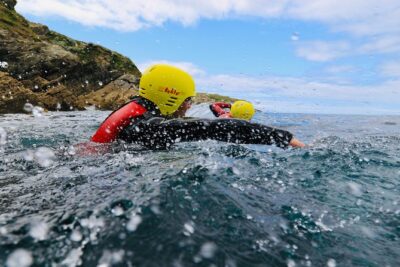
The opening section introduces the physical rhythm of coasteering. You climb over uneven rocks, time your movement with the swell, and swim short sections in open water. None of this requires a heroic leap, but it does require balance, steady movement, and attention.
You may notice that the coast looks different from water level. Rock shelves, small gaps, and wave-cut channels become part of the route. Features that seem minor from a clifftop can create a proper little obstacle when you are standing beside them in a wetsuit.
The guide gives instructions at each stage and keeps the pace relaxed. That helps a mixed group stay together. If you are confident in water but less sure on rocks, or comfortable scrambling but nervous about swimming, the early section gives you time to find your footing.
This is also where you can decide how much effort you want to give. Coasteering is active, and the combination of cold water, climbing, and repeated swims can be tiring. You do not need to sprint, and a sensible pace will leave you with more energy for the later sections.
Same rock and river, another way down:
- Discover Canyoning at Bruar Falls
★ 5.0 · 409 reviews - Ghyll Scrambling Water Adventure in the Lake District
★ 5.0 · 283 reviews - Coasteering
★ 5.0 · 191 reviews - Coasteering Geopark Adventure In Torquay
★ 5.0 · 150 reviews
Small Jumps Before Bigger Leaps
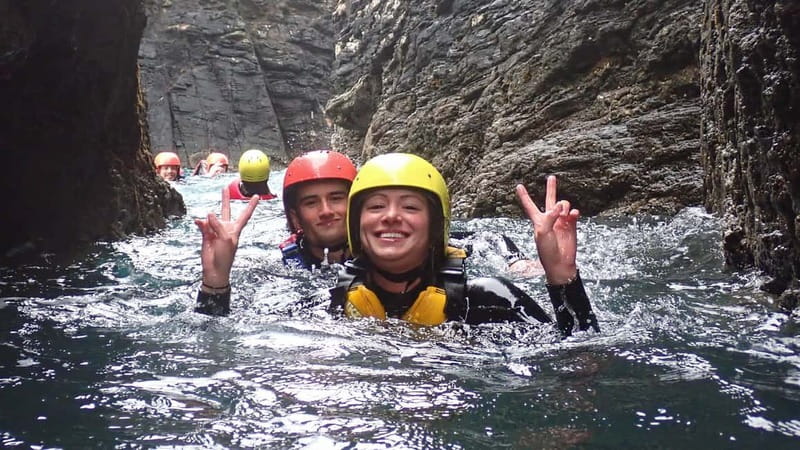
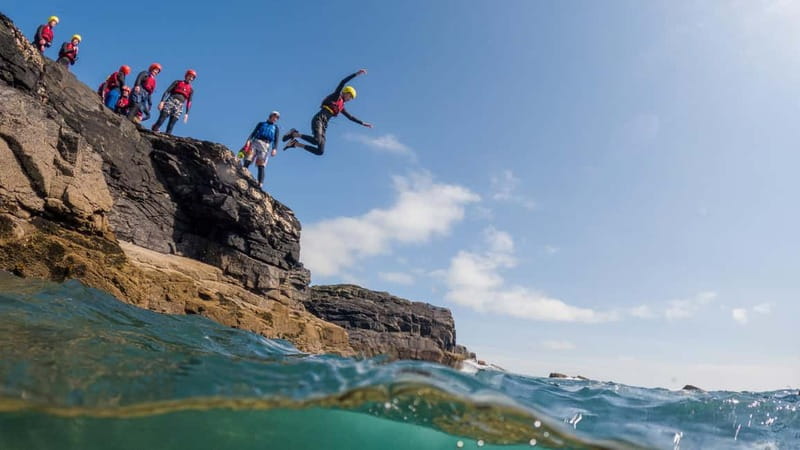
The first jumps are deliberately low. You learn how to approach the edge, enter the water correctly, and surface ready for the next instruction. These early jumps are less about adrenaline than technique.
Every jump is optional. If you would rather not leap, your guide offers another way forward. That could mean climbing around the point, entering from a lower spot, or simply taking the next section without jumping. The important point is that you can take part without pretending to be fearless.
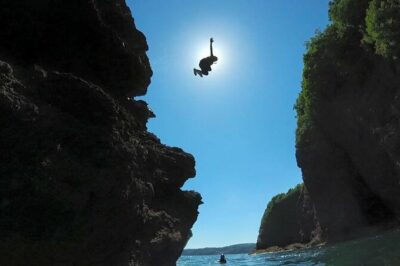
As the session continues, the jumps become larger. The bigger ones come later, after you have had time to understand the water, the equipment, and your own comfort level. Still, the largest option remains optional. You can enjoy the coast without taking the most dramatic route from rock to sea.
I would not book this activity solely for a guaranteed series of giant jumps. The jump selection depends on conditions, and the guide has to choose what is safe on the day. Book it for the combination of swimming, scrambling, coastal exploration, and optional thrills. That gives you a more accurate picture of the day.
Caves, Arches, and Water-Level Cornwall
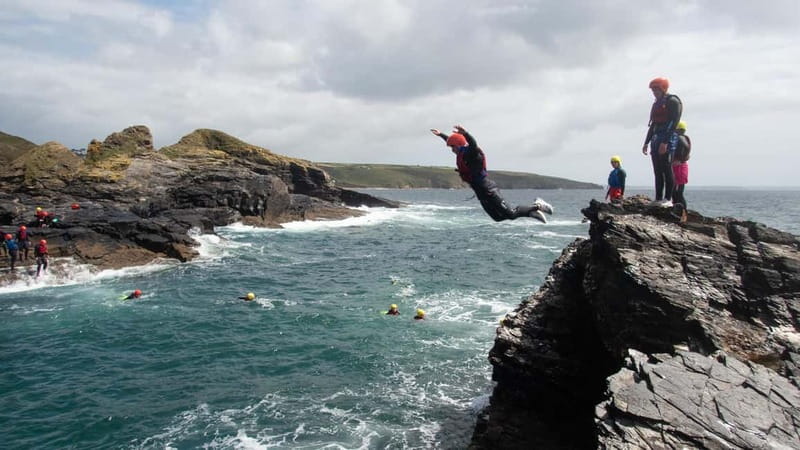
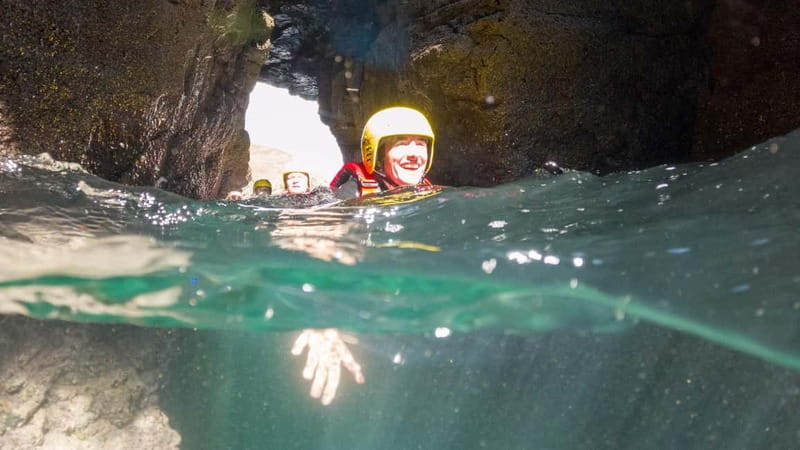
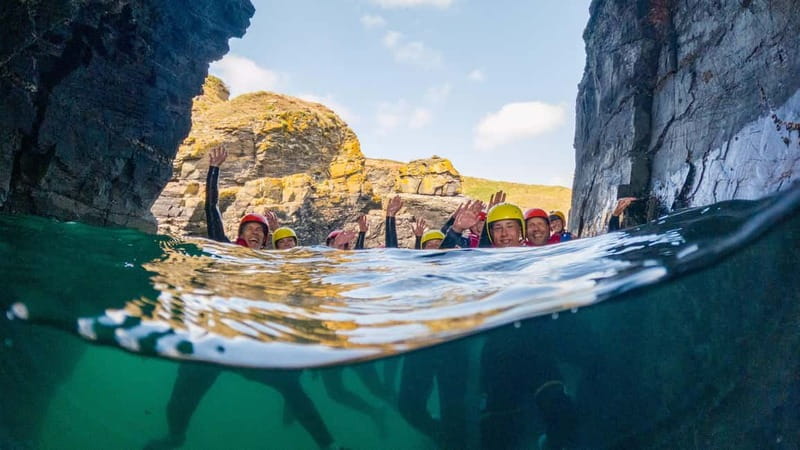
The best part of the session may be the sections between the jumps. You swim through narrow gullies, pass under sea arches, enter caves, and follow rock formations shaped by Atlantic swell. These places are reached from the water, not by following an ordinary coastal footpath.
A cave or arch can feel surprisingly close to shore, yet still be inaccessible without the right equipment and guidance. The wetsuit lets you spend longer in the water, while the buoyancy aid helps you move through short swims without treating each one as a serious test.
You might also encounter blowholes, small coves, and other wave-shaped features along the route. The exact mix depends on the selected location and sea conditions, so it is better to expect a changing coastal route than a fixed checklist of sights.
This is where the activity earns its place on a Cornwall schedule. You are not only seeking a rush. You are seeing how the sea has cut, rounded, and opened the coastline from a low angle. The view is close, physical, and noisy, with waves moving around the rocks rather than far below them.
How Hard Is the 3.5-Hour Session?
The full booking takes up to 3.5 hours, including arrival, forms, changing, equipment fitting, and the briefing. Actual activity time is about 2 to 2.5 hours.
That is enough time to make the session feel substantial without turning it into an all-day commitment. You will spend a meaningful stretch in the water, but you still have part of the day available for another Cornwall plan.
The physical demand is moderate to high, depending on the route and your choices. You should expect repeated short swims, rock scrambling, balancing, and climbing out of the water. The jumps are not compulsory, but avoiding them does not remove the effort involved in moving along the coast.
You should be able to swim. Non-swimmers are not suitable for this activity, and the open-water sections make that restriction sensible. Children under nine cannot take part. Children younger than fourteen must be accompanied by an adult, and anyone under eighteen who attends without a parent or guardian needs a participation form signed and returned in advance.
What to Wear and Pack
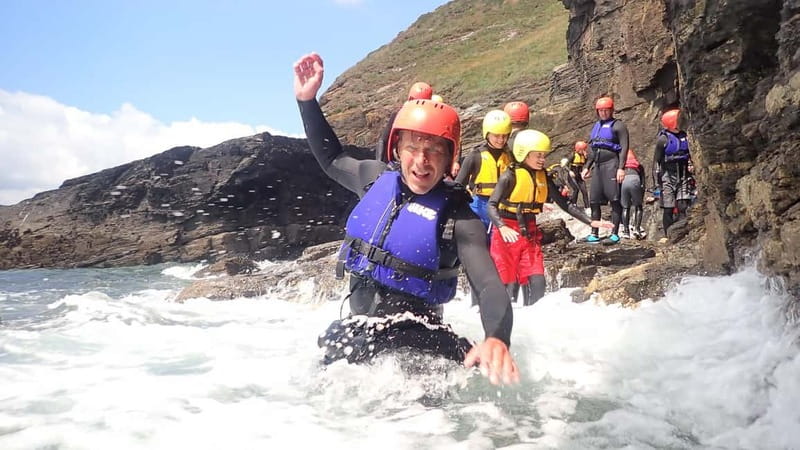
The provider supplies the major safety equipment, but your personal kit can affect comfort more than you might expect.
Bring:
- Swimwear to wear under the wetsuit
- A towel for changing afterward
- Lace-up sports shoes or sturdy trainers
- Shorts to wear over the wetsuit
- Any food or drinks you need before or after the session
The shorts are useful protection against rough rock and barnacles. They also add a little padding as you climb and sit on uneven surfaces. Do not rely on loose swim shoes. A secure pair of trainers is the key item.
You do not need to bring a helmet, buoyancy aid, or wetsuit. The winter wetsuit is supplied, along with the rest of the safety equipment. Photos may be taken by the guide when conditions allow, but you should not treat photography as a guaranteed part of the outing. Your hands and attention are better used for the rocks.
The Guide Makes the Difference
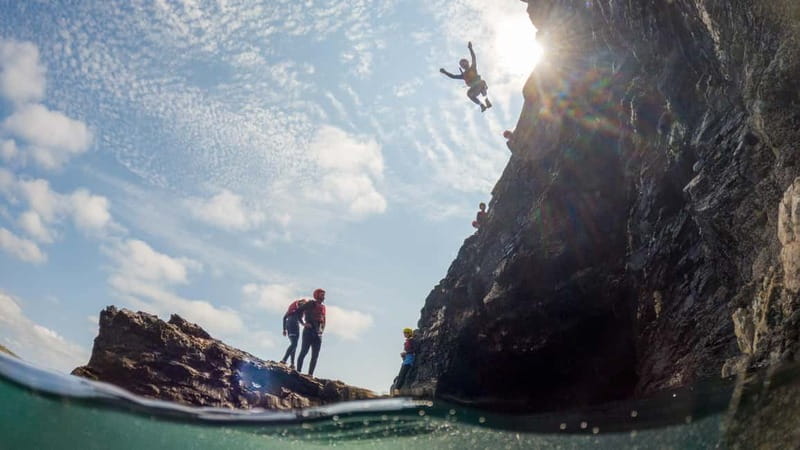
The guide’s role here is more than pointing out the next jump. You need someone who can judge the swell, explain safe movement, keep the group together, and offer a sensible alternative when a participant decides to stop.
The strongest praise for this activity focuses on the instructors’ effort to make the session both fun and challenging. That balance is important. Too much caution can flatten the adventure, while too much pressure can make a recreational outing feel uncomfortable.
The guide also adjusts the challenge to the group. If everyone is keen, the route can include more ambitious jumps when conditions permit. If confidence is mixed, the session can focus more on swimming, caves, arches, and lower entries.
English is the stated instruction language. You should be prepared to follow safety directions in English, especially around water movement and rock access.
Is $84 Good Value?
At $84 per person, this is best viewed as a specialist half-day activity rather than a simple sightseeing trip. You pay for equipment, a qualified guide, safety planning, and access to a coastal route that you could not safely manage alone.
The value improves if you want active time outdoors and expect to use the full session. It is less compelling if you dislike cold water, physical effort, or the idea of wearing a wetsuit for several hours.
There are also practical savings built into the price. You do not need to hire a wetsuit, helmet, or buoyancy aid separately, and you receive instruction before entering the water. The group route is adapted to conditions, which is more useful than a low price attached to an inflexible course.
Free cancellation is available up to 24 hours before the start time, and you can reserve now and pay later. Those terms help if Cornwall weather or your wider schedule is uncertain, though you still need to check the available start times before booking.
Who Should Book This Cornwall Adventure?
I would recommend this to confident swimmers, active families with eligible children, couples, friends, and solo visitors who want more than a standard coastal walk. It suits people who like trying physical activities but want the option to control the level of risk.
It is particularly good for you if:
- You want to explore caves and arches from the water
- You enjoy short swims and rough coastal scrambling
- You like the idea of cliff jumping but do not want every jump forced on you
- You are happy to follow safety instructions closely
- You can bring suitable trainers and manage a half-day physical outing
I would think twice if you are a non-swimmer, dislike open water, or want a relaxed boat trip with little exertion. The activity is also a poor match if your main goal is a guaranteed set of large jumps. Conditions and group ability always shape the route.
Should You Book It?
Book this coasteering session if you want to meet Cornwall at rock level, with cold water, rough stone, sea caves, and optional cliff jumps all in one outing. The careful progression from small jumps to larger choices makes it more approachable than a pure adrenaline session, while the caves and arches give it real scenic value.
Skip it if you want dry clothes, a fixed sightseeing route, or a gentle coastal walk. For everyone else, $84 is a fair price for 2 to 2.5 hours of guided activity, supplied safety gear, and access to a wilder side of Cornwall that cannot be reached from the path.
FAQ
Where does the Cornwall coasteering activity meet?
Meet at the Sydeny Cove car park and look for the white van with coasteering signage.
How long does the activity last?
Allow up to 3.5 hours in total. The actual coasteering portion lasts about 2 to 2.5 hours, with the remaining time used for meeting, changing, equipment fitting, and the safety briefing.
What safety equipment is provided?
A winter wetsuit, helmet, and buoyancy aid are provided. The session also includes instruction and a pre-activity safety briefing.
Are the cliff jumps compulsory?
No. Every jump is optional, and your guide offers alternatives at each jump point.
What should I bring?
Bring swimwear, a towel, sturdy lace-up sports shoes, and shorts to wear over the wetsuit. Food and drinks are not provided.
Can non-swimmers take part?
No. The activity is not suitable for non-swimmers because it includes swimming in open water.
What is the minimum age?
Children under nine cannot participate. Children younger than fourteen must be accompanied by an adult.
Is transport to the meeting point included?
No. You must arrange your own transport to the Sydeny Cove car park.
More Canyoning with Cliff Jumping in the UK
- Coasteering (Cliff Jumping, Scrambling, Wild Swimming) on Anglesey
★ 5.0 · 36 reviews - North Wales: Extreme Coasteering with Cliff Climbing & Jumps
★ 5.0 · 2 reviews - Matacanes : Canyoning + Hiking + Water Jumps + Rappel + Caves
★ 5.0 · 1,497 reviews - Sagres: Coasteering – Swimming, Cliff Jump & Rock Climbing
★ 4.9 · 226 reviews
Newly roped up around the UK
- Coasteering on Anglesey★ 5.0 · 15 reviews
- Two Hours Gorge Walking Activity★ 5.0 · 35 reviews
- Coasteering (Cliff Jumping, Scrambling, Wild Swimming) on Anglesey★ 5.0 · 36 reviews
- CANYONING in Laggan Canyon | Roybridge, Scotland★ 5.0 · 22 reviews
- Newton Stewart, Canyoning Adventure at Murrays Canyon★ 5.0 · 6 reviews
- Bruce’s Stone Canyoning Adventure.★ 5.0 · 3 reviews
- Family Gorge Walking★ 5.0 · 6 reviews
- Coasteering Adventure at Portknockie and Bow Fiddle Rock★ 5.0 · 8 reviews
UK Canyoning Tours, descent by descent.
Newquay Coasteering x Cornish Wave | Original Since 2012
Read our review →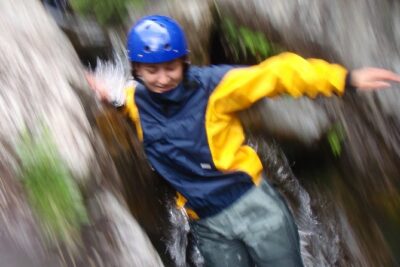
Ghyll Scrambling Water Adventure in the Lake District
Read our review →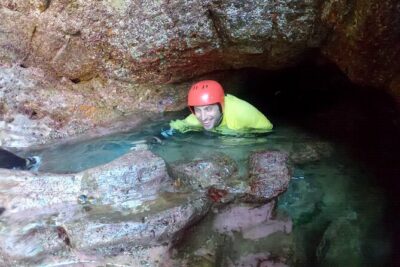
This trip also sits on these lists