
Review · CHILE
San Pedro de Atacama: Desert Tour with Canyoning & Trekking
Rappelling down waterfalls in the driest desert on Earth sounds like a contradiction, but that is the appeal of this six-hour canyoning trip from San Pedro de Atacama. You hike through Andean terrain, use ropes to descend canyon walls, and finish beside pools of cold water far from the usual desert viewpoints.
I like the mix of outdoor action and local insight, with time on foot to learn about the area, its plants, and Indigenous culture. I also like that the four rappels are taught step by step by guides such as Gary and Sebastian, making a first canyoning experience feel possible. The main consideration is physical: this is not a sightseeing ride. Altitude, uneven ground, water, ropes, and jumps make it unsuitable for children under 15, pregnant people, anyone with mobility limits, or anyone with vertigo.
Key points at a glance
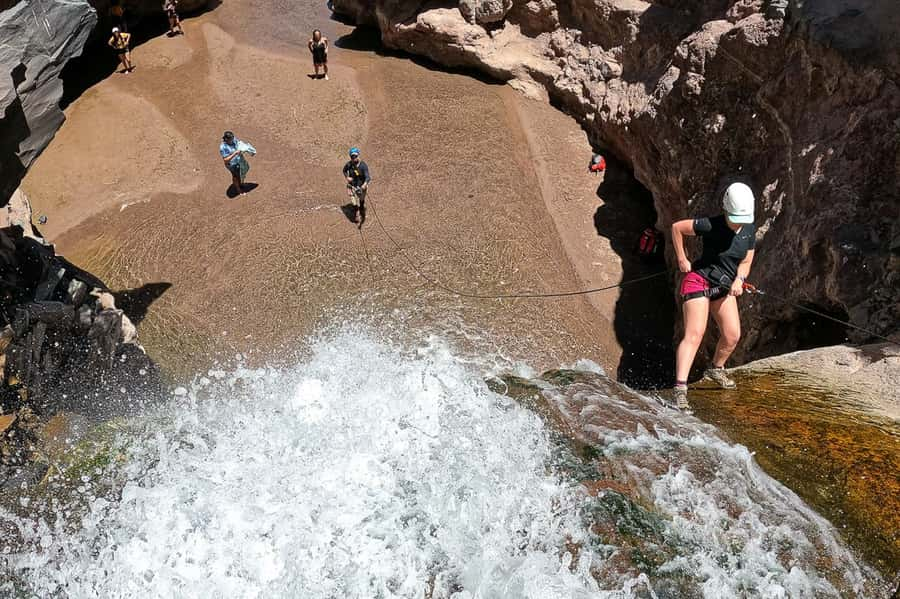
- Four waterfall rappels: Learn the technique at the canyon entrance, then descend cliffs and waterfalls with a helmet, harness, rope system, and walking stick.
- A rare wet side of Atacama: The route includes clear pools, canyon waterfalls, and a final swim or river bath in a place better known for dust and salt.
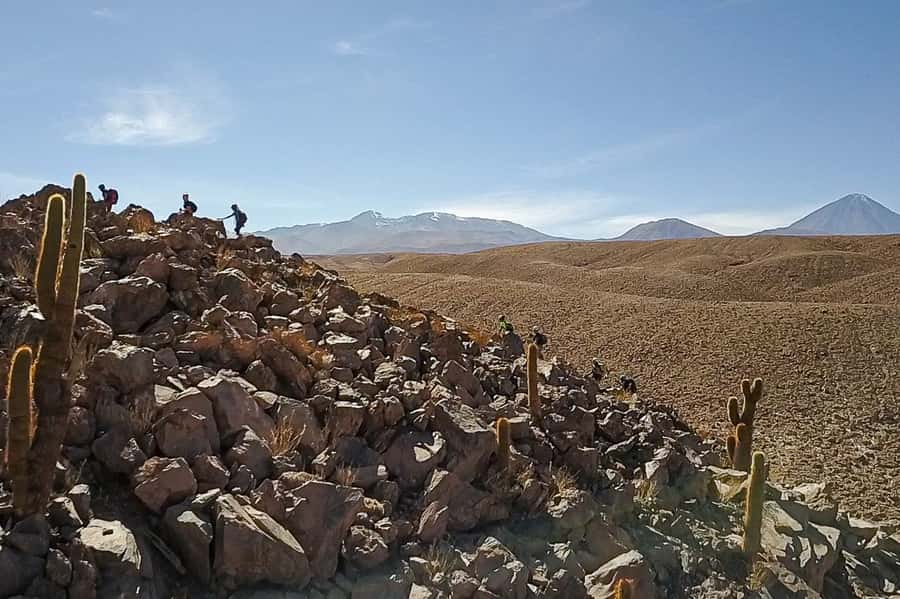
- An archaeological trail first: The outing begins with a medium-difficulty walk, adding cultural context before the rope work starts.
- Guides who teach as they go: Gary and Sebastian have led the activity in English, and Sebastian has explained Indigenous culture and plant life along the route.
- Small-group format: Groups are limited to 15 people, which matters when you need individual help with rappelling.
- Pack for water and sun: Bring swimwear, a towel, dry clothes, water shoes, sunscreen, sunglasses, a hat, and outdoor clothing.
Why this canyoning trip feels different from a normal desert tour
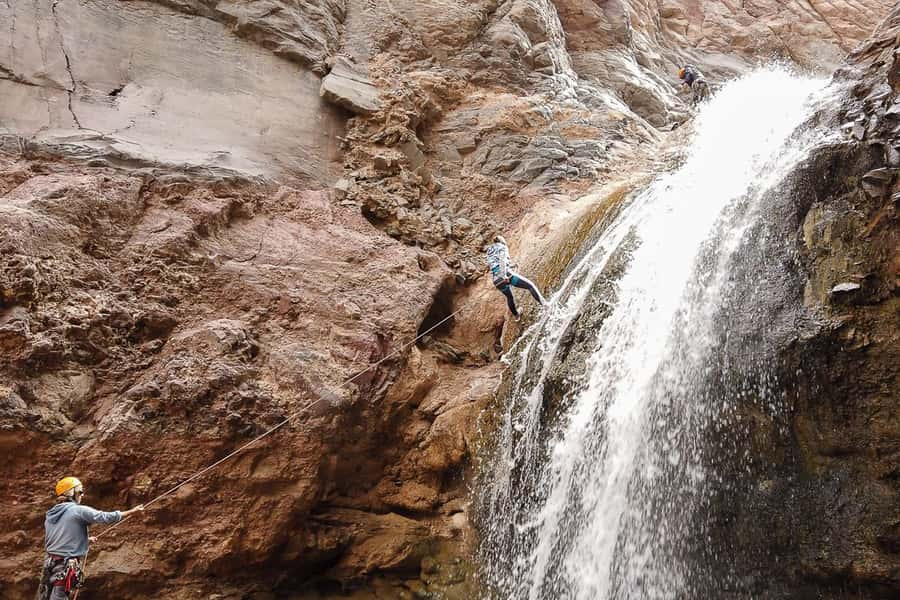
Most outings around San Pedro de Atacama focus on broad salt flats, volcano views, geysers, or dry red rock. This trip shows you a more surprising side of the region: water running through narrow canyons in an otherwise severe desert setting.
The contrast is the point. You can spend the morning under a hard blue sky, walking among volcanic and Andean scenery, then find waterfalls tucked into canyon walls. The water is not just something to photograph. You may rappel beside it, jump from rocks into pools, and use the final waterfall area as a place to cool down.
I also appreciate that the experience is not built around ropes alone. The first part follows an archaeological trail of medium difficulty. That gives you time to adjust to the altitude and terrain before the technical part begins. Guides have shared information about the land, plants, animals, and Indigenous culture during the walk, so the outing has more substance than a simple adrenaline stop.
The scenery is a major reward, but you should come ready to work for it. You will be moving over uneven ground and managing several different techniques with your body, ropes, and climbing equipment. This is active sightseeing, not a gentle walk with a photo break every few minutes.
More Hiking Trips in the world:
- Matacanes : Canyoning + Hiking + Water Jumps + Rappel + Caves
★ 5.0 · 1,497 reviews - Combo Activity Trekking, Sup Paddling, Camping and Canyoning
★ 5.0 · 54 reviews - Jungle Hike with Canyoning and Rappelling in Drake Bay
★ 5.0 · 48 reviews
The 25-minute drive from San Pedro
The day begins with pickup in San Pedro de Atacama and a transfer by jeep or SUV. The listed drive takes about 25 minutes, a useful detail if you are planning this around another activity or trying to protect time for rest at high altitude.
The vehicle gets you away from the town and toward a more isolated canyon area. That short transfer also helps explain the appeal of the excursion. You are not simply walking to a public swimming spot near town. The route reaches terrain that most people would not see without a guide, a vehicle, and the right equipment.
Hotel pickup and drop-off are included. That saves you from arranging transport to an unfamiliar starting point, though you should still confirm the exact pickup time because schedules can change with weather and other climate conditions.
Walking the archaeological trail before the ropes
The first major part of the outing is a hike along an archaeological trail. The walk is rated medium difficulty, so you should expect more than a flat stroll. It is a useful warm-up, but it also sets the tone for the day.
This section lets you take in the changing terrain before the canyon narrows. The route reaches more than 4,000 meters in the Andean altiplano area, and altitude can make an ordinary climb feel harder than expected. Even if you are fit at home, you should pace yourself and listen carefully to the guide.
The cultural side adds value here. Gary and Sebastian have explained the area, local plant life, and Indigenous culture while walking. That sort of information helps you read the place rather than simply pass through it. You may notice how different the plant life and rock formations feel from the familiar image of a totally empty desert.
Bring water even though a snack is included. The supplied information does not specify that drinking water is provided, so do not assume the snack covers your hydration needs. Sun protection matters too. Sunglasses, a hat, sunscreen, and suitable outdoor clothing are listed essentials.
Learning four rappels inside the canyon
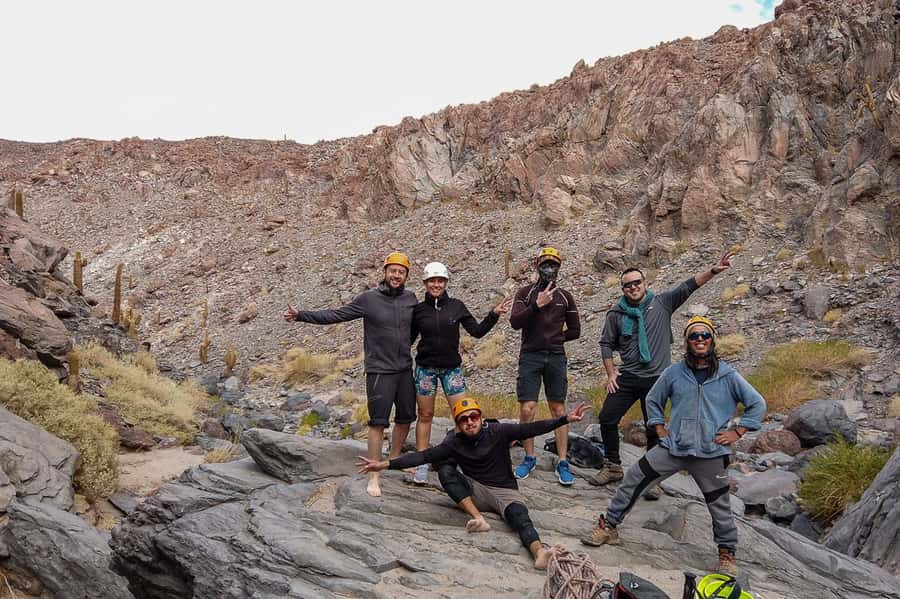
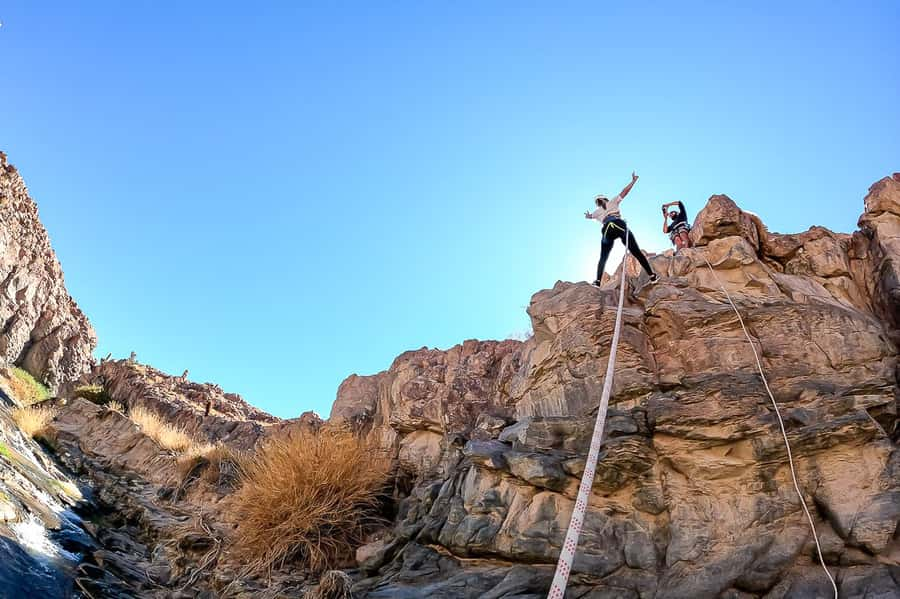
At the canyon entrance, the mountaineering guide explains the rappel technique and checks your protective equipment. You receive a helmet, harness, and walking stick, with four rappels included during the outing.
For a first-time participant, this teaching stage is one of the most important parts of the day. You are not expected to arrive with technical rope skills. The guides demonstrate how to use your body and equipment to move down waterfalls and cliff sections, then help you handle the obstacles one at a time.
The four descents give the activity a clear rhythm. You learn the basics, try the system, and gradually become more comfortable with the height and movement. The exact size and shape of each descent can vary with conditions, and the schedule may change because of weather, but the planned experience includes rappelling through waterfall and canyon sections.
This is where the small group limit of 15 helps. A large crowd would make rope instruction slow and impersonal. In a smaller group, you have a better chance to ask questions and receive direct guidance before each descent. The available guide languages are English, Spanish, Portuguese, and German.
Do not confuse the word canyoning with a simple rope slide. You may need to step over obstacles, move across wet rock, and use different techniques as the canyon changes. The equipment helps, but you still need balance, focus, and a willingness to follow instructions.
More Canyoning Tours around the world:
- Canyoning Da Lat Vietnam
★ 5.0 · 2,063 reviews - Full Day Canyoning Activity in Da Lat with Lunch
★ 5.0 · 1,577 reviews - From Marbella: Guadalmina River Guided Canyoning Adventure
★ 4.9 · 1,486 reviews - Canyoning Madeira Island – Level One
★ 5.0 · 1,362 reviews
Waterfalls, rock jumps, and canyon pools
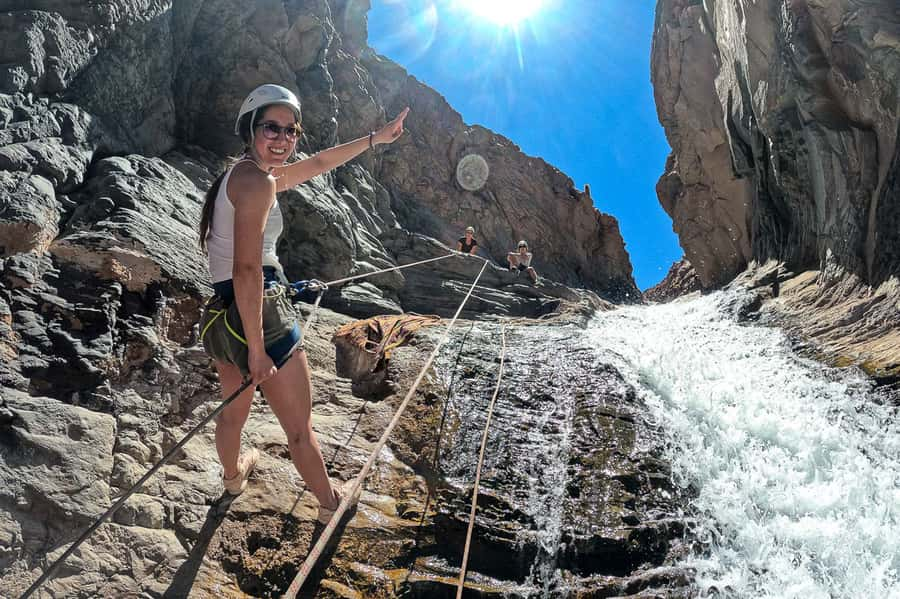
The central section combines rappelling with jumps from rocks of different heights into pools. The information provided does not give exact jump heights, so you should ask the guide about each one and only jump when you feel comfortable.
That flexibility matters. A good adventure day should challenge you without turning peer pressure into part of the activity. If you prefer not to jump, ask what alternatives are available at the site. The confirmed elements are the rappels, canyon movement, waterfalls, pools, and guided instruction. Specific obstacles can change with water and weather.
The pools are one of the most memorable features because they overturn your expectations of the Atacama. After the dry open country, finding water in a canyon feels almost secret, even though the outing is professionally guided. You should expect to get wet, which is why swimwear, water shoes, a towel, and a full change of clothes are on the packing list.
Water shoes are especially practical. Regular sneakers may be less useful around wet rock, while bare feet can be uncomfortable on rough ground. Bring a dry bag or waterproof protection for anything you need to keep dry, though this item is not listed as included.
The waterfall beach and the walk back
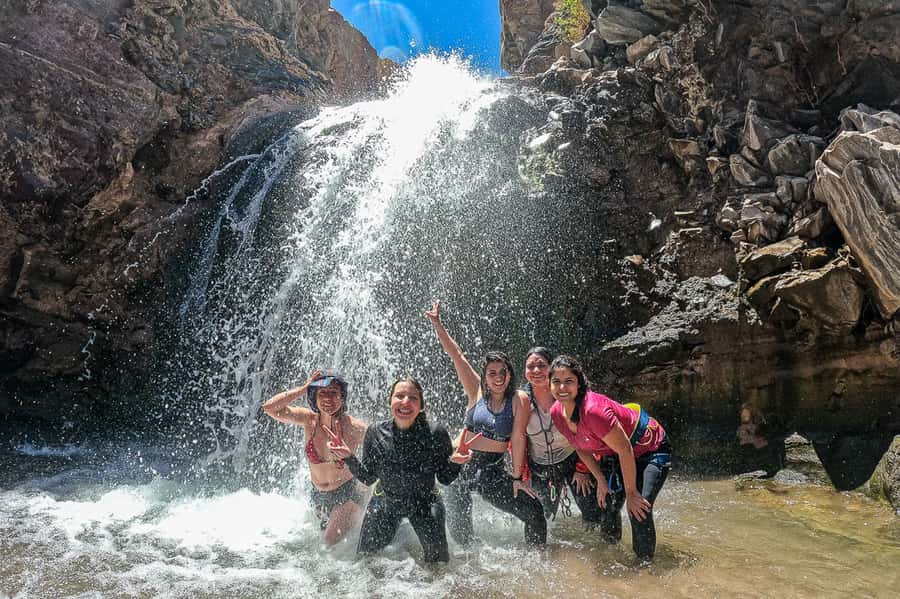
Near the end, the route reaches a beach beside the waterfalls. This is the natural pause in the day, a place to rest, cool off, and take in the canyon from a less technical position.
The final swim or river bath is a welcome finish after the rope work and walking. It also gives you time to enjoy the setting without concentrating on foot placement or rappel technique. Pack your towel and spare clothes where you can reach them easily. You will not want to dig through a buried bag while wet and sandy.
After the break, you walk back to the starting point and return by vehicle to San Pedro. The full activity lasts about six hours, so allow enough room in your day for the transfer and for possible changes caused by weather.
What the $189 price buys you
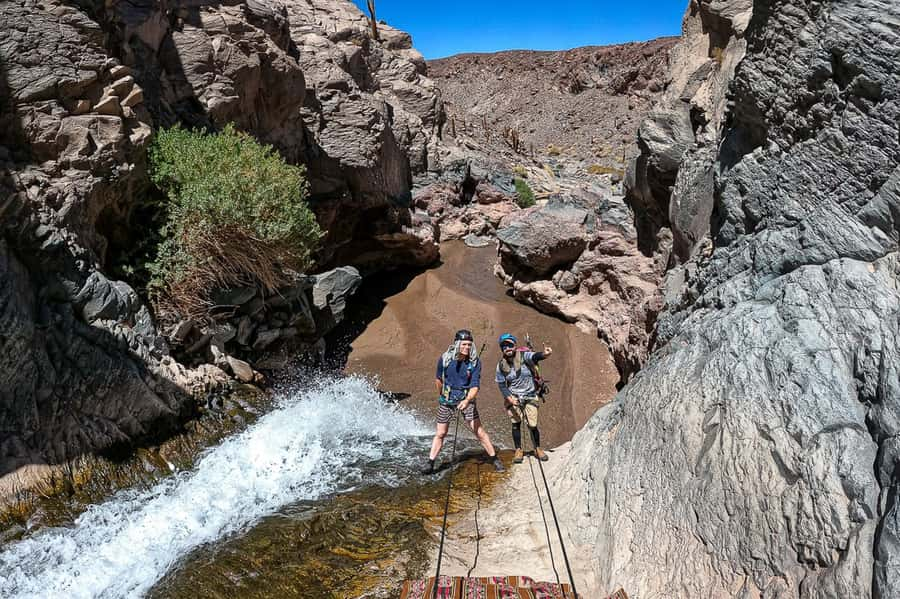
At $189 per person, this is not the cheapest way to spend half a day around San Pedro. The value depends on what you want from the desert.
You are paying for more than transportation to a viewpoint. The cost includes hotel pickup and drop-off, a mountaineering guide, four rappels, a helmet, harness, walking stick, and a snack. It also covers a guided route into canyon terrain that would be difficult to approach safely or understand on your own.
For someone who only wants broad desert scenery, the price may feel high. A standard sightseeing trip could offer more stops and less physical effort. But if you want a rare combination of technical adventure, swimming, and cultural interpretation, the price is easier to justify.
The small-group limit adds practical value. Rope activities require supervision, and a group capped at 15 should provide more personal attention than a large coach excursion. The strongest part of the price is the access to a wet canyon environment that is not part of the usual San Pedro circuit.
Safety, fitness, and altitude
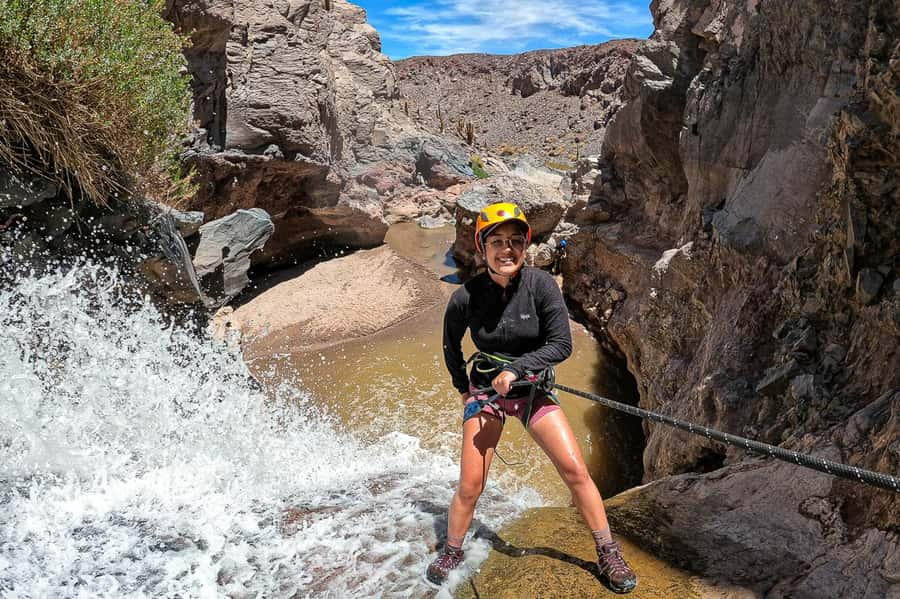
You should treat this as a physically demanding outdoor activity. The day includes a medium-difficulty hike, canyon movement, four rappels, rock jumps, wet surfaces, and a return walk. The tour is not suitable for children under 15, pregnant women, people with mobility impairments, or people with vertigo.
Altitude deserves attention. The route climbs into Andean terrain above 4,000 meters, and even a well-conditioned person may find exertion harder at that height. Move steadily, drink water, and tell the guide if you feel unwell. Do not make the mistake of judging the activity only by its six-hour duration. The combination of altitude and technical movement can be tiring.
Weather also matters. The schedule may change because of climatic factors. That is sensible in canyon country, where water and rock conditions affect safety. Keep your plans flexible and avoid arranging an important timed connection immediately after the tour.
The guides have been praised for making beginners feel safe and for explaining the equipment clearly. That is important, but your responsibility is simple: listen closely, use the provided protection correctly, and do not attempt a jump or descent beyond your comfort level.
What to pack for a wet desert day
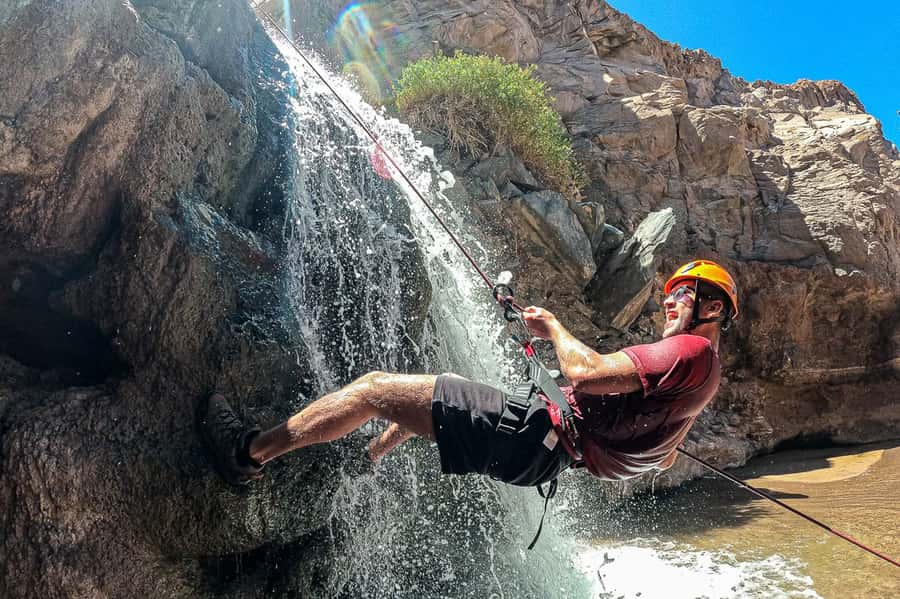
Use the supplied packing list as a real checklist, not a suggestion. You should bring:
- Swimwear
- A towel
- A complete change of clothes
- Water shoes
- Outdoor clothing
- Sunglasses
- A hat
- Sunscreen
- Your passport or identification card, with a copy accepted
The combination of swimwear and outdoor clothing is deliberate. You need protection from strong sun during the walk, then dry or water-friendly clothing for the canyon section.
Avoid bringing alcohol or drugs, and do not expect smoking in the vehicle to be allowed. Pets are not permitted, and alcoholic drinks cannot be taken into the vehicle. These rules are straightforward, but knowing them before pickup keeps the day simple.
Who should book this experience
I would recommend this tour to you if you want an active alternative to standard Atacama sightseeing and like the idea of learning a new outdoor skill while seeing unusual scenery. It suits first-time canyoners who are comfortable with heights, water, uneven terrain, and direct instruction.
It is also a good choice if you value a guide who explains more than the mechanics. Gary and Sebastian have brought attention to Chilean culture, Indigenous traditions, plants, and the surrounding environment, giving the walking section a useful sense of place.
You should think twice if you dislike heights, cannot swim or handle cold water comfortably, have mobility limitations, or want a relaxed day with little exertion. Vertigo is specifically listed as a reason not to take part. The same applies if you are looking for a dry desert tour with frequent vehicle stops.
The tour operates in small groups and offers guides in English, Spanish, Portuguese, and German. Free cancellation is available up to 24 hours before departure, and you can reserve now and pay later, which helps if weather or altitude concerns make your plans uncertain.
Should you book the San Pedro canyoning tour?
Book it if the words waterfall rappel, Andean canyon, and desert swimming sound more appealing than another standard viewpoint. The best reason to choose it is the combination: you get a hike with cultural information, four guided rappels, unusual water scenery, and a refreshing finish.
Skip it if you want an easy half-day or feel uneasy about heights and jumps. This is a serious active outing, even though beginners can learn the basics with help from the guides.
For fit adults aged 15 and over who want to see a less familiar side of the Atacama, the $189 price buys a distinctive day, not just a ride and a photo stop.
FAQ
How long does the canyoning tour last?
The experience lasts six hours, including the vehicle transfer, hike, canyoning activities, waterfall break, and return to San Pedro de Atacama.
Does the tour include hotel pickup and drop-off?
Yes. Pickup and drop-off at your hotel in San Pedro de Atacama are included.
How many rappels are included?
The activity includes four rappels through waterfalls and canyon sections.
What equipment is provided?
A helmet, harness, and walking stick are provided. A mountaineering guide also leads the activity.
What languages are available?
Guides are available in English, Spanish, Portuguese, and German.
Can children take part?
The activity is not suitable for children under 15. It is also not suitable for pregnant women, people with mobility impairments, or people with vertigo.
Newly roped up around the world
- São Miguel, Azores: Ultra AdventurePark Canyoning★ 5.0 · 4 reviews
- East Zion: Stone Hollow Full-day Canyoneering Tour★ 5.0 · 7 reviews
- Valencia Canyoning. Experience for everyone★ 4.6 · 12 reviews
- Canyoning in Interlaken from Zurich★ 4.0 · 4 reviews
- East Zion Ultimate Slot Canyon Canyoneering UTV Adventure★ 5.0 · 108 reviews
- Coasteering on Anglesey★ 5.0 · 15 reviews
- Two Hours Gorge Walking Activity★ 5.0 · 35 reviews
- Canyoning and Rafting Tours from Antalya★ 4.5 · 2 reviews