
Review · UK
2-Hour Coasteering Adventure Near Bude
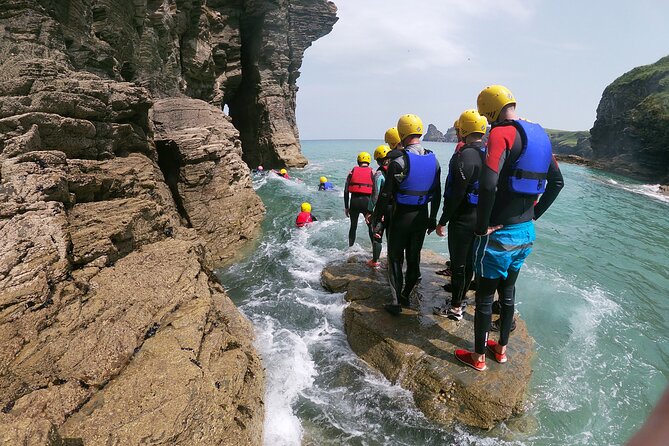
Cornwall’s coast is best understood from the waterline, where you swim through the swell, scramble over rocks, and leap from ledges into the sea. This two-hour coasteering trip near Bude gives you that close-up view without asking you to plan a route or judge the conditions yourself.
I like the small group limit of 15, which gives the guide room to help nervous swimmers and keep confident ones moving. I also like the choice of morning or afternoon departures, plus the fact that wetsuits, buoyancy aids, and helmets are supplied.
The catch is simple: this is not a gentle sightseeing outing. You need good fitness, the ability to move over uneven ground, and the confidence to swim 50 meters without help. Sea conditions also matter, so poor weather can cancel the session.
Key points to know before booking
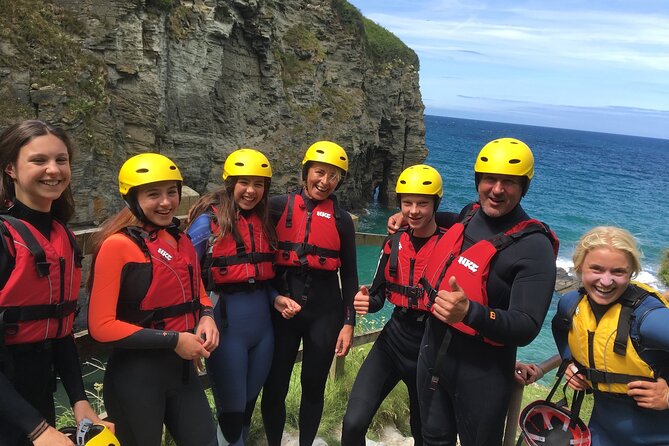
- You swim, climb, scramble, and jump: This is an active sea adventure, not a boat tour or coastal walk.
- Robin may lead your session: He is praised for balancing safety, encouragement, and fun.
- Gear is supplied: You get a wetsuit, buoyancy aid, and helmet, but you must bring suitable shoes and shorts.
- The group can reach 15 people: That is small enough for personal guidance, though it may feel lively during jumps.
- The meeting point is near Tintagel: Start and finish at Bossiney Campsite, with public transportation nearby.
- Weather can change the plan: You receive a new date or full refund if poor conditions cause cancellation.
What coasteering near Bude really involves
Coasteering combines several simple skills into one fast-moving coastal session. You swim beside the rocks, climb across uneven sections, and jump from safe points chosen by the guide.
The appeal is the variety. You are not repeating one exercise for two hours. One minute you are moving through the sea, the next you are using your hands and feet to cross a rocky stretch, then deciding how far you want to push yourself on a jump.
I like this format for people who find ordinary sightseeing too passive. Cornwall’s coast becomes something you interact with, not just something you photograph from a path.
You should also understand the limits. This is not a set of amusement-park rides. The sea controls the mood, and the rocks require care. Your guide explains what to do before you enter the water, but you still need to pay attention and move with purpose.
More Coasteering Tours in the UK
- Coasteering Experience in Newquay
★ 5.0 · 465 reviews - Newquay Coasteering x Cornish Wave | Original Since 2012
★ 5.0 · 342 reviews - Half-Day Coasteering in Newquay Cornwall
★ 5.0 · 239 reviews
Getting ready at Bossiney Campsite
Your session begins at Bossiney Campsite, Tintagel, PL34 0AY. The activity ends at the same meeting point, which keeps the day easier to organize and avoids arranging a second pickup location.
You are fitted with a wetsuit, buoyancy aid, and helmet. These are the key pieces of equipment for a cold-water coastal activity. The wetsuit helps with warmth, the buoyancy aid supports you in the water, and the helmet protects your head around the rocks.
Bring shoes that you are happy to get wet. This is an important detail, not a minor packing suggestion. You also need shorts to wear over the outside of the wetsuit. The supplied equipment does not cover those items.
I would arrive ready to change and avoid bringing anything you cannot afford to get wet. The information provided does not specify changing-room arrangements, storage, or towel service, so keep your personal kit simple.
The safety briefing sets the tone
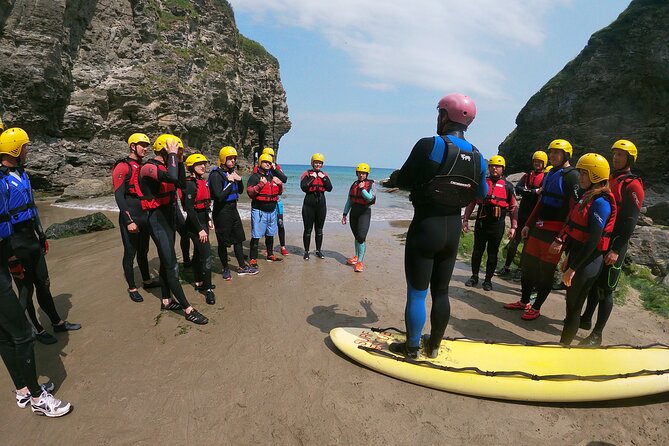
Before heading into the sea, the lead guide explains what coasteering involves and runs through the main do’s and don’ts. That briefing matters because the activity asks you to make decisions around moving water and uneven rocks.
You learn what to expect before the physical part begins. This is also when the guide can set the pace for the group and explain how the jumps will work. The strongest part of the instruction is not simply telling you to be careful. It is giving you a clear idea of how to move through the session.
Robin receives particular praise for finding the right balance between safety and fun. That balance is useful here. A guide who focuses only on caution can drain the energy from the outing, while a guide who pushes too hard can make people uncomfortable.
You should still speak up if you are worried about a jump, swim, or rocky section. The session is meant to challenge you, not force you into a choice you cannot manage.
Swimming along Cornwall’s rocky edge
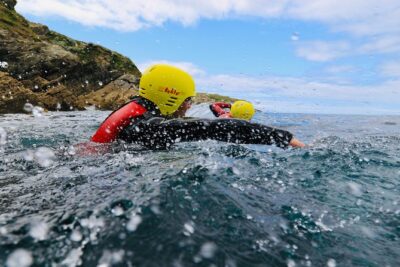
Once you enter the sea, the coast looks different. From land, you see cliffs and coves as a broad view. From the water, you notice the rock faces at eye level and feel the movement of the swell around you.
The route is described as an exploration of the local coast, with sea swimming and rock movement forming the core of the session. Exact stops are not provided, and that is sensible for an activity shaped by weather and sea conditions.
You might find yourself moving between sheltered sections and more exposed stretches, but the precise route will depend on what the guide considers suitable on the day. That flexibility is one reason a guide adds value. You are not left to judge the water by appearance alone.
The swim requirement is clear: you must be able to swim 50 meters unaided. That is a minimum ability, not a promise that the water work will feel effortless. If you are comfortable in a pool but rarely swim in open water, prepare for a more demanding setting.
Same rock and river, another way down:
- Discover Canyoning at Bruar Falls
★ 5.0 · 409 reviews - Ghyll Scrambling Water Adventure in the Lake District
★ 5.0 · 283 reviews - Coasteering
★ 5.0 · 191 reviews - Coasteering Geopark Adventure In Torquay
★ 5.0 · 150 reviews
Rock scrambling and uneven ground
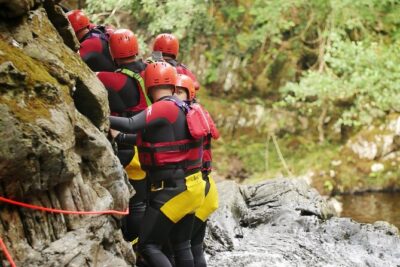
The land sections require you to move over uneven ground. You may use your hands for balance and take care with each step as you cross the rocks.
This part rewards steady movement rather than speed. Good footwear matters, which is why wet-safe shoes are required. Flip-flops would be a poor choice, and the provided information does not say that footwear is supplied.
The climbing element also gives the session its sense of place. You are not simply swimming in front of Cornwall’s coast. You are using its natural edges to make progress, with the guide showing you where to go.
I would consider this activity a better fit for someone who enjoys practical outdoor movement than for someone who wants a polished, predictable route. The terrain will not feel as easy as a paved path, and tired legs may make the second half more demanding.
The jumps are the big payoff
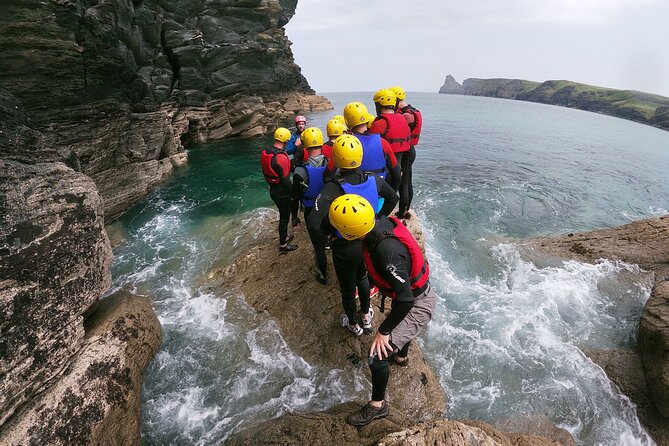
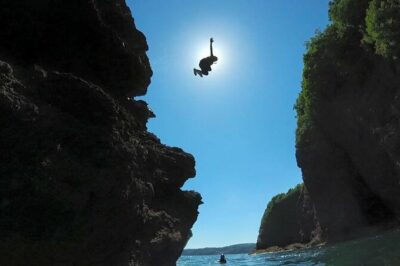
The jumps provide the clearest moment of personal choice. The guide identifies suitable places, then you decide how far you want to go.
One particularly enthusiastic review describes the thrill of being encouraged to attempt more than expected. Another notes that an extra large jump was allowed during one session, even though it was not part of the planned itinerary. Treat that as a possible bonus, not a guaranteed feature.
The important point is the range of challenge. You do not have to arrive as an expert jumper. The guide can help you judge the options, and the group atmosphere may give you the confidence to try something new.
Still, you should not book this expecting every jump described by someone else. Coastal activities change with conditions, and the guide has the final say on what is safe. A jump might be removed from the session, or the group might use different points altogether.
Why the guide matters in a group of up to 15
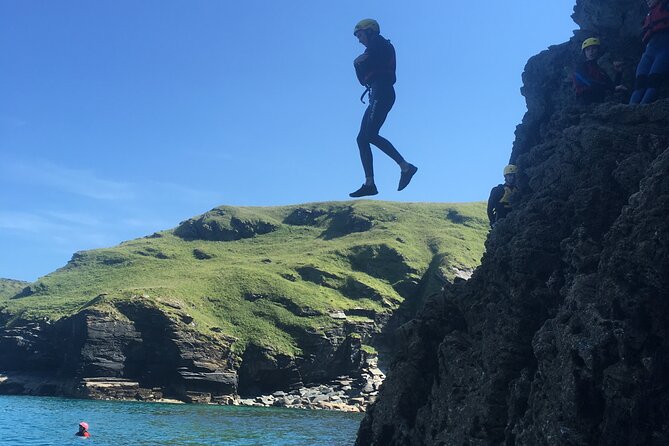
A maximum of 15 people keeps the session smaller than a large commercial outing, though it is not a private tour. You should expect some waiting while people take turns at jumps or move through tighter sections.
That group size can work well for mixed confidence levels. Someone like Robin can encourage hesitant participants while letting more eager members take on a bigger challenge when conditions allow.
The praise for Robin focuses on three useful qualities: professionalism, friendliness, and encouragement. Those are not decorative extras in coasteering. They affect whether you feel able to ask questions, admit nerves, and make sensible choices.
There may also be moments when the group’s pace is set by its slowest member. That is normal for a shared outdoor activity. If you want complete control over timing and route, a private format would suit you better, but no private option is listed here.
How much value you get for $76.32
At $76.32 per person, this is not a cheap way to spend two hours. Its value depends on how much you want to participate rather than watch.
The price includes the main technical equipment: wetsuit, buoyancy aid, and helmet. You are also paying for instruction, safety planning, and access to a coastal route that would be difficult to tackle responsibly on your own.
I think the price is reasonable for someone who already wants an active Cornish outing and would otherwise need to arrange gear and make uncertain choices around the rocks. It is less appealing if you are only mildly curious about coasteering or would be content with a coastal walk.
The two-hour duration is a good middle ground. It is long enough to include the briefing, swimming, rock movement, and jumps, but short enough to fit around other plans in Cornwall. Morning and afternoon choices add useful flexibility.
This session is booked around 19 days ahead on average, so I would not leave it until the last day of a short visit if the activity is important to you.
Who should book this Cornwall adventure
You are a strong match if you:
- Enjoy swimming in the sea
- Have good general fitness
- Can move over uneven ground
- Can swim 50 meters without assistance
- Like a little controlled fear and physical challenge
- Want to see the coast from a lower, more unusual angle
- Prefer guided outdoor activity to passive sightseeing
You should think twice if you dislike cold water, rocky footing, or group activities. This is also a poor choice if you need a fully predictable route, since weather and sea conditions can affect what is possible.
The session is not described as suitable for people with limited mobility, and the fitness requirements are firm. If you are unsure about your ability to swim or climb safely, contact the provider before booking rather than hoping the equipment will solve the problem.
Weather, cancellation, and practical planning
Coasteering depends on good weather. If conditions force a cancellation, you are offered another date or a full refund. The same applies if the minimum number needed to run the session is not reached.
For your own plans, free cancellation is available if you cancel at least 24 hours before the start time. Changes or cancellations inside that window are not accepted for a refund, and the cut-off uses local time.
The activity is offered in English and uses a mobile ticket. The meeting point is near public transportation, though no route or service details are supplied. Plan your transport around Bossiney Campsite rather than the end of the coastal session, since you return there afterward.
Bring:
- Shoes that can get wet
- Shorts to wear over the wetsuit
- A mobile ticket
- Enough time to get ready before the start
- A towel and dry clothes as sensible personal items, though these are not listed as supplied
Should you book the 2-hour coasteering tour near Bude?
Book it if you want a guided physical challenge and can comfortably meet the swimming and fitness requirements. The best parts are the mix of sea swimming, rock scrambling, and jumps, plus the chance to see Cornwall’s coast from places a normal walk cannot reach.
The small group format, supplied safety gear, and guide-led route make the outing easier than arranging coastal adventure on your own. Robin’s encouraging approach may help you attempt more than you expected, but the guide will still put safety first.
Skip it if you want a relaxed coastal view, dislike getting wet, or cannot swim 50 meters unaided. For the right person, the $76.32 price buys more than equipment and two hours on the clock. It buys a properly guided way to meet Cornwall’s rough edge at close range.
FAQ
Where does the coasteering tour start?
The tour starts at Bossiney Campsite, Tintagel, PL34 0AY, UK.
Where does the activity finish?
The activity ends back at the meeting point at Bossiney Campsite.
How long does the coasteering experience last?
The session lasts approximately two hours.
What equipment is provided?
A wetsuit, buoyancy aid, and helmet are provided.
What should I bring?
Bring shoes that you are happy to get wet and shorts to wear over the outside of your wetsuit.
Do I need to be able to swim?
Yes. You must be able to swim 50 meters unaided.
How fit do I need to be?
You must have a strong level of physical fitness and be able to move over uneven ground.
How many people can join the tour?
The maximum group size is 15 people.
What happens if bad weather cancels the session?
You will be offered a different date or a full refund if poor weather causes cancellation.
Newly roped up around the UK
- Coasteering★ 5.0 · 24 reviews
- Gorge Scrambling in Snowdonia★ 5.0 · 38 reviews
- Galloway Canyoning Adventure, Murrays Canyon half day★ 5.0 · 45 reviews
- Canyoning Half-Day Trip at Keltneyburn from Aberfeldy★ 5.0 · 45 reviews
- Coasteering Day Trips from Edinburgh★ 5.0 · 51 reviews
- Gorge Walking★ 5.0 · 52 reviews
- Falls of Bruar Canyoning★ 5.0 · 57 reviews
- Canyoning Day Trip from Edinburgh★ 5.0 · 75 reviews
UK Canyoning Tours, descent by descent.
Newquay Coasteering x Cornish Wave | Original Since 2012
Read our review →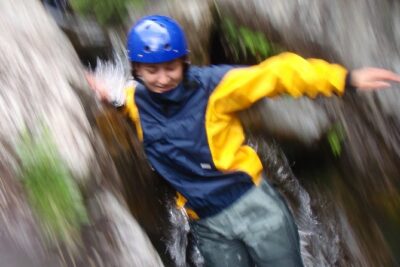
Ghyll Scrambling Water Adventure in the Lake District
Read our review →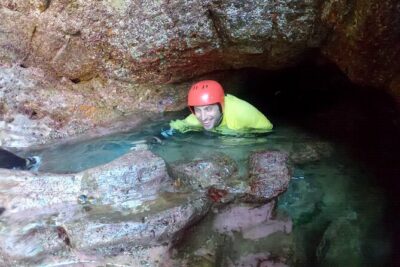
This trip also sits on these lists