
Review · DA LAT
Dalat: Canyoning Extreme Adventure Vietnam
Dalat’s canyoning day is less a gentle nature outing than a full-body adventure through forest, rock, and rushing water. You’ll learn to control an abseil, slide through a natural rock chute, swim a calm river, and face a powerful 25-meter waterfall. The guides are the best part, giving clear instructions and steady encouragement, especially when your nerves arrive before your feet do.
I like the small-group feel, often around six to twelve people, and the fact that the price covers transport, equipment, lunch, wetsuit, shoes, and photos. The free pictures and videos are useful here because your hands will be busy with ropes. The main drawback is simple: this is physically demanding, and the final 15 to 20-minute uphill walk can feel long after a day in cold water.
Quick facts worth knowing
- About 8 kilometers of action: You move through jungle, streams, cliffs, and waterfalls rather than staying at one lookout.
- Five major water challenges: Expect dry-cliff abseiling, ziplining, river swimming, water sliding, and waterfall descents.
- A serious 25-meter waterfall: This is the day’s big test, with heavy water and a real need for calm, controlled movement.
- Wetsuits and water shoes are supplied: You only need to bring personal items and a complete dry outfit.
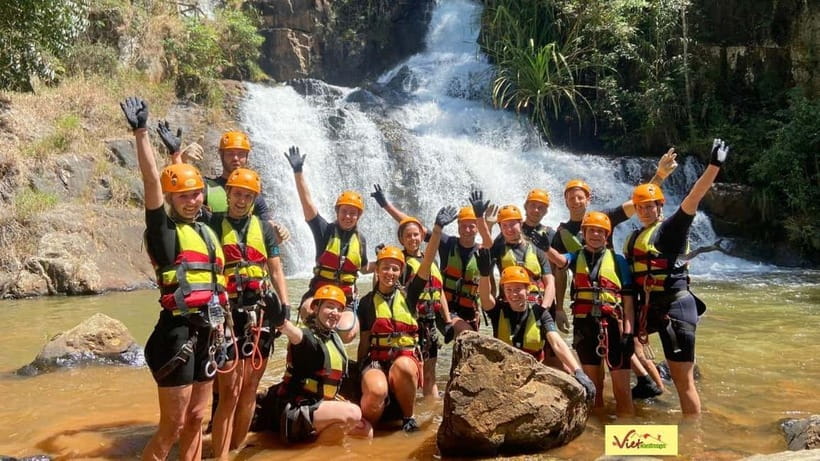
- Photos and videos are included: Guides take pictures throughout the route and send them after the trip.
- $69 covers the essentials: Pickup, drop-off, lunch, cacao, purified water, safety gear, and English-speaking guides are included.
Why Dalat’s canyoning feels different
Dalat is known for cool weather, pine country, farms, and waterfalls. This trip takes you away from ordinary sightseeing and puts you inside the water system itself. You walk along the stream, clip into ropes, and use the rock as your route.
That change of pace is the real appeal. You are not simply looking at a waterfall and taking a photograph from a platform. You are lowering yourself beside one, passing under another, and letting water carry you through a natural slide.
The route covers roughly 8 kilometers. That number matters because the day includes plenty of walking between the headline activities. You will need enough stamina to walk through uneven ground, climb out at the end, and stay focused after several wet challenges.
The tour is aimed at beginners, not just experienced climbers. Guides first teach the basics of abseiling and explain how to control your speed and react to common situations. That training helps, but it does not remove the height, cold water, or physical effort. You still need to take part actively.
More Advanced and Extreme Canyoning in the world:
- Cetina River Extreme Canyoning Adventure from Split or Zadvarje
★ 5.0 · 452 reviews - Extreme Canyoning on Cetina River from Split or Zadvarje
★ 5.0 · 310 reviews - Extreme Canyoning on Cetina River from Split or Šestanovac
★ 5.0 · 262 reviews
Base camp: equipment, training, and the first nerves
At base camp, you receive a helmet, harness, life jacket, ropes, wetsuit, and canyoning shoes. The equipment matters more here than on a standard walking tour, since much of the route involves wet rock, vertical drops, and moving water.
The first lesson covers abseiling technique. You practice controlling your descent on a dry surface before reaching the waterfalls. That is a smart order. It gives you time to understand the rope system while your feet are still on solid ground and your attention is not split by cold water.
Guides such as Sin, Alex, Fin, Naly, Viet, and Phat are frequently assigned to groups, though your particular team may differ. The strongest part of their job is not simply operating the ropes. They explain each step, keep an eye on nervous participants, and adjust the pace so a first-timer can continue without being rushed.
If heights bother you, say so early. The guides are used to helping people through the first hesitation. You can expect encouragement, but the activity still requires you to follow instructions and commit to each movement.
The 18-meter dry cliff starts the action
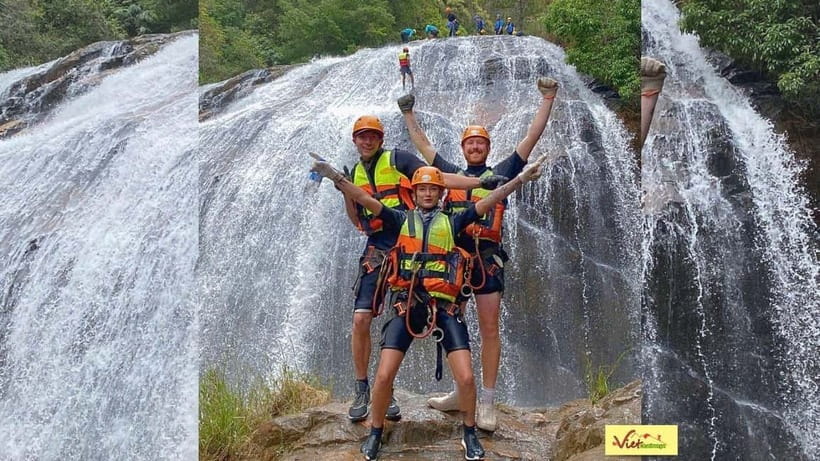
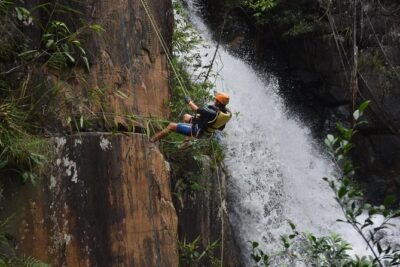
The first major descent is an 18-meter dry cliff. It is a useful test because you are already above the ground, yet you are not being hit by a waterfall. You practice leaning back, keeping your feet against the rock, and controlling the rope rather than simply dropping.
For many people, the hardest part is the first step away from the ledge. Once your body settles into the harness, the task becomes more technical and less frightening. At the bottom, you continue toward the waterfall and river section.
This is not a quick photo stop. The dry cliff sets the tone for the rest of the day. You learn that the equipment can support you, but your job is to move slowly and listen. The guides give repeated instructions, which is welcome when water and height make it difficult to process everything at once.
A 70-meter zipline reaches the river
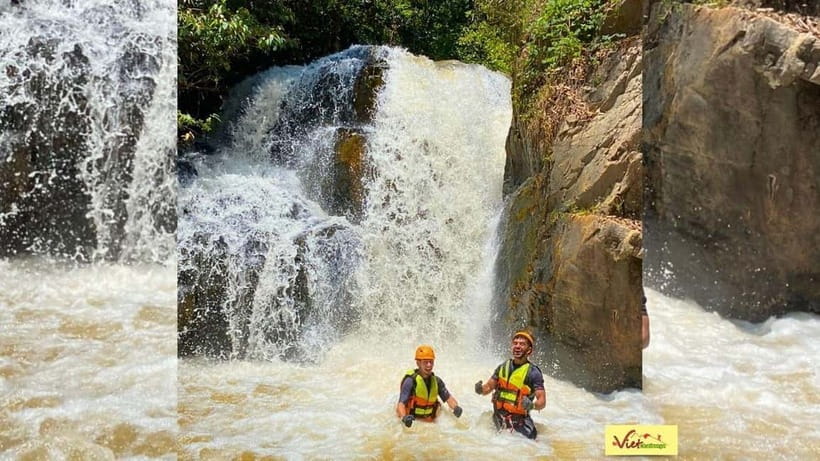
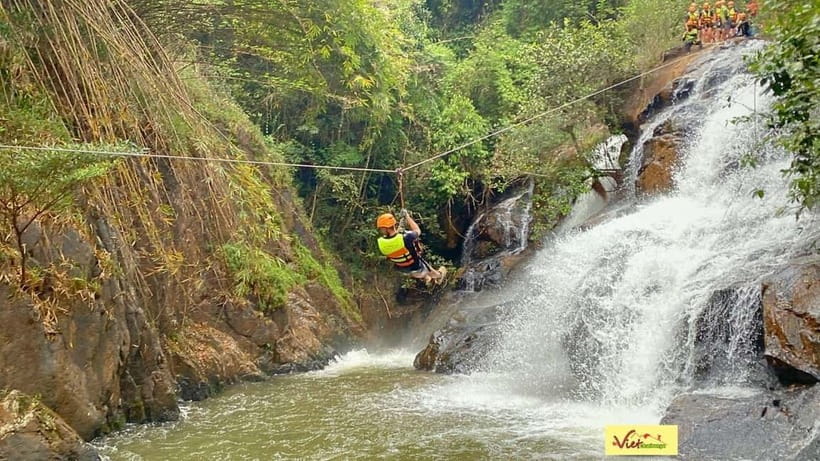
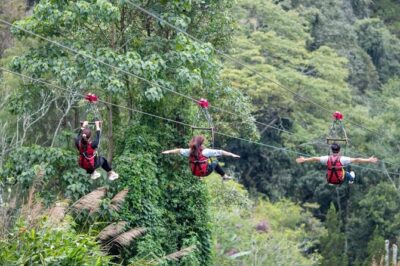
Further down the canyon, a 70-meter zipline carries you toward the river. The route is also described as a Tyrolean Traverse area, so you receive instructions before making the crossing.
This section gives your legs a break from the rope descent, though it is still an exposed activity. It is short compared with the full day, but the view into the canyon adds variety. You are moving over the terrain instead of down a wall or through the water.
I like this kind of change in rhythm. A full canyoning route can become repetitive if every section uses the same technique. Here, the zipline breaks up the abseils and gives you a different way to see the forest and cliffs.
More Canyoning Tours around the world:
- Canyoning Da Lat Vietnam
★ 5.0 · 2,063 reviews - Full Day Canyoning Activity in Da Lat with Lunch
★ 5.0 · 1,577 reviews - Matacanes : Canyoning + Hiking + Water Jumps + Rappel + Caves
★ 5.0 · 1,497 reviews - From Marbella: Guadalmina River Guided Canyoning Adventure
★ 4.9 · 1,486 reviews
The lazy river and 15-meter dry cliff
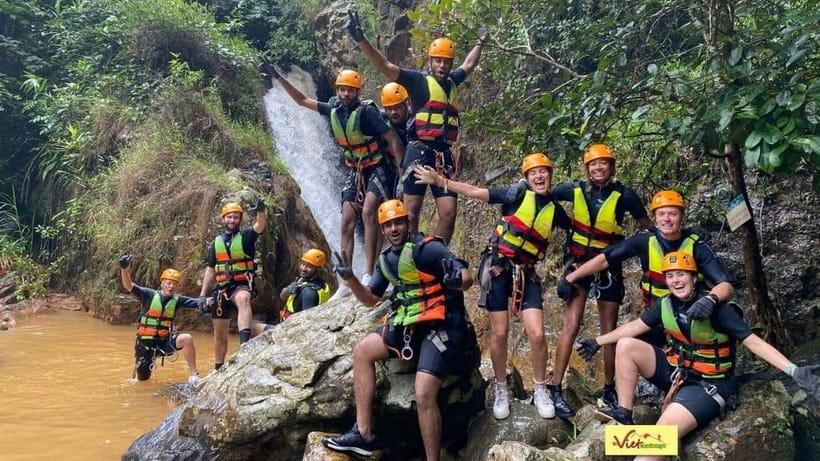
Next comes a calmer water section, described as swimming on a lazy river. The life jacket helps you float, and the slow water provides a pause before another vertical descent.
Do not mistake the calm river for a relaxed end to the day. You still face a 15-meter dry cliff afterward. Compared with the 18-meter wall, it is slightly shorter, but the repeated effort can make it feel just as demanding.
The pairing works well. You get time in the water, then return to rope work while your body is wet and your concentration must stay sharp. This is one reason to bring socks and a good change of clothes. The supplied shoes handle the route, but dry clothing at the end is essential comfort.
The natural water slide is pure fun
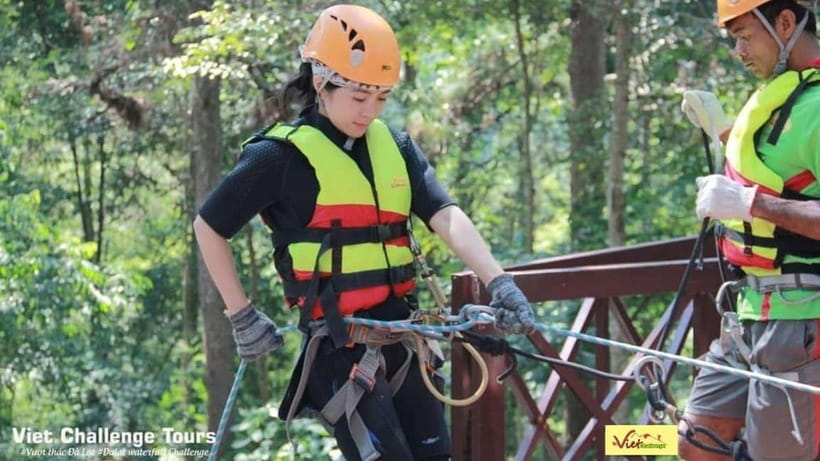
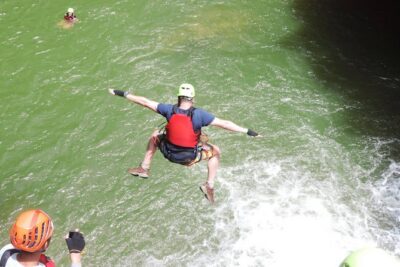
The water slide is one of the less intimidating activities, but it is still lively. Years of water erosion have shaped a smooth rock channel. You lie back, hold your arms across your shoulders, hold your breath as instructed, and let the water pull you down the chute.
The slide ends in a plunge pool, so you surface wet and usually smiling. It is a good contrast with the controlled seriousness of abseiling. You are not managing the rope here. You are trusting the shape of the rock and the flow of the water.
Listen carefully to the guide’s position and instructions before starting. Natural slides are not theme-park rides with a standard surface and fixed speed. The guides determine how to approach the section safely.
Lunch beside the highest waterfall
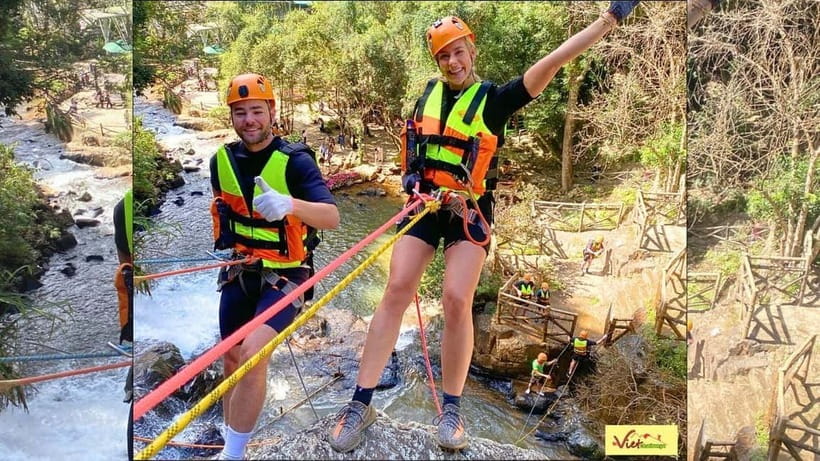
Lunch arrives at a sensible point, before the hardest waterfall. The planned meal is a picnic with Vietnamese baguettes, tropical fruit, cacao, and purified water. Vegetarian food is available, and the meal is meant to be filling rather than fancy.
The setting does much of the work. You eat near the top of the highest waterfall, surrounded by forest, rock, and moving water. After several hours of activity, a meal with fresh fruit and carbohydrates is exactly what you need.
There is one detail to clarify when booking or meeting the operator: the meal format may vary. The main plan describes a picnic, while one account describes standard Vietnamese food at a nearby restaurant, including fried rice and chicken wings. Either way, lunch is included, but do not assume the exact menu or setting is fixed every day.
The cacao at the end is a small but welcome touch. After cold water and rope work, a warm drink can feel like a reward rather than a minor extra.
The 25-meter waterfall is the real test
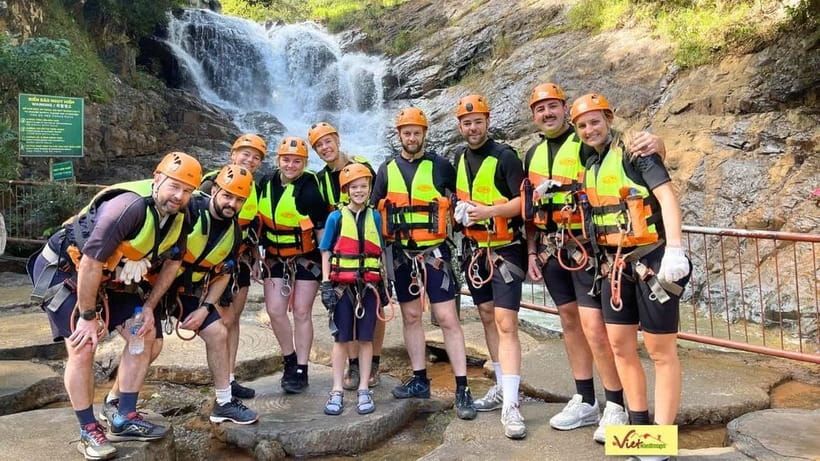
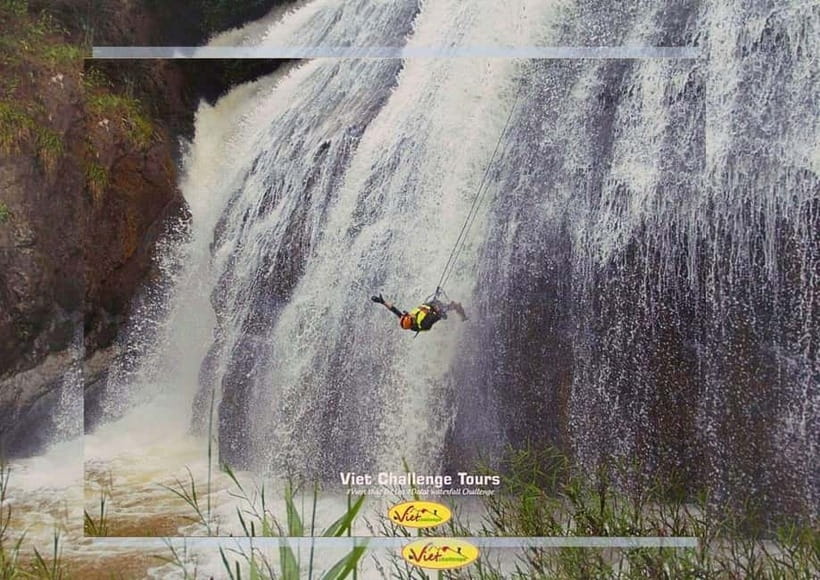
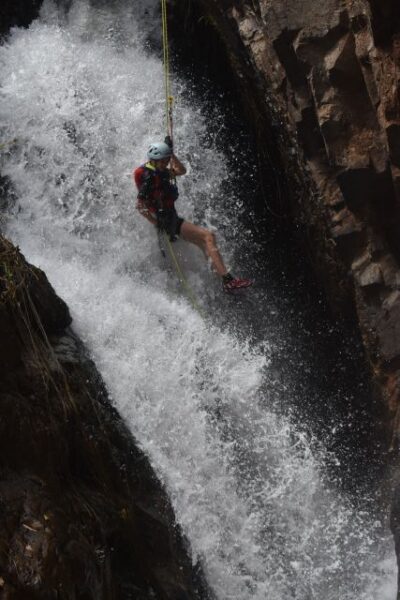
The 25-meter waterfall is where the trip earns its extreme label. It is about 20 meters wide, and the water comes down with real force. You abseil through the flow while managing your position, rope, and breathing.
This is not a challenge to rush. The practical goal is controlled movement. Keep your head clear, follow the guide’s commands, and use the footholds and rope as instructed. The height is only part of the difficulty. The falling water makes it harder to see, hear, and maintain balance.
You may find this section physically tiring, especially if you have already completed the dry cliffs and slide. That is why the earlier training and guide-to-participant attention matter. The activity is achievable for fit beginners, but it is not a casual stop for someone who dislikes heights, cold water, or strenuous movement.
The guides have a reputation for staying calm and encouraging. Alex, Sin, and Naly are among the names praised for clear instructions and patient support. Your guide may be someone else, but the company’s English-speaking teams are expected to explain each activity before you begin.
The washing machine waterfall comes last
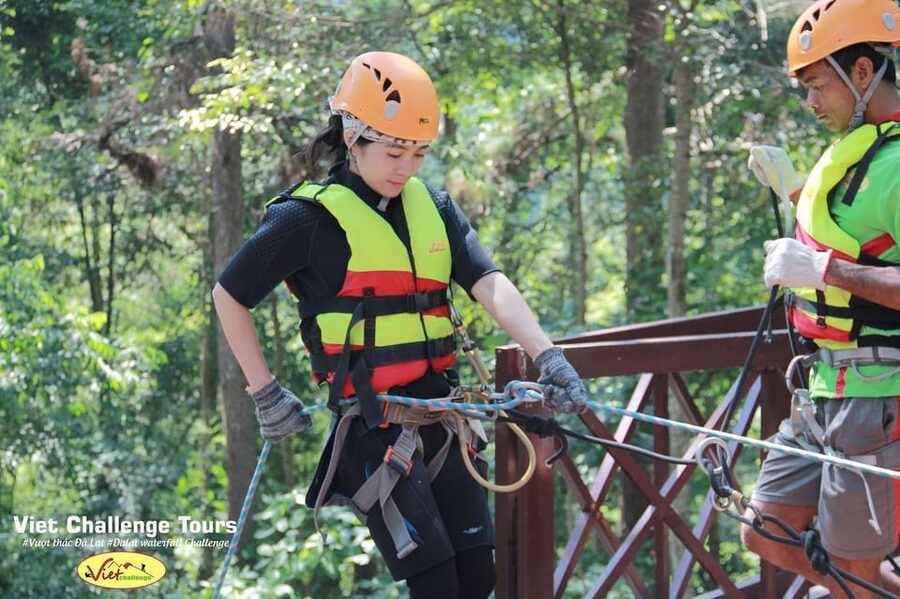
The washing machine waterfall is the final major obstacle and perhaps the most uncomfortable. The current spins you, pushes you away from the cliff, and forces you to stay composed while water moves around your body.
This section is not about looking graceful. It is about listening, using the safety system correctly, and letting the guides direct you. The name gives you a fair warning: the water is active, and the sensation can be disorienting.
By this point, fatigue may affect your confidence. Some people will find the last waterfall more mentally difficult than the taller one because the water movement feels less predictable. If you are nervous, tell the guide before you start rather than trying to hide it.
Once this is finished, you hike uphill to meet the vehicle. The walk is commonly around 15 to 20 minutes, according to the experience details. It is not a long trek by normal standards, but after a wet day it can be the part you remember in your legs.
What the $69 price really includes
At $69 per person, this is good value if you plan to use the full package. You receive hotel pickup and drop-off, canyoning equipment, wetsuit, water shoes, lunch, cacao, purified water, professional English-speaking guides, and photos.
Buying these parts separately would be awkward and expensive. You would need transport into the forest, specialist safety gear, food, and a guide team capable of managing ropes and moving water. The included photos also have practical value because you cannot safely use your own phone during most of the route.
The package is not a bargain if you want a quiet waterfall walk. You are paying for a full day of physical activity and risk management, not just scenery. The value is strongest for someone who wants several different challenges in one outing.
Pickup and drop-off are included, and direct drop-off at the bus station can be arranged. Luggage can be stored safely in the transport during the trip, which helps if you are leaving Dalat afterward.
What to bring and who should book
Bring a complete change of clothes, sunscreen, insect repellent, and socks. The supplied wetsuit and shoes cover the main water equipment, but you will still want dry clothes for the ride back.
You should be comfortable with:
- Walking on uneven ground
- Getting wet repeatedly
- Abseiling from dry cliffs and waterfalls
- Swimming or floating with a life jacket
- Taking instructions in a group
- Walking uphill after the final waterfall
The tour is not suitable for anyone under 110 centimeters or over 140 kilograms. Solo participants and groups are welcome, and the reported group size of six to twelve people offers a better balance than a very large outing.
The activity suits fit beginners, confident couples, friends, and solo visitors who want an active day in nature. It is less suitable if you have a serious fear of heights, dislike getting cold and wet, or want a flexible sightseeing schedule.
Should you book Dalat Canyoning Extreme Adventure?
Book it if you want a serious, well-supported outdoor challenge rather than a passive waterfall visit. The combination of training, multiple rope sections, natural slides, a zipline, lunch, transport, and free photos gives you a lot for $69.
I would pay particular attention to the physical demands. The 25-meter descent, washing machine waterfall, and final uphill walk are not minor details. Still, the guides’ clear teaching and calm support make this a realistic first canyoning experience for many people.
If you are unsure, consider your reaction to the first 18-meter dry cliff. If you can follow instructions and keep going after the initial nerves, the day builds toward its bigger challenges. If that first descent already feels like too much, this is probably not the right activity.
Cancellation is available up to 24 hours before departure for a full refund, and you can reserve now and pay later. That gives you some flexibility, but the decision itself is straightforward: book this for adrenaline, water, and a strong sense of achievement, not for a restful day out.
FAQ
What is included in the $69 price?
The price includes pickup and drop-off, wetsuit, water shoes, all canyoning equipment, professional English-speaking guides, picnic lunch, cacao, purified water, photos, and videos.
How long is the canyoning route?
The route covers about 8 kilometers through forest, streams, cliffs, and waterfalls. The experience also includes a final uphill walk of about 15 to 20 minutes to meet the vehicle.
Do I need canyoning experience?
No. The guides train you in basic abseiling technique and explain how to handle the equipment and possible situations before the route begins.
What activities are included?
You can expect an 18-meter dry-cliff abseil, a 70-meter zipline, a 15-meter dry-cliff abseil, swimming in a lazy river, a natural water slide, a 25-meter waterfall descent, and the washing machine waterfall.
What should I bring?
Bring a change of clothes, sunscreen, insect repellent, and socks. Wetsuits and canyoning shoes are provided.
Is lunch included?
Yes. The planned meal includes Vietnamese baguettes, tropical fruit, cacao, and purified water, with vegetarian options available. The exact meal setting or menu may vary.
Can solo participants join?
Yes. Solo and group participants are welcome. Group sizes are often described as around six to twelve people.
Is the tour suitable for everyone?
The activity is not suitable for people under 110 centimeters or over 140 kilograms. It also requires you to handle heights, cold water, rope work, walking, and an uphill finish.
Newly roped up around the world
- Anna: Guided Canyoning Tour★ 5.0 · 5 reviews
- Baumgarten: Advanced Canyoning Adventure★ 5.0 · 2 reviews
- Barranquismo Anaga Tenerife★ 4.8 · 12 reviews
- Bali: Gitgit Waterfall Canyoning with Transfers & Lunch★ 5.0 · 3 reviews
- Bali: Canyoning Adventure in Sambangan Canyon★ 5.0 · 35 reviews
- Bavaria: Beginner Canyoning Tour★ 4.5 · 10 reviews
- Bad Ischl: Canyoning Adventure for Beginners EXTENDED★ 5.0 · 2 reviews
- Bagni di Lucca: Canyoning Crazy★ 4.9 · 28 reviews
Da Lat Canyoning Tours, descent by descent.
Full Day Canyoning Activity in Da Lat with Lunch
Read our review →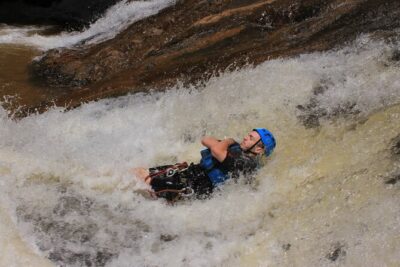
Full-Day Canyoning Tour with Datanla Falls Rappelling
Read our review →
Combo Activity Trekking, Sup Paddling, Camping and Canyoning
Read our review →This trip also sits on these lists