
Review · GREECE
3-Hour Small Group Coasteering in Sounio
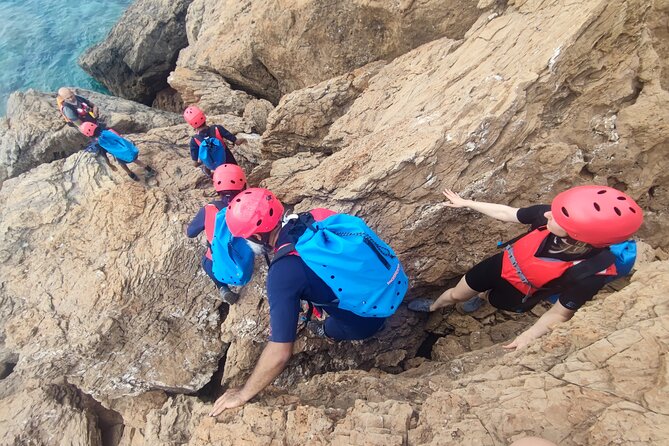
Below the Temple of Poseidon, the coast turns wild and physical. This three-hour coasteering trip takes you across rocks, through clear Aegean water, and along cliffs that most visitors only see from the temple above. You swim, snorkel, scramble, climb, and jump from the rocks, with the guide setting the pace.
I like the mix of activities, since you are not stuck doing one long swim or one fixed walking route. I also like the personal touch: guide Nikki helped one guest build confidence through a series of increasingly high jumps, while another guide took photos and sent them afterward. The main drawback is simple: this is an active outing, not a gentle sightseeing cruise, and it requires moderate fitness, comfort in the water, and decent weather.
Key points at a glance
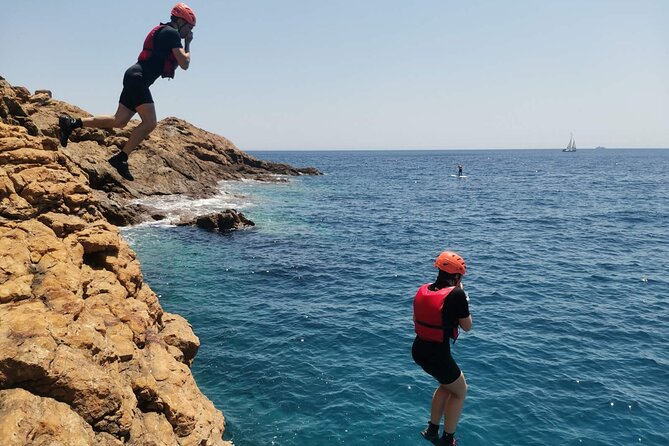
- Cliff jumps beneath the Temple of Poseidon: You approach the famous monument from the sea, with several jumping options based on your comfort.
- A full kit is provided: Your equipment includes a wetsuit, water shoes, helmet, life vest, mask, and snorkel.
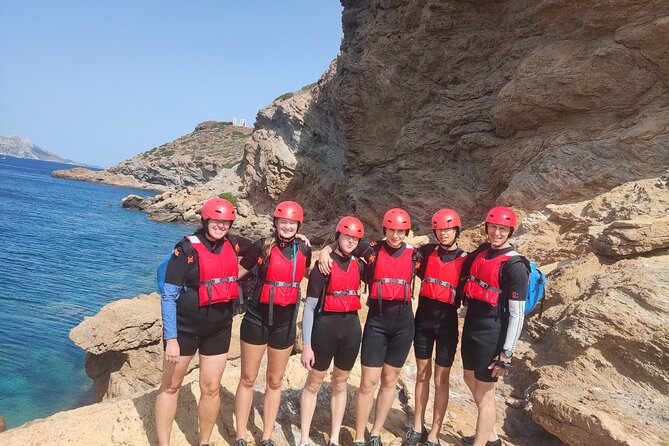
- A genuine small-group format: The group can include up to 15 people, allowing guides to give hands-on help.
- More than swimming: Expect rock scrambling, climbing above the water, snorkeling, and short sections along the shore.
- A practical three-hour length: The activity fits well into a half-day plan around Sounio.
- Athens transport is optional: Pickup can be arranged for an additional cost, but the standard meeting point is at the Archaeological Site of Sounion.
Coasteering beneath the Temple of Poseidon
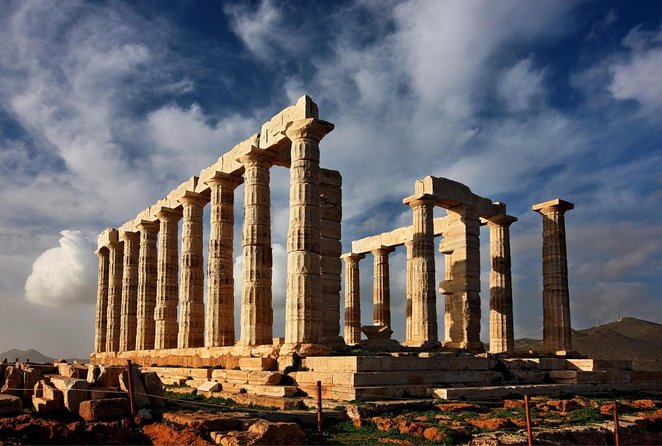
Sounio is best known for the Temple of Poseidon, perched above the southern tip of Attica. Most people approach it as an archaeological site, take in the sea views, and leave. This activity gives you a different angle, placing you on the rocky shoreline below the temple.
The coast here is made for coasteering. You move beside the sea rather than simply walking along a marked path. Some sections involve scrambling over boulders. Other parts require swimming between rocks, climbing short stretches above the water, or stepping into the sea from a low ledge.
The setting does much of the work. The water is described as clear and light blue, and the rocky coast provides the rough, natural feel that makes this more interesting than a standard beach outing. You get the setting of Sounio without spending the whole day in the most crowded areas around the monument.
The Temple of Poseidon is the visual anchor, but it is not the main activity. The temple appears from below and gives the outing a strong sense of place. If your main goal is a detailed visit inside the archaeological site, you should allow separate time for that. The coasteering meeting point is at the archaeological site, but the activity itself focuses on the coastline.
More Coasteering Tours in Greece:
- Award Winner Premium Kayak and Coasteering Adventure with Lunch
★ 5.0 · 472 reviews - Coasteering Experience in Newquay
★ 5.0 · 465 reviews - Mallorca: Half-Day Coasteering Experience
★ 4.7 · 447 reviews
What the three-hour route involves
The listed itinerary has one main stop, the Temple of Poseidon, but the outing is not a conventional temple tour. The three-hour period is used for a moving coastal route with several physical activities built into it.
You begin at the Sounion meeting point at 9:30 am. From there, the guides prepare the group and provide the required gear. The equipment matters here. A wetsuit can make the water more comfortable, while the shoes help with rough rocks. The helmet, life vest, mask, and snorkel cover the core needs for the route.
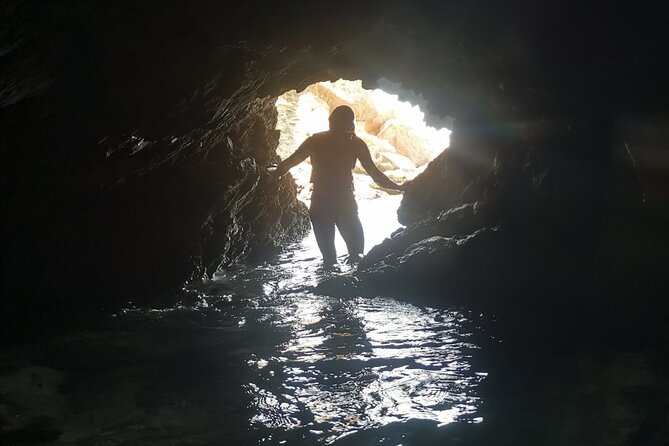
Once you reach the coast, expect a combination of swimming and scrambling rather than a single straight course. You may climb over rocks, move along the shoreline, and enter the water at different points. The description specifically includes high jumps, snorkeling, and climbing on rocks above the sea.
The jumps are not presented as one all-or-nothing challenge. That is important. One guest arrived unsure about cliff jumping and began with a very small jump. The guide then worked upward through slightly higher jumps, allowing the guest to decide how far to go. This kind of progression is useful because a jump can feel very different when you are standing above the water than it does when you are watching someone else do it.
You should still expect to make your own decisions. Encouragement from a guide is helpful, but you should not feel obliged to attempt a height that makes you uncomfortable. The value of a small group is that the guide can offer support and adjust attention to the people who need it.
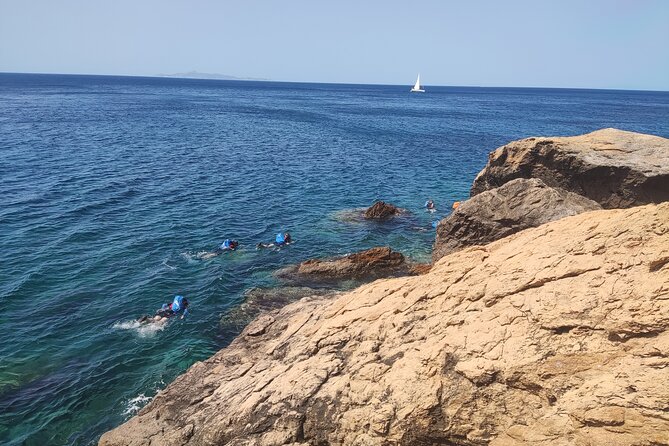
Snorkeling adds a quieter part to the outing. After the scrambling and jumping, you can use the provided mask and sea snorkel to look for marine life in the Aegean. The information does not promise a particular species or a dedicated wildlife briefing, so keep expectations sensible. This is a coastal activity with snorkeling included, not a specialist marine biology trip.
Why the small group matters
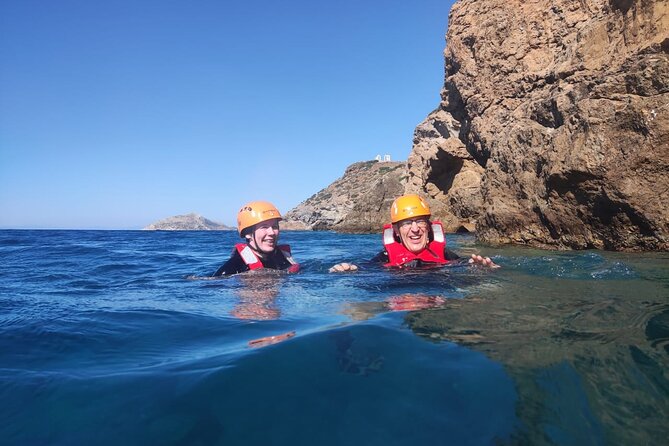
The maximum group size is 15 people. That is not a private tour, but it is small enough to make a difference during a physical activity.
On a normal sightseeing walk, a large group mainly affects how easily you hear the guide. Here, group size affects your safety and your time in the water. People need help with equipment, footing, route choices, and jump decisions. A guide who can see what each person is doing is more useful than one trying to manage a crowd.
The experience also seems well suited to mixed confidence levels. One member of a family needed help during a few difficult moments, and guide Nikki offered calm encouragement and physical support. That detail gives you a better idea of the guiding style than a general promise of personal attention. You should expect guidance that is practical and reassuring, especially when the rocks or jumps feel intimidating.
Small groups can still move at different speeds. If you are very confident and want constant action, you may occasionally wait for others. If you are less confident, that slower rhythm can work in your favor. The group format gives you a chance to watch before trying something yourself.
The activity is offered in English. Confirmation is provided at booking, and the operator stays in touch by email or WhatsApp the day before.
Equipment, clothing, and physical demands
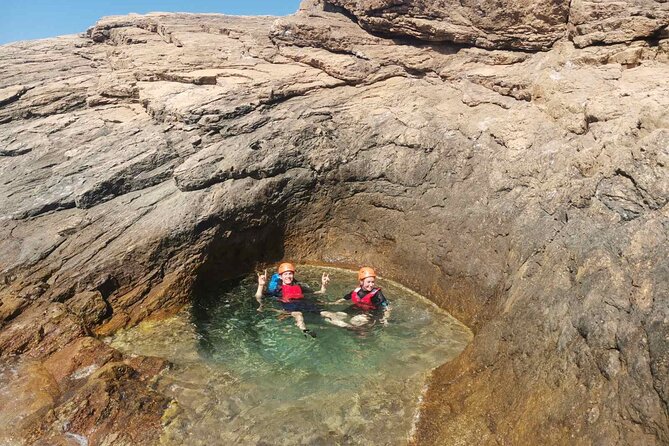
The price includes a wetsuit, shoes, helmet, life vest, mask, sea snorkel, and all fees and taxes. That is a useful package because bringing suitable coasteering equipment from Athens would be awkward and expensive.
You will still need to plan for personal items. Bottled water and snacks are not included. Since the activity lasts about three hours and involves swimming and exertion, bring water and something to eat for before or after the outing. The supplied information does not state whether drinking water is available at the meeting point, so do not count on the tour providing it.
Wear a swimsuit beneath the wetsuit. The shoes supplied for the activity are intended for the route, so you do not need to arrive with specialist water footwear. You should also bring whatever dry clothes you want for afterward, though the exact changing arrangements are not specified.
The stated fitness requirement is moderate. That phrase deserves a practical reading. You should be able to swim, climb over uneven rocks, scramble using your hands and feet, and handle repeated movement in and out of the water. The activity is not described as suitable for people with limited mobility, and it is not a relaxed shore walk.
You do not need to be an expert cliff jumper. The guide can build the jumps gradually, as Nikki did with one hesitant participant. But you should be open to physical challenges and accept that the sea and rocks are less predictable than a swimming pool.
More Three-Hour Experiences in Greece:
- Canyoning discovery 3h in Aix les bains / Chambéry: Ternèze
★ 5.0 · 53 reviews - 3-Hour Guided Canyoning in the Cocciglia Gorges
★ 5.0 · 33 reviews
The Temple of Poseidon from sea level
The temple is the cultural reason many people come to Sounio. Built on a high point above the sea, it is one of the most memorable ancient sites near Athens. The coasteering route does not replace a temple visit, but it changes how you see the site.
From the water and rocks below, the monument becomes part of a wider coastal setting. You are no longer looking only at columns and stone. You are seeing why this headland mattered as a landmark for people moving across the Aegean.
That sea-level view is one of the strongest reasons to choose this activity over a standard visit alone. You get an active morning first, then you can visit the temple afterward if you arrange enough time. One participant used a private driver arranged with help from the guide, allowing the family to visit the Temple of Poseidon after coasteering before returning to Athens.
Do not assume that this transport arrangement is included. Transportation depends on the number of people and the pickup location, and pickup is available only on request at an extra cost. If you want to combine the activity with the archaeological site, ask about the timing and transport before booking.
Price and what you receive for $90.22
At $90.22 per person, this is not the cheapest way to spend a morning near Athens. Its value depends on whether you need an active outing with equipment and a guide, rather than simply access to the coast.
The price covers the wetsuit, shoes, helmet, life vest, mask, snorkel, and all fees and taxes. It also covers a guided route in an area where footing, water entry, and cliff jumps are better handled with support. You are paying for the equipment and for the guide’s judgment as much as for the three hours themselves.
Transportation is the main extra cost to watch. The standard meeting point is the Archaeological Site of Sounion, not central Athens. Pickup can be arranged, but it costs more. If you are staying in Athens and do not have a practical way to reach Sounio, calculate that added amount before comparing this with other day trips.
The activity is booked, on average, 42 days ahead. That suggests you should not leave it until the last morning of an Athens trip if your dates are fixed. The group is capped at 15, and the activity also needs a minimum number of participants to operate.
A five-out-of-five rating from 12 reviews, with all recommending the experience, is encouraging. The strongest points are clear: beautiful scenery, several activities in one outing, patient guidance, and the chance to push past a fear of jumping. A small set of ratings cannot predict every day on the water, but it does support the idea that this experience delivers well for the right kind of participant.
Weather, cancellations, and planning your day
Good weather is required. If poor conditions force a cancellation, you are offered another date or a full refund. The same choice applies if the minimum number of participants is not met.
You can cancel for a full refund up to 24 hours before the start time. Cancellations or changes made less than 24 hours before the activity are not refunded or accepted, and the cut-off follows local time.
The 9:30 am start leaves room for another Sounio activity later in the day, but do not pack the schedule too tightly. Coasteering can be tiring, and transport arrangements may take time. If you want to visit the temple after the activity, allow enough space for that visit rather than treating it as a guaranteed quick stop.
The meeting point is near public transportation, but the available information does not specify routes or travel times. Confirm the exact meeting instructions in advance, especially if you are not using the optional pickup.
Who should book this Sounio adventure?
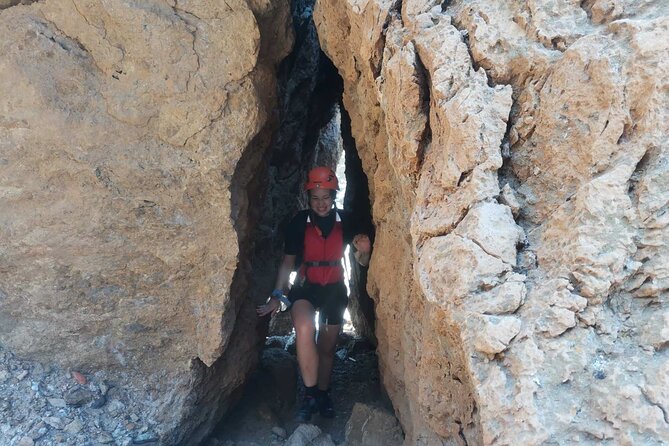
I would choose this for an active person who has already seen the main Athens sights and wants something outdoors. It also suits families with older children or teenagers who can meet the moderate fitness requirement and enjoy trying several activities in one morning.
It is a good match if you like guided challenges but do not want a formal athletic course. The progressive approach to the jumps means you can test your confidence rather than committing to the highest point immediately. The snorkeling and swimming also give the route variety.
I would be cautious if you dislike uneven rocks, cold water, heights, or changing conditions. This is not the right pick if your ideal Sounio visit means sitting quietly by the sea or spending most of the time examining the temple. It is also less convenient if you cannot reach the meeting point and do not want to pay extra for pickup.
Should you book the coasteering trip?
Book it if you want to combine the coast, the Aegean, and the Temple of Poseidon in a physical three-hour outing. The equipment is included, the group is limited to 15, and the guides appear ready to help you progress at your own pace. The strongest part is the mix: scrambling, swimming, snorkeling, climbing, and cliff jumping all fit into one morning.
Skip it if you are looking for an easy sightseeing tour or if your fitness level makes climbing and swimming difficult. Before paying, confirm transportation from Athens and decide how much time you want for the temple itself.
For the right participant, this is one of the more memorable ways to experience Sounio. You do not simply look at the coast from above. You move through it, with the ancient temple watching from the rocks.
FAQ
Where does the Sounio coasteering activity start?
It starts at the Archaeological Site of Sounion, Lavreotiki 195 00, Greece.
What time does the activity begin?
The scheduled start time is 9:30 am.
How long does the activity last?
The activity lasts approximately three hours.
Is transportation from Athens included?
No. Transportation is available on request at an extra cost, depending on the number of participants and pickup location.
What equipment is provided?
The tour provides a wetsuit, shoes, helmet, life vest, mask, and sea snorkel. All fees and taxes are also included.
Are food and drinks included?
No. Bottled water and snacks are not included.
How many people can join the activity?
The maximum group size is 15 people.
What fitness level do I need?
You should have a moderate physical fitness level. The activity includes swimming, rock scrambling, climbing, snorkeling, and jumps from rocks.
What happens if the weather is poor?
The activity requires good weather. If it is canceled because of poor conditions, you can choose another date or receive a full refund.
Newly roped up around Greece
- Family Adventure From Athens Canyoning at Pisia Canyon★ 5.0 · 2 reviews
- Deos Canyoning Experience at Paleochori Metsovo★ 5.0 · 3 reviews
- SAMARIA Gorge Walk: full day from area Heraklion CRETE★ 4.0 · 11 reviews
- Guided Canyoning: Manikia Gorge with Lunch and Photos from Athens★ 5.0 · 16 reviews
- Canyoning trip at Zagori area of Greece – Section B★ 5.0 · 13 reviews
- Papigo Zagori: Nefeli Gorge Canyoning★ 4.6 · 6 reviews
- Olympus Canyoning Course: Entry to Intermediate★ 4.8 · 6 reviews
- Neda: Canyoning Adventure★ 5.0 · 4 reviews
Greece Canyoning Tours, descent by descent.
Canyoning trip at Zagori area of Greece – Section A
Read our review →
From Thessaloniki: Half-Day Canyoning Trip to Mount Olympus
Read our review →
Olympus Canyoning Course – Entry to Intermediate
Read our review →
Rethymno: Canyoning Tour in the Kourtaliotiko Gorge
Read our review →
Guided Canyoning: Manikia Gorge with Lunch and Photos from Athens
Read our review →This trip also sits on these lists