
Review · GREECE
Olympus Canyoning Course: Entry to Intermediate
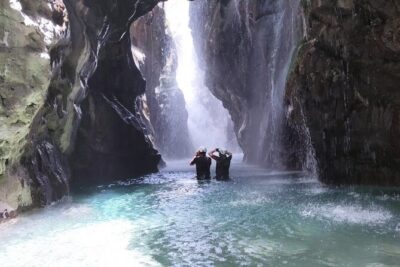
Mount Olympus supplies the drama here: waterfalls, rocky cliffs, natural slides, and cold pools come one after another on a guided canyoning route. I like the small group limit of eight, and I like that beginners receive hands-on training before the descent. The main caution is the 20-minute approach hike, which one participant found difficult at a low fitness level.
I also like the choice of three levels, from a first canyoning outing to an intermediate route with rappels as high as 22 meters. Thomas is the guide named in the feedback, and his professional, friendly approach earned especially strong praise. At $425 per person, this is a serious day out, so you should be keen on active adventure rather than simply sightseeing.
Key points at a glance
- Three route levels: Pick Beginner, Level 1, or Level 2, with instruction matched to your experience.
- A real canyon descent: Plan on about two hours of active canyoning after training and the approach hike.
- Intermediate thrills: Level 2 includes rappels up to 22 meters, steep slides, and jumps higher than 7 meters.
- Small-group guidance: No more than eight participants means more room for personal instruction and safety checks.
- Useful inclusions: Transfers, park fees, helmet, harness, photos, and video are covered.
- Bring the basics: You need swimwear and a towel, while canyoning boots cost an extra €10 if needed.
What the Mount Olympus route is really like
This is not a quick roadside waterfall stop. You spend a full day learning techniques, walking into the canyon, and moving through it under the direction of a professional guide.
The day begins with a meeting from 12:30, with pickup available from selected places around Neoi Poroi, Platamonas, Leptokarya, Litochoro, Katerini, and Larisa train station. You can also meet the team at an agreed hotel or meeting point. The exact schedule is confirmed by email or WhatsApp, so keep your phone available before the outing.
Once you reach the starting point, the team gets you into the required equipment. The supplied safety gear includes a helmet and harness. You will also need to provide your height, weight, and shoe size in advance. This helps the team prepare suitable equipment and decide if canyoning boots are needed.
Then comes a roughly 20-minute walk through the forest. It is a short approach on paper, but it is not nothing. If your fitness is low, take this part seriously. One person specifically found the opening hike difficult, and that is useful information for anyone who thinks the day starts only when the first waterfall appears.
The forest walk is part of the setting, not wasted time. You are moving from the road and nearby settlements into a more rugged section of Mount Olympus. The canyon begins after this approach, and the change in pace helps you get ready for the more technical part of the day.
More Intermediate Canyoning in Greece:
- Olympus Canyoning Course – Entry to Intermediate
★ 5.0 · 54 reviews - From Funchal: Intermediate (Level 2) Canyoning Adventure
★ 4.9 · 1,111 reviews - Madeira Canyoning For Beginners Nun’s Valley Level 2
★ 4.9 · 421 reviews
Training first, then the water
You do not need previous climbing experience. That makes this course more approachable than the height figures might suggest, but it does not make it passive. You will be taught the basics needed for your selected level, including abseiling, canyon trekking, jumps, slides, anchoring, belaying, and via ferrata skills where appropriate.
The guide introduces techniques before asking you to use them. That matters because canyoning is a sequence of small decisions: where to place your feet, how to control a rappel, when to wait, and how to move safely as a group. The training gives you a chance to learn those actions before the route becomes more demanding.
The small group is a major practical benefit. With a maximum of eight people, the guide has a better chance to watch each participant and explain a technique clearly. It also means you are not one face in a large line waiting at every obstacle.
The instruction changes with the level you choose. Beginners learn the essential methods needed for the route. Level 1 adds more independence, including learning how to prepare yourselves at the master point and belay on short ropes. Level 2 is aimed at people who want a more active role in the sport, with essential instruction added along the way when needed.
You should be honest about your experience and comfort with heights when choosing. The course is designed to teach you, but the intermediate route is not simply a longer beginner outing.
Beginner route: a strong first taste
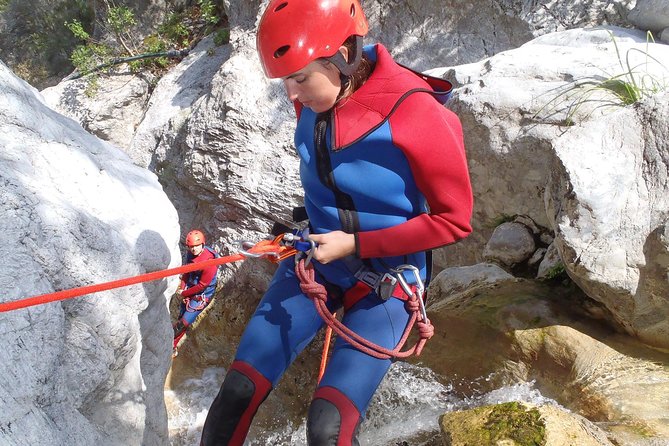
The Beginner course starts with a 7-meter waterfall used for abseiling. You receive the essential training first, then descend under the guide’s supervision.
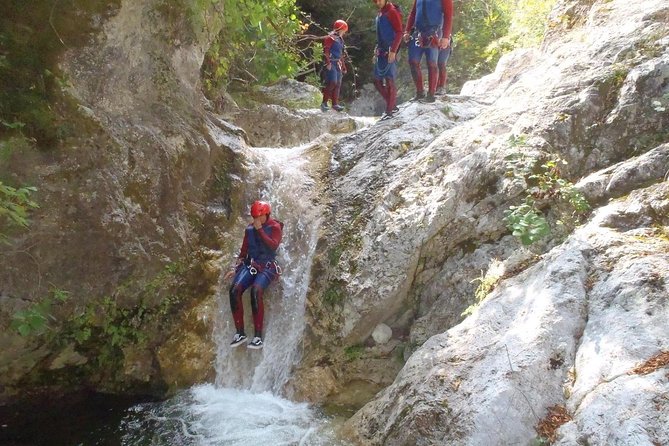
After that, the route brings in a long natural waterslide, along with chances for jumps and slides. The appeal is easy to understand: you are not just walking beside the water and taking photographs. You are using the canyon itself as the route.
The path continues through a section called the snake’s hall, followed by a smaller slide. There is also canyon trekking and a short technical abseil before the final exit, which ends with a big splash.
This level suits you if you want genuine canyoning without committing to the longest rappels or highest jumps. It still includes several types of movement, so you get a proper introduction rather than a watered-down activity. The opening waterfall also gives the day a clear sense of occasion.
Do not mistake Beginner for effortless. You still need to hike, handle safety equipment, follow instructions, and move through water and over rock. The route is accessible to newcomers in terms of prior climbing experience, but it calls for a reasonable level of fitness and comfort with outdoor activity.
Level 1: learning to take more control
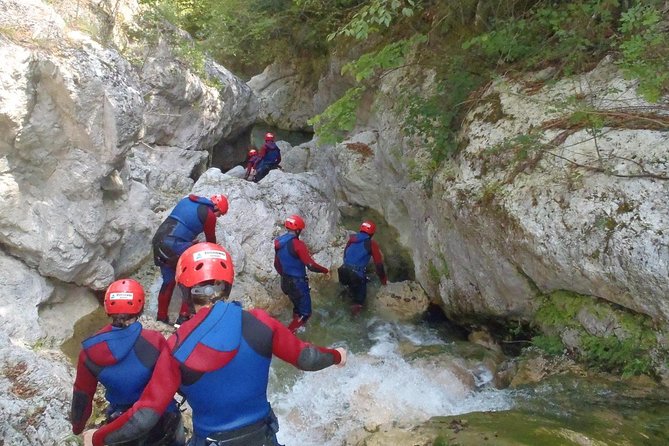
Level 1 is the bridge between a guided first experience and more active participation. You learn to become more autonomous, including how to prepare yourselves at the master point and how to belay on short ropes.
You also use the equipment for longer waterfall rappels with more exposure. The word exposure matters here because the feeling can change even when the technique is familiar. A longer rappel and a more open position can feel more demanding than the first waterfall.
This route makes sense if you have already tried basic canyoning, climbing, or similar rope work and want to understand more of what the guide is doing. It also suits a confident beginner who wants extra instruction and a greater role, provided the guide agrees that the level is appropriate.
The value is not only in the physical thrills. You are learning how a canyoning system works, from the anchor point to the rope handling. That can make the activity feel more rewarding than simply being lowered from one obstacle to the next.
More Canyoning Tours around Greece:
- Canyoning trip at Zagori area of Greece – Section A
★ 5.0 · 425 reviews - From Thessaloniki: Half-Day Canyoning Trip to Mount Olympus
★ 5.0 · 267 reviews - Canyoning Experience in Neda for Beginners
★ 5.0 · 90 reviews - Canyoning in the water – Kourtaliotiko Gorge
★ 5.0 · 55 reviews
Level 2: the intermediate challenge
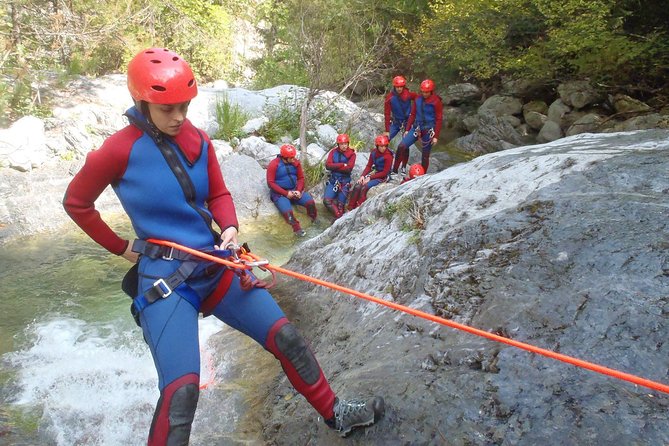
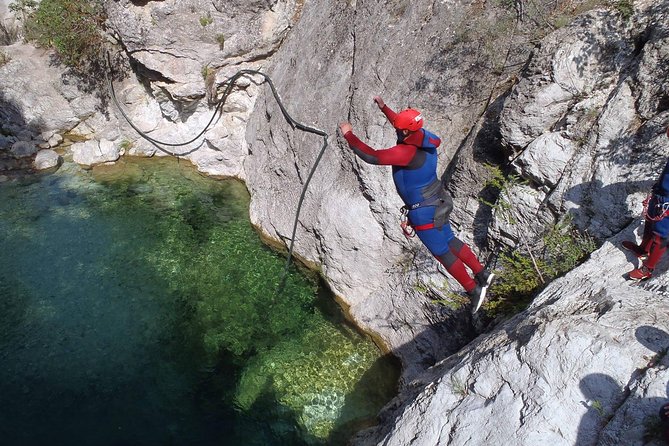
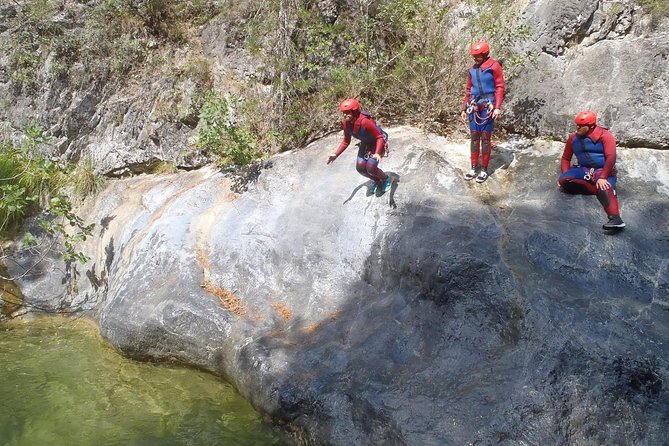
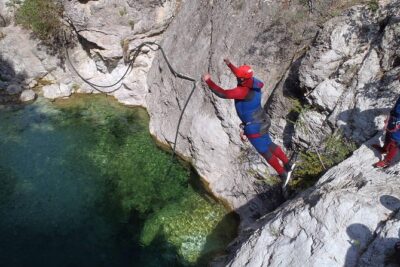
Level 2 is for people who want to be part of the sport, not just sample it. The route includes long abseils reaching up to 22 meters, steep slides, and high jumps over 7 meters.
Those figures give you a useful benchmark before booking. A 22-meter rappel and a jump above 7 meters are not minor additions to a sightseeing day. You need to be comfortable with heights, water, and active instruction. The guide still provides essential training as required, but the route expects more involvement from you.
The intermediate course is a good choice for an experienced outdoor enthusiast who wants a compact, technical canyoning day. It may also suit someone with prior rope experience who wants to build canyoning skills. It is less suitable if you are nervous about height or hoping to decide your level only after arriving.
The route combines controlled rope work with the less predictable fun of slides, jumps, and swimming. That mix is what gives the day its character. You are not repeating one maneuver for hours. Each section asks for a slightly different response.
Why the small group and guide matter
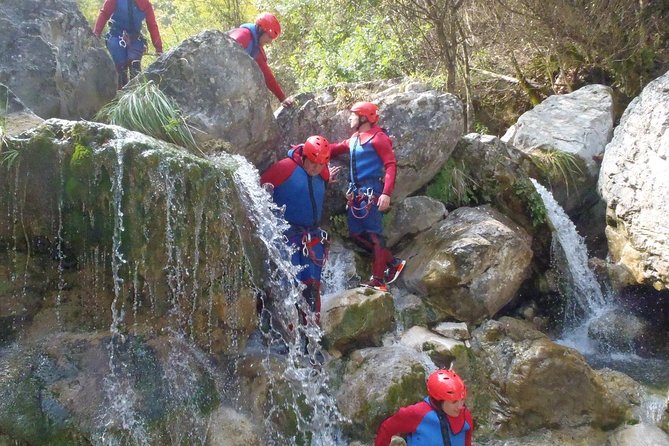
Canyoning is much better when instruction does not feel rushed. A group capped at eight allows the guide to address individual concerns and keep the movement through the canyon organized.
Thomas is the guide specifically named in the available feedback. He was praised for being friendly and highly professional, which fits the needs of this activity. You want someone who can explain a technique plainly, set a calm pace, and still keep the day lively.
The guide’s role is not limited to pointing out the next waterfall. They teach abseiling, belaying, anchoring, canyon movement, jumps, slides, and via ferrata skills according to the level. That makes the outing feel more like a short course than a simple outdoor attraction.
You should still expect to follow directions carefully. Safety gear does not replace good judgment. Stay focused during briefings, ask questions when something is unclear, and tell the guide if a height or maneuver is beyond your comfort level.
What is included for $425
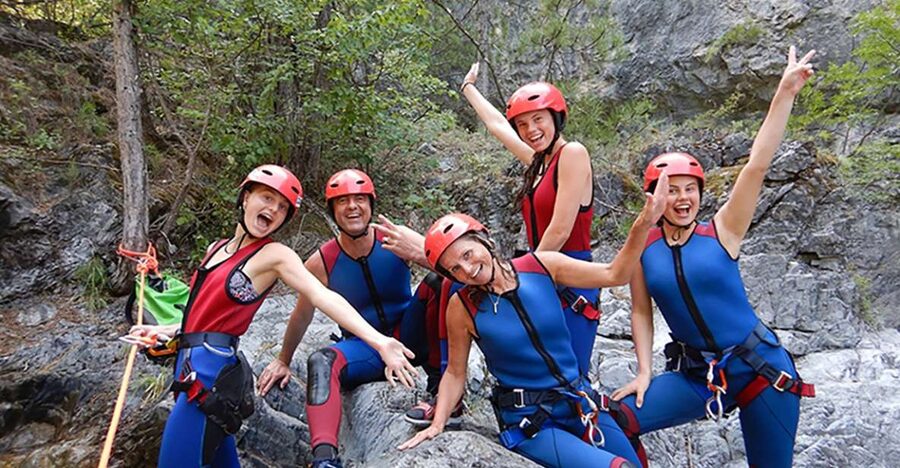
At $425 per person, this is an expensive day by ordinary excursion standards. The price makes more sense when you count what is bundled into it: private round-trip transfer, national park fees, a professional guide, helmet, harness, hotel pickup and drop-off in selected areas, plus photos and video.
The transfer is particularly useful if you are staying along the coast or near Mount Olympus but do not have a car. You avoid arranging your own transport to a mountain starting point, and the team handles the return journey after a physically demanding day.
Photos and video also add value. Canyoning is awkward to document while you are holding a rope, stepping through water, or preparing for a jump. Having the provider record parts of the experience means you can stay focused instead of trying to protect a phone.
The price does not include food and drinks. You should plan accordingly, especially since the activity lasts most of a day and includes a two-hour active descent. A snack is included midway, but the supplied details do not specify what it contains, so do not treat it as a full meal.
Canyoning boots cost €10 if you need them. The team asks for your shoe number and may provide boots if your footwear is unsuitable. That small extra cost is worth accepting if it gives you better footing and keeps your own shoes from being soaked and battered.
What to bring and how to prepare
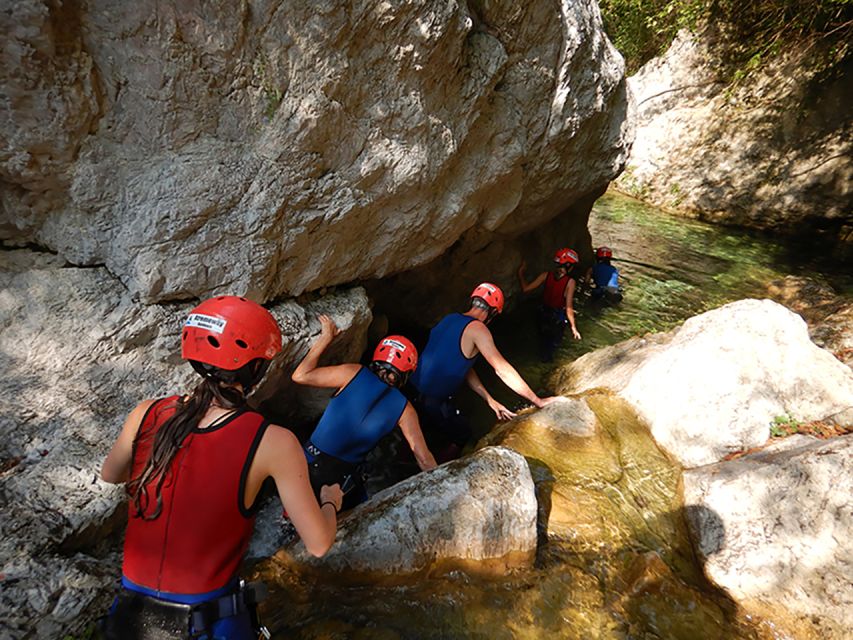
Bring swimwear and a towel. You will be dealing with water, slides, swimming, and splashes, so ordinary sightseeing clothes are not the right choice.
Give the provider your height, weight, and shoe size before the day. This is not busywork. It helps the team prepare the harness and footwear, and it lets them decide if supplied canyoning boots are needed.
Do not bring alcohol or drugs. They are not permitted, and the activity requires clear attention around ropes, rocks, water, and jumps.
I would also keep the day flexible around the pickup time. The meeting begins from 12:30, but the guide contacts you through email or WhatsApp with additional timing details. Check those messages before setting off, particularly if you are arranging your own route to a meeting point.
Who should book this course
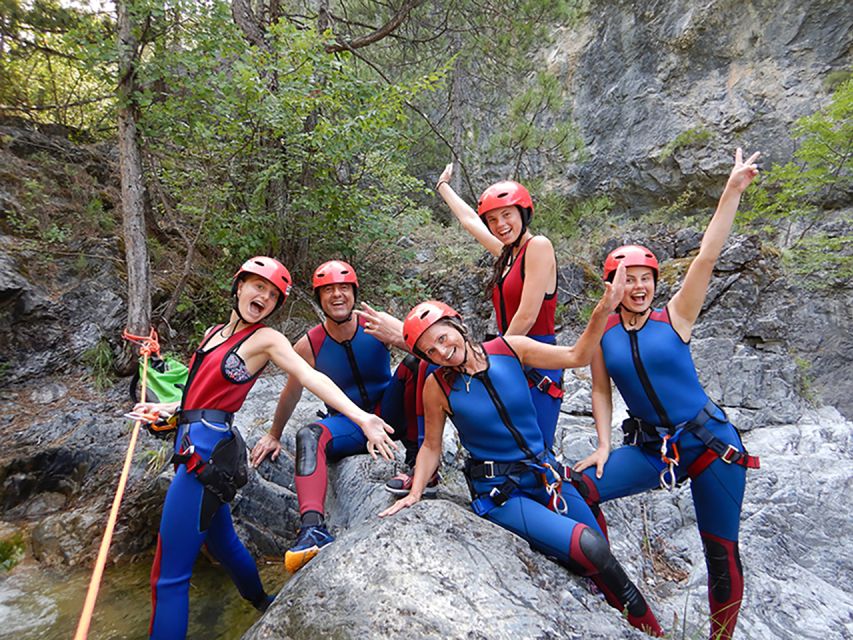
This suits you if you want an active Mount Olympus experience with real participation. You should be comfortable hiking, getting wet, listening closely, and trying new techniques under supervision.
The Beginner route is the sensible starting point if you have no climbing background. Level 1 is better if you want more rope skills and longer rappels. Level 2 is for a more serious challenge, with 22-meter abseils and jumps above 7 meters.
The course is not suitable for pregnant women, people with back or heart problems, people with mobility impairments, or wheelchair users. Those restrictions are important because the route involves hiking, rope work, water, jumps, and uneven rocky ground.
Fitness matters even on the easiest level. The approach hike is only about 20 minutes, but the full outing includes a roughly two-hour canyon descent. If you rarely exercise, ask the provider directly about the level before booking.
Practical booking details
The activity lasts one day and is conducted in English. Pickup is available from selected hotels and meeting points in Neoi Poroi, Platamonas, Leptokarya, Litochoro, Katerini, and Larisa train station, with other meeting arrangements confirmed by the guide.
You can cancel up to 24 hours before the activity for a full refund, and the reserve-now, pay-later option keeps your plans more flexible. Availability and start times should still be checked before booking, since the guide confirms the final schedule directly.
The overall rating is 4.8 from six reviews, with especially strong comments about the beauty of the canyon, the varied rappels and jumps, and Thomas’s skill and friendly manner. One four-star assessment points to the opening hike as the main concern, so that small criticism should not be ignored.
Should you book Olympus canyoning?
Book it if you want a memorable, physical day rather than a passive Mount Olympus outing. The best reasons are the three difficulty levels, the small English-speaking group, the range of techniques, and the included transport and media.
Choose the Beginner route if you are new to canyoning. Consider Level 1 or Level 2 only if you are comfortable with more exposure and want to take a larger role in the rope work. At $425, the price is easiest to justify if you use the transfer, value professional instruction, and want photos and video included.
Skip it if the opening hike sounds difficult, if you have a medical condition listed in the restrictions, or if you would rather stay dry and admire the waterfalls from a trail. For an active visitor ready to rappel, slide, jump, swim, and work through a mountain canyon, this is a serious and well-supported choice.
FAQ
How long does the canyoning activity last?
It is a one-day activity. After equipment preparation and a roughly 20-minute forest hike, the active canyoning descent lasts about two hours.
What canyoning levels are available?
You can choose Beginner, Level 1, or Level 2, which is the intermediate option. The levels differ in the amount of rope work, exposure, rappel length, slides, and jumps.
Do I need previous climbing experience?
No. Previous climbing experience is not required, and the guides teach the essential skills needed for your chosen level.
How high are the rappels on the routes?
The Beginner route starts with a 7-meter waterfall rappel. Level 2 includes longer rappels of up to 22 meters.
How many people are in each group?
The group is limited to eight participants.
Is transportation included?
Yes. Round-trip private transfer and hotel pickup and drop-off are included for selected areas. Pickup or meeting arrangements are available around Neoi Poroi, Platamonas, Leptokarya, Litochoro, Katerini, and Larisa train station.
What should I bring?
Bring swimwear and a towel. You should also provide your height, weight, and shoe size before the activity.
Are canyoning boots included?
Canyoning boots are available for an additional €10 if your footwear is unsuitable. The provider asks for your shoe number in advance.
Who should not take part?
The activity is not suitable for pregnant women, people with back or heart problems, people with mobility impairments, or wheelchair users.
Newly roped up around Greece
- Family Adventure From Athens Canyoning at Pisia Canyon★ 5.0 · 2 reviews
- Deos Canyoning Experience at Paleochori Metsovo★ 5.0 · 3 reviews
- SAMARIA Gorge Walk: full day from area Heraklion CRETE★ 4.0 · 11 reviews
- Guided Canyoning: Manikia Gorge with Lunch and Photos from Athens★ 5.0 · 16 reviews
- Canyoning trip at Zagori area of Greece – Section B★ 5.0 · 13 reviews
- 3-Hour Small Group Coasteering in Sounio★ 5.0 · 12 reviews
- Papigo Zagori: Nefeli Gorge Canyoning★ 4.6 · 6 reviews
- Neda: Canyoning Adventure★ 5.0 · 4 reviews
Greece Canyoning Tours, descent by descent.
Canyoning trip at Zagori area of Greece – Section A
Read our review →
From Thessaloniki: Half-Day Canyoning Trip to Mount Olympus
Read our review →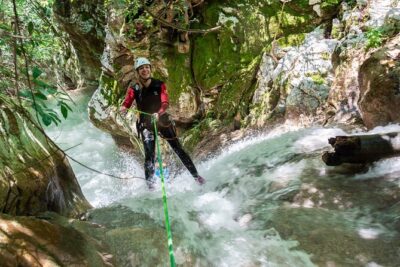
Olympus Canyoning Course – Entry to Intermediate
Read our review →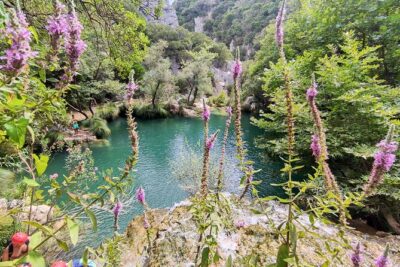
Rethymno: Canyoning Tour in the Kourtaliotiko Gorge
Read our review →
Guided Canyoning: Manikia Gorge with Lunch and Photos from Athens
Read our review →This trip also sits on these lists