
Review · MALLORCA
Pollença: Kayak and Coasteering Cliff Jumping
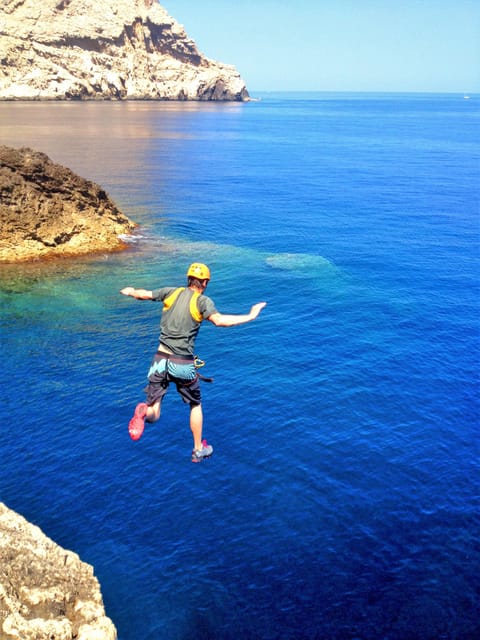
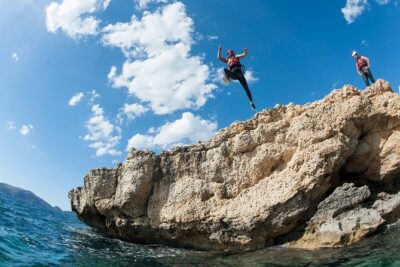
Mallorca’s north coast gets properly exciting when you leave the beach by kayak and reach cliffs that can only be approached from the sea. This 3.5-hour Cala Sant Vicenç adventure combines paddling with cliff jumping, snorkeling, deep water solo climbing, and possible cave exploration, so you get much more than a standard kayak trip.
I like the short, manageable kayak route and the way the activity changes pace once you reach the coasteering area. I also like that the route is designed for beginners as well as more adventurous participants, with guides who can split a larger group by interest. The main consideration is simple: this is not a quiet paddle. You need to be happy around open water, on cliffs, and in swimwear with sports shoes.
Key points to know before booking
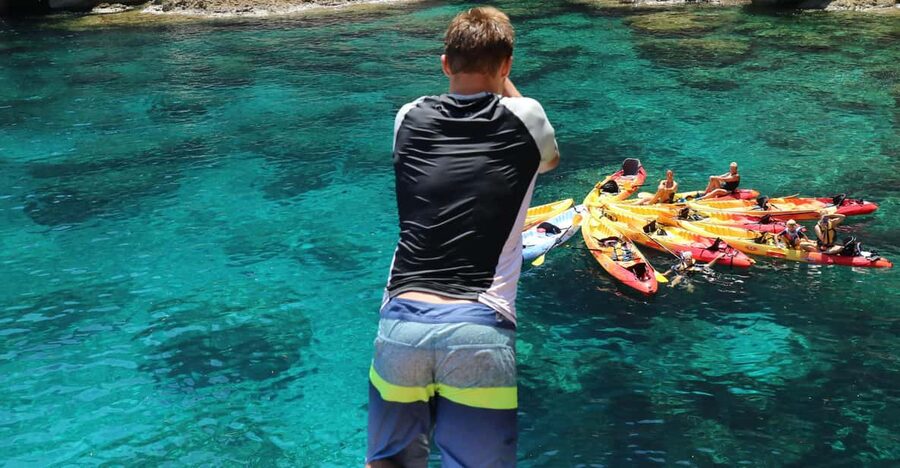
- About 1.5 kilometers by kayak: You paddle from Cala Molins toward a wild stretch of Cala Sant Vicenç before reaching the activity area.
- Several adventures in one trip: Expect cliff jumping, snorkeling, deep water solo climbing, and other activities chosen by the guide.
- Beginner-friendly, not low-energy: The route is suitable for all levels, but the day is built around active participation.
- A sea-only coastline: You leave the kayaks at an area that can only be reached from the water.
- Caves depend on the sea: If conditions are suitable, the group can paddle into caves.
- Five guide languages: Instruction is available in Catalan, Spanish, English, French, and German.
Why Cala Sant Vicenç makes a good adventure setting
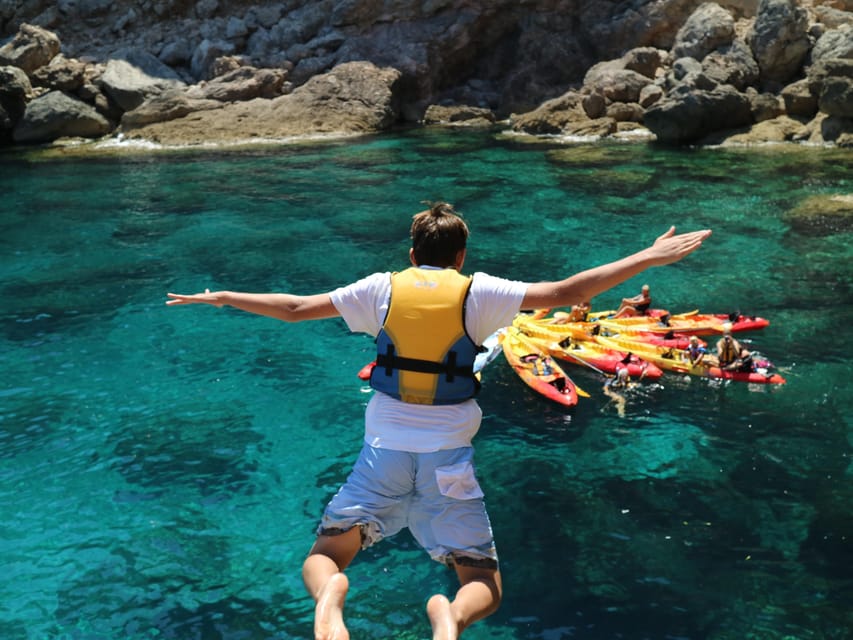
Cala Sant Vicenç sits on Mallorca’s north coast, where clear blue water meets steep rock. The setting is more rugged than a simple beach outing. From a kayak, you see the coast from water level, then get close to rock walls and small islands before stopping at the coasteering area.
That change in viewpoint matters. From the beach, the cliffs may look like scenery. From a kayak, they become part of the route. You paddle beside them, look for openings, and judge where the guide will take the group next.
The trip begins at Cala Molins, one of the beaches in the Cala Sant Vicenç area. You meet on the sand near the right side of the beach when facing the sea. The kayaks are placed there, and free parking is available nearby, which makes the starting point easier if you are arriving by car.
The setting is attractive, but it also means the sea shapes the day. The plan can change if conditions are not suitable. Cave access is specifically dependent on the sea, and the precise jumps or climbing sections may also vary with safety needs. That flexibility is a sensible part of any coastal activity.
More Coasteering Tours in Spain
- Mallorca: Half-Day Coasteering Experience
★ 4.7 · 447 reviews - Coasteering in South Mallorca with Transfers
★ 5.0 · 55 reviews - Coasteering Mallorca
★ 5.0 · 40 reviews
Starting at Cala Molins with a ten-minute safety briefing
The first stage is a short out-of-water explanation. Your guide covers safety and basic navigation before you launch. This is where you learn the essentials for handling the canoe or kayak and understand how the group will move along the coast.
You do not need previous kayak experience. The activity includes a quick lesson in paddling technique, so beginners can get comfortable before the route begins. That is useful because the kayaking is not just a short ride to the next attraction. You spend roughly 1.5 kilometers on the water before reaching the coasteering area.
Bring your questions here. Once the kayaks leave the beach, it is harder to stop and sort out simple concerns. The briefing is also your chance to make sure you understand the guide’s signals and the order of the group.
The activity is available in Catalan, Spanish, English, French, and German. That range is helpful for mixed-language groups and reduces the risk of missing an important safety instruction.
Paddling along the wild coast for about 1.5 kilometers
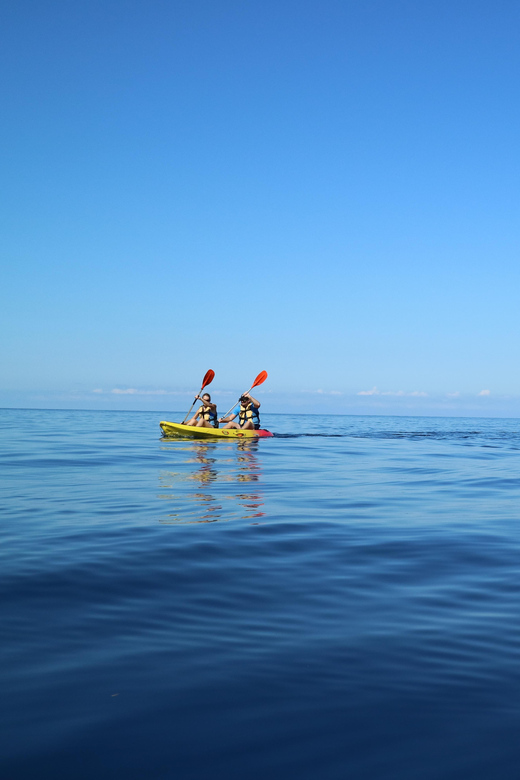
The kayak section takes you through the blue waters of the north coast. You cross near small islands and use basic navigation skills as the guide leads the way. The route is described as circular, so you are not simply paddling in a straight line and turning around.
I like this part because it gives the day a natural build-up. You start with a skill that most people can learn quickly, then move toward bigger physical challenges. The paddle also lets you see the coast before committing to the cliff section.
The water can look calm and inviting, but you should treat the kayak portion as a real outdoor activity. You will be paddling, balancing, and staying with the group. Snacks and water are worth bringing, especially since the activity lasts several hours and the supplied information does not indicate that food or drinks are included.
The guide also explains significant features of the area during the journey. You are not just following a route without context. At the same time, this is primarily an active outing, not a sightseeing cruise. If you want a quiet boat ride with long stops for photographs, this will feel too busy.
Reaching an adventure zone that has no road access
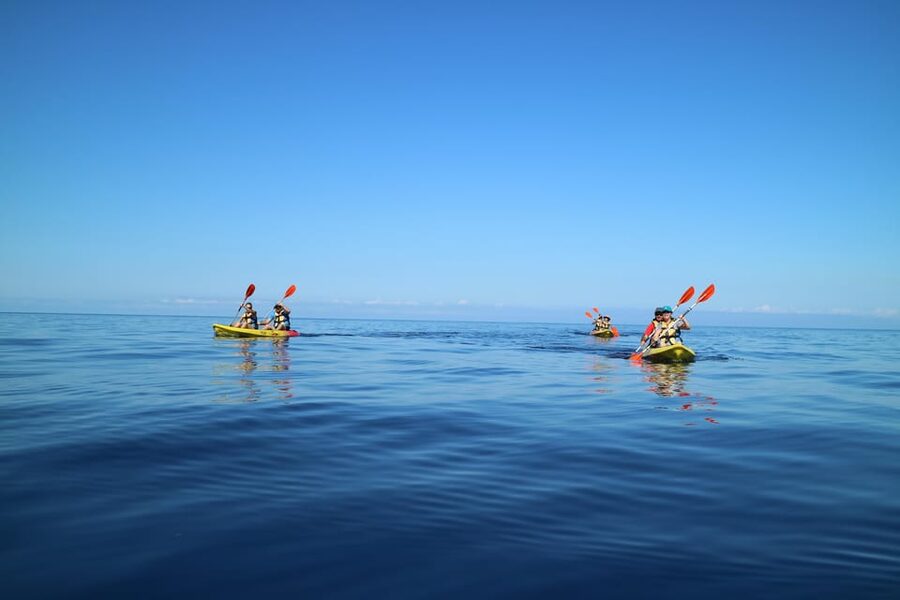
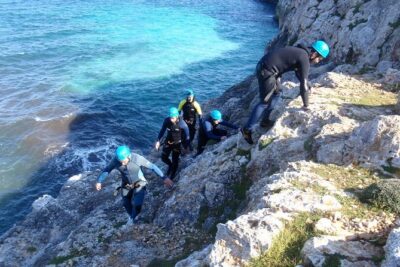
After the kayak section, the group reaches a coastal area accessible only from the sea. You leave the kayaks behind and begin the coasteering portion. This is the moment when the activity shifts from paddling to scrambling, swimming, climbing, and jumping.
That sea-only access is one of the strongest parts of the trip. You are not arriving at a marked attraction with a crowd gathered around it. The guide brings the group to a section of coast that forms part of the route itself.
The exact order of activities can depend on conditions and the guide’s plan. The information describes more surprises prepared by the guide, but it does not give a fixed list beyond the main activities. That means you should expect variety rather than a tightly timed sequence.
For a larger group, the guides may divide people according to their interests. This is useful if some participants want more climbing while others prefer snorkeling or a simpler section of the route. It also helps keep the pace more comfortable for mixed ability levels.
More Coasteering Tours in Mallorca:
- Shore Excursion: Coasteering in Mallorca
★ 5.0 · 40 reviews - Kayak & Coasteering
★ 5.0 · 38 reviews - Coasteering Cliff jumping
★ 5.0 · 27 reviews - North Mallorca Coasteering Tour with Transfers
★ 4.5 · 19 reviews
Cliff jumping with room to choose your comfort level
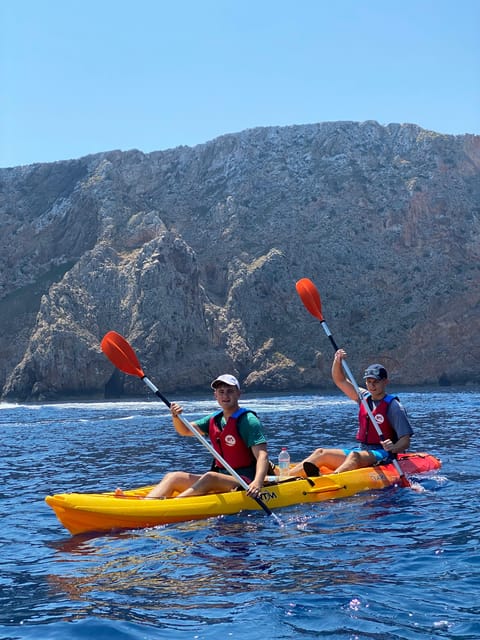
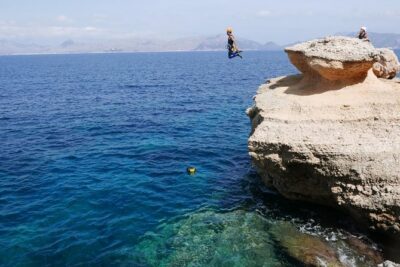
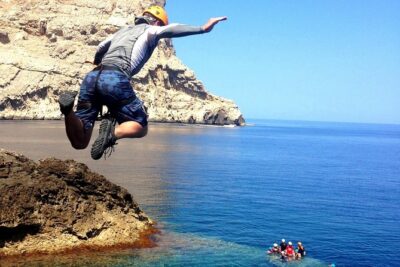
Cliff jumping is one of the headline attractions, but the important point is that the route is presented as suitable for all levels. That should not be confused with a completely gentle outing. You still need to be willing to enter the water from rocky coastal areas and take part in an active route.
A good approach is to treat the jumps as optional within your own comfort range. Listen to the guide and do not let the energy of the group push you into a jump that feels wrong for you. The activity is built around adventure, not proving anything.
The setting makes the jumps more memorable than a purpose-built platform. You reach the locations by kayak and coasteering, so the jump is part of a wider coastal route. Still, the sea controls the experience. Conditions can affect which jumps are used and how the guide organizes the group.
If you are booking for a mixed group, this is worth discussing before you reserve. The activity can suit beginners, but someone who strongly dislikes heights, open water, or physical activity may prefer a regular coastal kayak tour.
Snorkeling and deep water solo climbing
Once the kayaks are on shore, the group can explore the water and rock in several ways. Snorkeling gives you a slower part of the day, with time to look below the surface and cool off between more active sections.
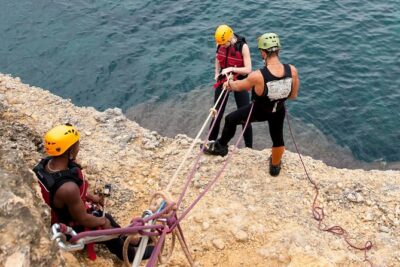
Deep water solo climbing adds another challenge. You climb rock above the sea without conventional ropes, then return to the water. The name may sound serious, and it does require comfort with heights and swimming, but the activity is presented as part of a route for different ability levels.
The information does not specify the climbing height, equipment, or a minimum swimming requirement. Do not assume that the activity is suitable for anyone who cannot swim confidently. If you have concerns about the climbing or jumping sections, ask the provider before booking.
I like the mix because it prevents the day from becoming repetitive. Kayaking uses your arms and coordination. Snorkeling slows the pace. Cliff jumping adds a burst of nerve. Climbing brings a different kind of focus. The result is more varied than a standard paddle along the shore.
Sea caves when conditions allow
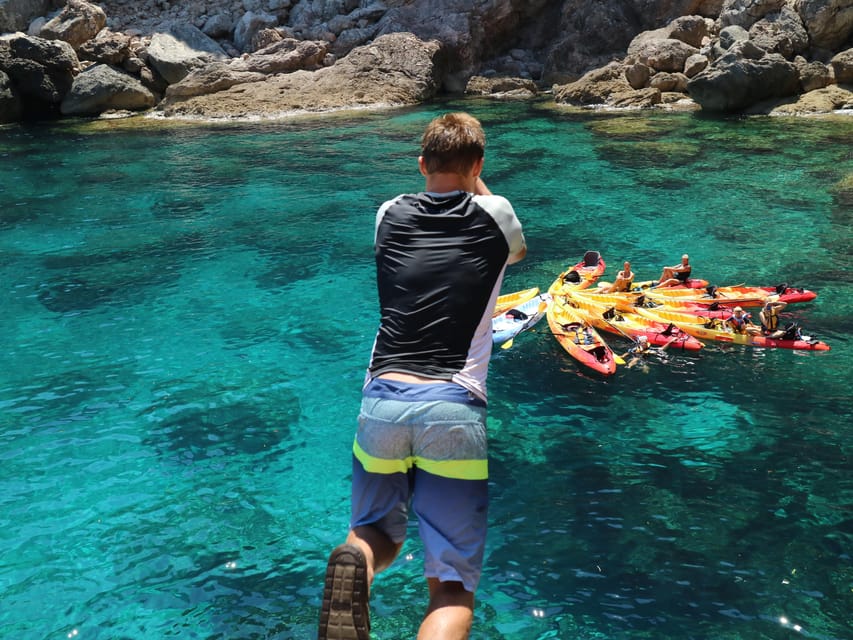
If the sea is calm and safe enough, the kayak route can include caves. This is not guaranteed, so treat it as a possible extra rather than the central reason to book.
Cave access depends on conditions that can change quickly along a rocky coast. The guide may decide that a cave is unsuitable on the day, and that is the right call. You still have the main route and coasteering activities even if the caves are not possible.
Caves also show why the kayak matters. A larger boat may not reach the same openings, while a kayak lets you approach the rock under your own power. The guide handles the route, but you get a close-up view of the coastline from a low position on the water.
What the $98 price includes
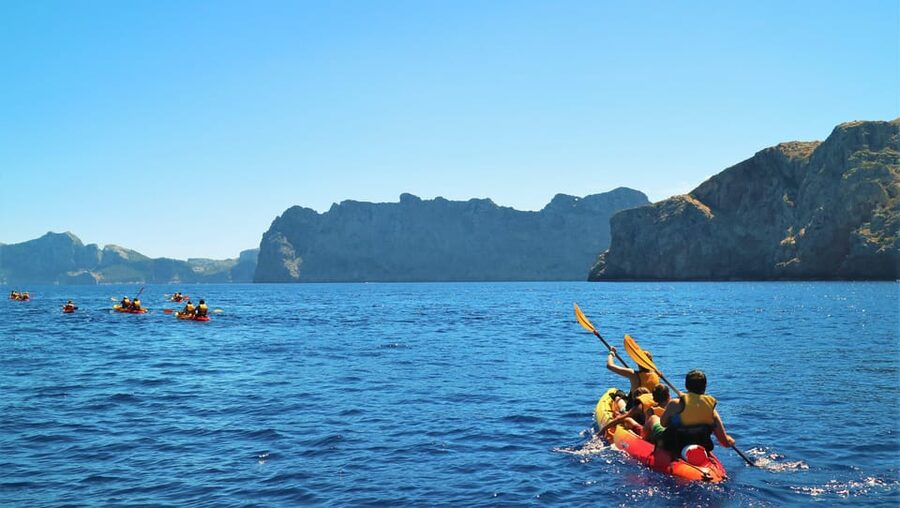
At $98 per person, this is not the cheapest way to spend a morning in Mallorca. The value comes from packing several activities into one guided outing: instruction, kayak use, a coastal route, snorkeling, cliff jumping, deep water solo climbing, and possible cave access.
You are also paying for a local sea kayak guide and the safety structure that comes with a guided coasteering route. That matters more here than it would on a simple beach rental. The coastline is rocky, the route involves open water, and the guide decides how to handle conditions.
The price makes the most sense if you want an active half-day and would otherwise pay separately for kayak hire and another adventure activity. It makes less sense if you only want to paddle slowly or spend most of the time on the beach.
The package does not list transport, meals, or personal clothing as included. Bring your own swimwear, water, snacks, and sports shoes. Sports shoes are especially important because the coasteering section takes place around rock, not only in the kayak.
Who will enjoy this most
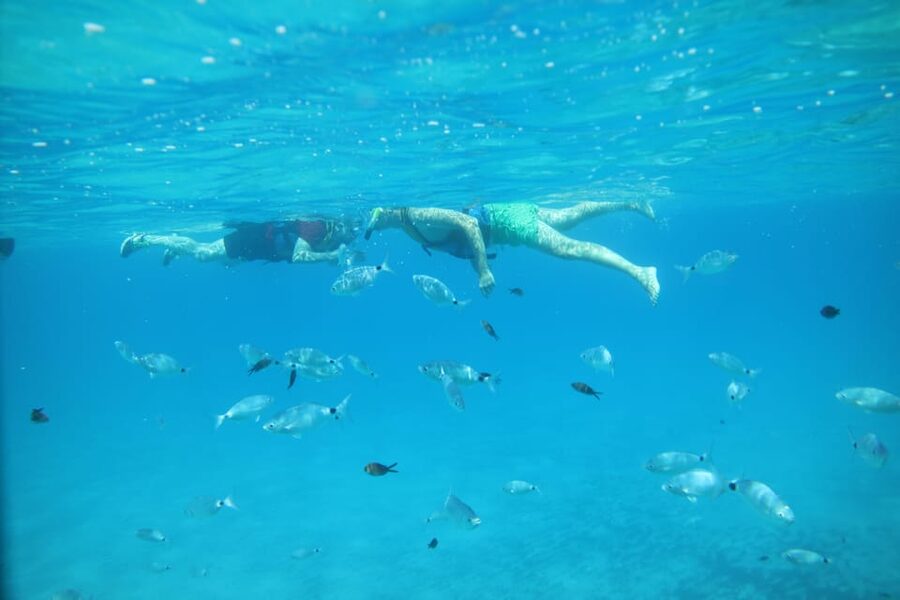
I would recommend this for adults, older children, couples, and groups of friends who want a busy coastal outing rather than a passive sightseeing trip. Children under nine cannot take part. For anyone older, the key question is comfort with the water and the activity level.
It also suits mixed groups better than you might expect. The route is designed for all levels, and a larger group can sometimes split by interest with two guides. That gives more flexibility for people who want different amounts of climbing or jumping.
Beginners should not feel that they need advanced kayak skills. The basic navigation technique is taught at the start, and one German-language booking described the route as suitable for beginners. Still, beginner-friendly does not mean effortless. You should be ready to paddle, swim, climb, and move around uneven coastal rock.
This is not the right pick if you want guaranteed cave access, a fixed jump height, a relaxed paddle, or a fully predictable schedule. The appeal is the changing mix of activities, and that comes with some uncertainty.
Practical preparation for the beach meeting point
Plan to arrive at Cala Molins beach, where the kayaks are on the sand at the right side when you face the sea. There is plenty of free parking nearby, according to the meeting instructions.
Wear swimwear under your clothes. Bring water and snacks, since neither is listed as included. Pack sports shoes that you can use around the rocky coasteering sections. Do not rely on bare feet just because much of the activity involves water.
You should also be ready to spend the full 3.5 hours outdoors. The supplied schedule lists a ten-minute safety briefing followed by the main kayak and coastal activity period. The timing can feel long if you are not used to paddling, so eat sensibly beforehand and bring enough water.
The activity offers free cancellation up to 24 hours before the start time, and you can reserve without paying immediately. Those options are useful when your Mallorca plans depend on weather or changing holiday arrangements.
Should you book this Cala Sant Vicenç adventure?
Book it if you want one active outing that combines kayaking with cliff jumping, snorkeling, climbing, and possible caves. The strongest points are the wild sea-only route, the mix of activity levels, and the guide support in several languages.
I would be especially comfortable recommending it to a group with different interests, since the guides can divide a larger party by preference. Beginners can take part, but everyone should accept that this is an adventure around open water and cliffs, not a gentle beach lesson.
Skip it if you dislike heights, cannot swim comfortably, or want a quiet kayak tour. At $98, the value is best for people who plan to use the full range of activities. If that sounds like your kind of Mallorca morning, Cala Sant Vicenç gives you a lively, well-packed way to meet the coast from the water.
FAQ
Where does the kayak and coasteering activity meet?
Meet on Cala Molins beach at Carrer de Cala Molins, 4. The kayak is on the sand at the right side when you face the sea, and free parking is available nearby.
How long does the activity last?
The activity lasts 3.5 hours. It begins with a ten-minute safety briefing before the kayaking and coasteering route.
How far will I kayak?
You will kayak approximately 1.5 kilometers to the area where the coasteering activities begin.
What activities are included?
The experience includes kayak instruction and a guided coastal route, followed by cliff jumping, snorkeling, deep water solo climbing, and other activities. Kayaking into caves is possible if sea conditions allow.
What should I bring?
Bring swimwear, snacks, water, and sports shoes. These items are not described as provided by the activity.
Is the activity suitable for children?
Children under nine cannot take part. The route is described as suitable for all levels, including beginners, but it still involves active water and cliff-based activities.
More Kayak and Canoe Trips in Mallorca
- Award Winner Premium Kayak and Coasteering Adventure with Lunch
★ 5.0 · 472 reviews - Private Tour explore Vulcano Island by Kayak & Coasteering
★ 5.0 · 338 reviews - Lisbon: Arrábida Kayak and Coasteering Adventure Tour
★ 5.0 · 130 reviews - Okinawa Iriomote Mangrove SUP or Canoe and Splash Canyoning Tour
★ 5.0 · 98 reviews
More Canyoning with Cliff Jumping in Mallorca
- Alcudia: Coasteering Cliff Jumping
★ 5.0 · 5 reviews - Matacanes : Canyoning + Hiking + Water Jumps + Rappel + Caves
★ 5.0 · 1,497 reviews - Sagres: Coasteering – Swimming, Cliff Jump & Rock Climbing
★ 4.9 · 226 reviews - Coasteering and Cliff Jumping Near Lagos
★ 5.0 · 212 reviews
Newly roped up around Mallorca
- Coasteering Cliff jumping★ 5.0 · 27 reviews
- Try adventure, try coasteering – North coast★ 5.0 · 7 reviews
- North Mallorca Coasteering Tour with Transfers★ 4.5 · 19 reviews
- East Mallorca Coasteering Experience with Transfers★ 4.0 · 10 reviews
- Canyoning Mallorca★ 5.0 · 9 reviews
- Mallorca: coasteering South★ 4.5 · 14 reviews
- Mallorca: Coasteering North★ 5.0 · 8 reviews
- Mallorca: Speleo-Coasteering Tour along the Coast of Alcudia★ 5.0 · 5 reviews
Mallorca Canyoning Tours, descent by descent.
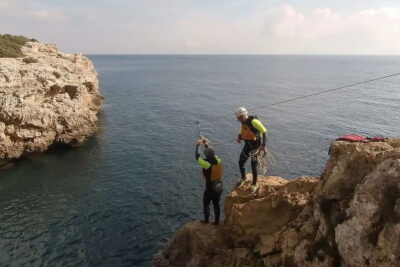
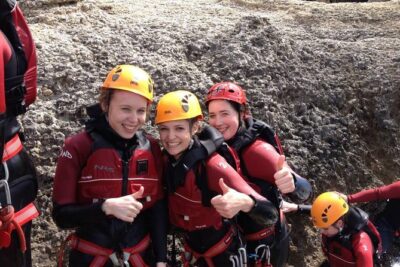
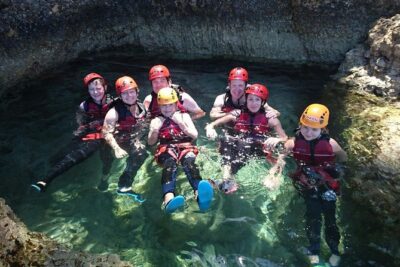
East Mallorca Coasteering Experience with Transfers
Read our review →This trip also sits on these lists