
Review · ALGARVE
Coasteering and Cliff Jumping Near Lagos
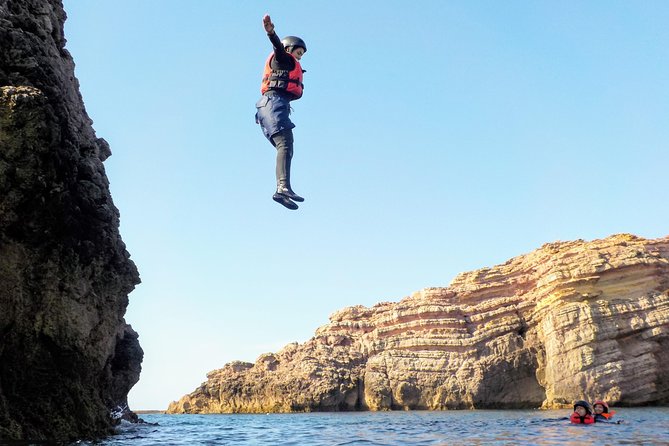
The best part of this coasteering trip near Lagos is that the coast becomes your playground. You swim through sea caves, scramble over rocks, cross clear bays, and work your way toward cliff jumps as high as 10 meters. It is far more active than a sightseeing cruise, and it reaches shoreline corners you cannot visit on foot.
I like two things right away: the jumps build gradually, and guides such as Nelson give you a choice at every stage. I also like the mix of activity and place. You are not simply jumping from a cliff, you are learning how to move through a rugged part of the Costa Vicentina Natural Park while hearing about local marine life and traditions.
The catch is simple: this is a real workout. You will swim in open ocean, climb uneven rock, balance on small ledges, and pull yourself up in full gear. If you are not a confident swimmer, dislike heights, or want a gentle coastal outing, choose something calmer.
Key points to know before booking
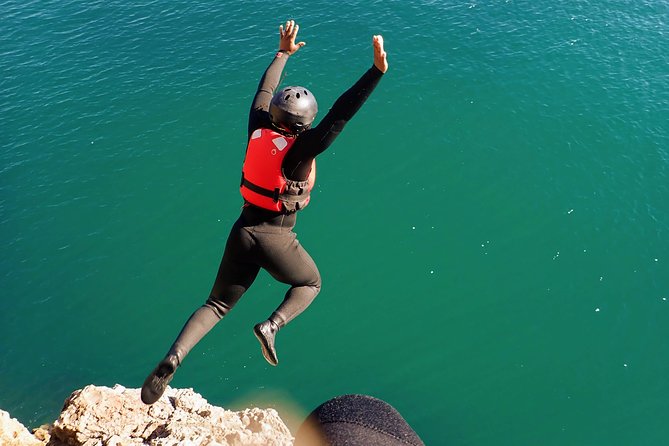
- Jumps reach up to 10 meters: You start low and can progress higher, with alternatives if a jump feels wrong.
- The route includes caves and secluded beaches: Swimming is part of the transport between rocky sections.
- Nelson is closely involved: Guides focus on safety, route choice, local sea life, and helping you through difficult climbs.
- All major gear is supplied: Expect a wetsuit, buoyancy aid, helmet, and coasteering shoes.
- Three hours can feel demanding: Good swimming ability and moderate physical fitness are required.
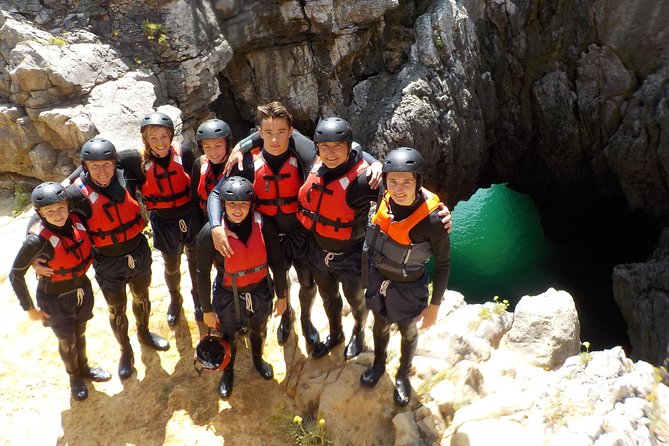
- The group can reach 14 people: Smaller departures may give you more direct attention from the guide.
Starting near Praia da Ingrina in the Costa Vicentina Natural Park
The meeting point is Coastline Algarve SUP & Coasteering at EM1257 6, 8650-310 Raposeira. This is near Praia da Ingrina, in a remote natural area west of Lagos. The spot is close to public transportation, but you should not expect a polished visitor center.
The meeting point is described as a garage on a street rather than a full shop. There is no restroom there, so arrive prepared. The area has limited facilities because the activity operates inside a protected natural park. Look for the company vehicle and allow a little time to get organized before the session begins.
From the meeting point, the group goes to the coast. The short transfer may involve following the guide’s van to the beach, which can be useful if you are driving and want to avoid confusion on small local roads. The activity ends back at the meeting point.
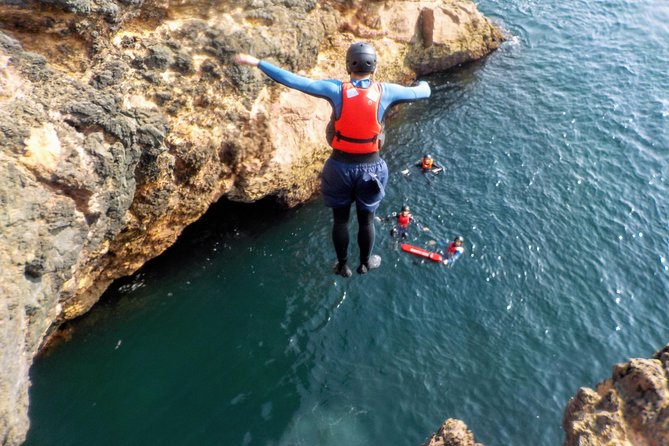
The setting is a strong part of the value. Praia da Ingrina and the surrounding coast feel rugged and open, with cliffs, rock shelves, sea caves, and quiet coves. You are not being led from one crowded viewpoint to another. The route uses the coast itself, and conditions determine exactly which sections are practical on the day.
More Coasteering Tours in Portugal
- Award Winner Premium Kayak and Coasteering Adventure with Lunch
★ 5.0 · 472 reviews - Lisbon: Sesimbra/Arrábida Natural Park Coasteering Adventure
★ 4.9 · 345 reviews - Sagres: Coasteering – Swimming, Cliff Jump & Rock Climbing
★ 4.9 · 226 reviews
Getting fitted with a wetsuit, helmet, and buoyancy aid
Before you reach the water, the team supplies the key equipment: wetsuit, buoyancy aid, helmet, and shoes. The gear matters. The Atlantic water can feel cold, and the wetsuit helps you stay comfortable during long periods of swimming. The helmet protects your head around rock, while the buoyancy aid gives support in the water.
Pay attention to shoe sizing. The operator uses European sizes, and the group may need to sort through footwear before leaving the meeting point. If the company asks for your sizes ahead of time, send them early and double-check the email address or booking message channel. This small step can prevent a very uncomfortable morning on sharp rock.
Once everyone is suited up, the guides assess the conditions. The sea, wind, swell, and route all affect what you can safely do. You then receive an explanation of basic coasteering skills, including how to move over rock, climb, swim, and approach a jump.
This briefing is not filler. You need to know where to place your feet, how to enter the water, and how to follow the person ahead without crowding them. Nelson is often praised for keeping the group together, controlling turns, and giving clear instructions. That structure is especially useful when nerves start to take over.
Starting with small jumps and easy water entries
The route begins with smaller jumps. This gives you a chance to test the water, learn the guide’s signals, and find out how your body feels in the equipment. The early sections are meant to be fun, but they also teach the movement patterns you will use later.
You do not have to begin with a dramatic leap. The point is to build comfort. Some people arrive eager to jump and others need a few minutes before their legs cooperate. The guides can offer a lower entry or another way around a difficult point, so you can stay involved without forcing yourself into a jump.
That flexibility is one of the best features of the outing. You can take on more as you gain confidence, but skipping a jump does not mean leaving the group. A person who dislikes heights can still enjoy the swimming, climbing, caves, and shoreline sections.
The route is not a straight line from one jump to the next. You may swim across a bay, scramble along a rock shelf, climb to a new launch point, and then wait your turn. These transitions are part of the experience. They are also why the outing feels more strenuous than the headline cliff-jumping idea suggests.
Swimming through caves and along the open coast
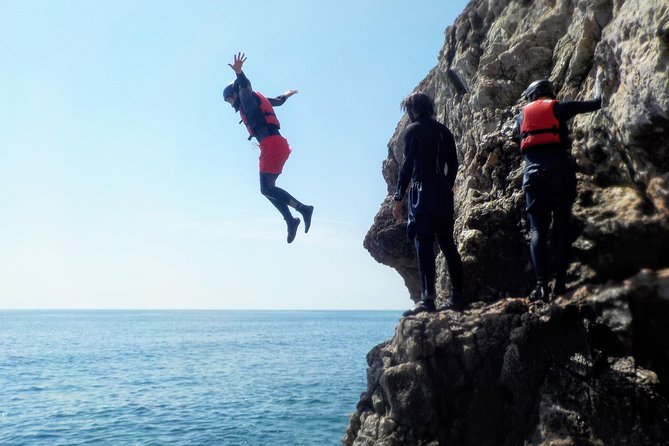
The coastline reveals itself from water level. You move around rock formations, enter sea caves, and pass through clear sections of ocean where the guide can point out marine life. The caves are not just photo stops. You reach them by swimming, and the waves and rock make each approach part of the challenge.
One memorable feature is the possibility of jumping into a grotto. The final cave jump is often treated as a highlight, but it is still optional. Conditions and confidence matter, and the guide can direct you to another route if the cave entry does not suit you.
You should expect open-ocean swimming rather than a few quick paddles beside shore. One session can include a long swim in full gear, with the buoyancy aid adding comfort but also bulk. The wetsuit helps with cold, yet it can make climbing out of the water tiring.
The marine-life information adds useful context. Nelson and the other guides explain what you may see around the rocks and how local people relate to the sea. This turns the outing into more than a physical challenge, but keep your expectations realistic. It is an active coastal session first, with nature interpretation woven into the route.
Same rock and river, another way down:
- Canyoning Madeira Island – Level One
★ 5.0 · 1,362 reviews - Canyoning in Madeira Island- Level 1
★ 5.0 · 1,125 reviews - From Funchal: Intermediate (Level 2) Canyoning Adventure
★ 4.9 · 1,111 reviews - Madeira: Beginner Canyoning – Level 1
★ 5.0 · 1,072 reviews
Working up toward the 10-meter cliff jumps
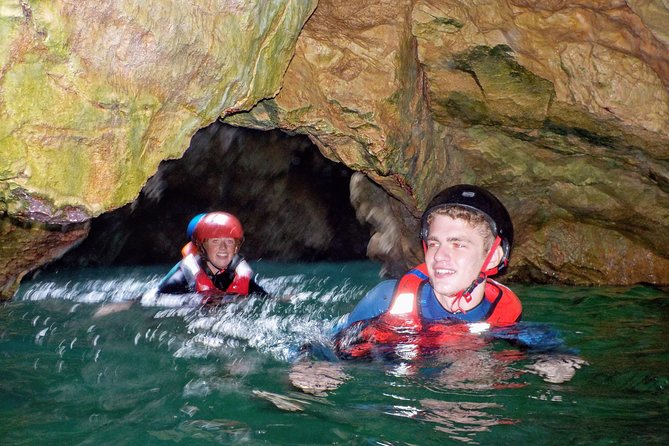
As the group progresses, the jump points become higher. The advertised maximum is about 10 meters, or roughly 30 feet. You are not required to reach that height, and the guide will assess both the conditions and your comfort before encouraging a higher jump.
The sensation is not only about height. You first need to climb or scramble to the launch point, find a secure position, listen to the instructions, and wait for a clear landing area. The guide checks the route and helps you choose where to step. This is why the experience can feel both thrilling and technical.
If you are afraid of heights, expect a proper challenge. The guide may encourage you, but the decision remains yours. A good session should leave you proud rather than pressured, and the supplied information makes clear that alternatives are available.
The group format affects your pace. With a maximum of 14 people, you may wait while others take their turns. That pause can be welcome because it gives your legs a rest, but it also means the activity is not a private, nonstop sequence of jumps. Smaller groups can feel more personal and allow the guide to spend more time with each person.
Climbing, balancing, and getting out of the water
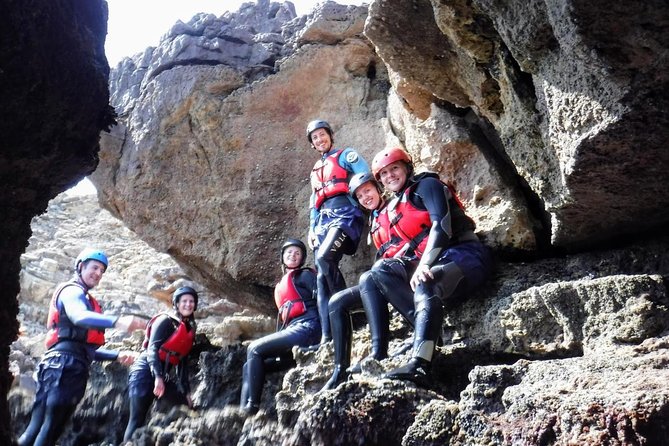
The climbing is easy to underestimate. You are not hiking along a marked trail for three hours. You are using hands and feet on uneven rock, balancing on narrow surfaces, and sometimes pulling yourself up with help from a rope or the guide’s direction.
Several accounts of the activity point to the same practical truth: you need to be in decent shape. The combination of swimming, climbing, a wetsuit, helmet, and buoyancy aid can leave you tired near the end. If you regularly walk, swim, or take part in active sports, you are more likely to find the effort manageable. If you are unsure, contact the operator before booking.
The guides help with difficult sections and show you where to step. Still, do not treat their support as a substitute for basic strength and balance. You need to control your own movement, especially when the rock is wet or the sea is moving below you.
This is also why the experience suits active families with older children and teenagers better than young children. The activity is not recommended for children under 13. A 13-year-old may be accepted, but age alone does not guarantee readiness. Swimming ability, confidence, and physical strength matter more than simply meeting the minimum age.
Walking back over the cliffs
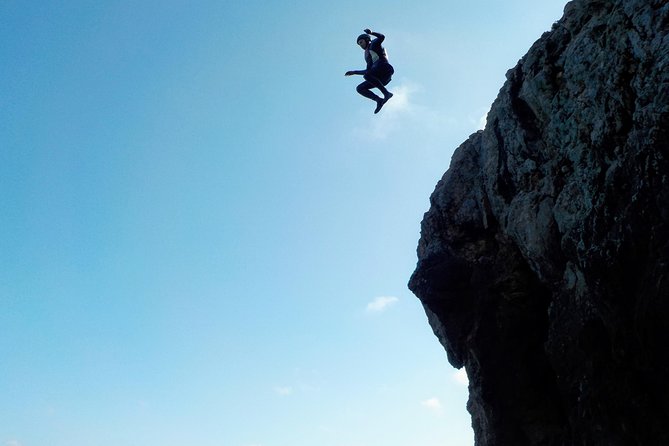
After the water work, the return follows a coastal path over the cliffs. This final walk lets you dry out a little, catch your breath, and see the route from above. It is a calmer finish after the noise and movement of the sea.
The walk also gives the guide time to talk with the group about the session, the coast, and local suggestions. Guides have offered advice about nearby beaches and restaurants, and there is a small restaurant next to the meeting area that some people use after the activity. That can be convenient when you finish hungry and tired.
Do not expect a long guided hike. The walk is the closing section of a coasteering route, not a separate nature trek. Its value is the change of viewpoint and the chance to finish together without rushing straight from the water into a car.
Is $70.17 a fair price?
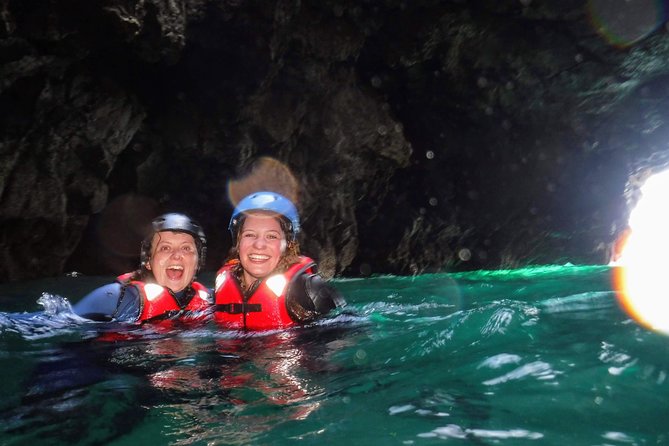
At $70.17 per person, this is not the cheapest way to see the Algarve coast, but it covers far more than a simple walk or standard beach visit. You receive equipment, instruction, a guide, access to difficult shoreline, and roughly three hours of activity.
The value is strongest if you would otherwise pay for several separate experiences. In one session, you get cliff views, swimming, cave exploration, climbing, local sea-life information, and supervised jumps. You also avoid having to bring or rent the main safety equipment yourself.
The price is less attractive if you only want to watch the coast or take a few photographs. You will spend much of the time moving, waiting for turns, and managing your gear. This is an experience you buy for participation, not convenience.
The high satisfaction rate, with 99 percent of people recommending it and a five-star rating from 212 reviews, suggests that the format works well for its intended audience. I would still focus more on the physical demands than the rating. A perfect score cannot make open-ocean swimming easier for someone who is not comfortable in the water.
What to bring and how to prepare
The operator supplies the main equipment, but you should arrive ready for an active morning or afternoon.
- Wear a swimsuit under the wetsuit.
- Bring water for after the activity.
- Use sun protection before gearing up.
- Arrive having used the restroom, since facilities at the meeting point are limited.
- Send accurate shoe sizes in advance, using European sizing if requested.
- Bring a towel and dry clothes for afterward.
- Leave valuables behind unless the operator gives you a safe storage option.
You should also eat sensibly beforehand. The session combines swimming and climbing, so a very heavy meal may be uncomfortable, while arriving hungry is not ideal. The exact start time is not provided here, so check your booking details and allow time to find the meeting point.
The activity requires good weather. If poor conditions force cancellation, you can receive a different date or a full refund. You can cancel for a full refund up to 24 hours before the start time. Cancellations or changes inside that window are not refunded or accepted.
Who should book this Algarve adventure?
I would recommend it to confident swimmers, active families with teenagers, couples wanting a memorable challenge, and anyone who prefers a close look at the coast over a passive sightseeing trip. It is especially appealing if you like trying something new but want a guide controlling the route and safety process.
You do not need to jump from every height. The trip works well for a mixed group because one person can take the higher jump while another chooses a lower route or focuses on climbing and swimming.
I would not choose it for a non-swimmer, anyone with very limited fitness, or a person looking for a relaxed coastal outing. Fear of heights is not an automatic reason to skip it, but you should be honest with yourself about climbing and open water.
Should you book Coasteering and Cliff Jumping near Lagos?
Book it if you want to work for your coastal views. The memorable part is not just the 10-meter jump. It is the full route: getting into the wetsuit, learning the techniques, swimming into caves, climbing over rock, building courage one jump at a time, and walking back above the sea.
The best reason to go is the combination of strong local guidance and genuine physical adventure. Nelson and the Coastline Algarve team provide equipment, explain the risks, offer alternatives, and help you find a safe route. Just arrive prepared for a workout, not a gentle excursion.
FAQ
Where does the coasteering experience start?
It starts at Coastline Algarve SUP & Coasteering, EM1257 6, 8650-310 Raposeira, Portugal, near Praia da Ingrina in the Costa Vicentina Natural Park.
Where does the activity finish?
The experience ends back at the meeting point.
How long does the activity last?
The scheduled duration is approximately three hours.
How much does the experience cost?
The listed price is $70.17 per person.
What equipment is provided?
The operator provides a wetsuit, buoyancy aid, helmet, and coasteering shoes.
Do I have to jump from the highest cliffs?
No. The jumps begin at lower heights and increase as the route continues. Alternatives are available if you do not want to take a particular jump.
How high can the jumps be?
The highest jumps can reach up to 10 meters, or about 30 feet.
Is the activity suitable for non-swimmers?
No. The activity is not recommended for non-swimmers because it includes open-ocean swimming.
Is there a minimum age?
The activity is not recommended for children under 13.
What happens if bad weather cancels the activity?
You will be offered a different date or a full refund if poor weather causes the cancellation.
More Canyoning with Cliff Jumping in Portugal
- Coasteering Algarve: Cliff Jump, Swim & Climb in Sagres
★ 4.9 · 158 reviews - Albufeira: Guided Coasteering Tour with Cliff Jumping
★ 4.9 · 123 reviews - Intermediate Canyoning in Madeira – Jumps, Slides & Rappels
★ 4.8 · 120 reviews - CLIFF JUMPING tour – Coasteering in Albufeira
★ 5.0 · 70 reviews
Newly roped up around Portugal
- Kids Version – Coasteering with snorkeling: Algarve★ 5.0 · 12 reviews
- Canyoning from Porto★ 5.0 · 23 reviews
- Private Canyoning Adventure from Porto★ 5.0 · 25 reviews
- Serra D’Arga Canyoning★ 5.0 · 21 reviews
- Madeira: Coasteering Adventure with Snorkeling, w/pick-up★ 5.0 · 103 reviews
- From Arouca: Canyoning Discovery – Adventure Tour★ 4.5 · 5 reviews
- Arouca: Canyoning in Rio de Frades★ 5.0 · 4 reviews
- From Porto: Canyoning – Adventure Tour★ 5.0 · 10 reviews
Algarve Canyoning Tours, descent by descent.
Sagres: Coasteering – Swimming, Cliff Jump & Rock Climbing
Read our review →
Coasteering Algarve: Cliff Jump, Swim & Climb in Sagres
Read our review →
This trip also sits on these lists