
Review · PORTUGAL
Lisbon: Sesimbra/Arrábida Natural Park Coasteering Adventure
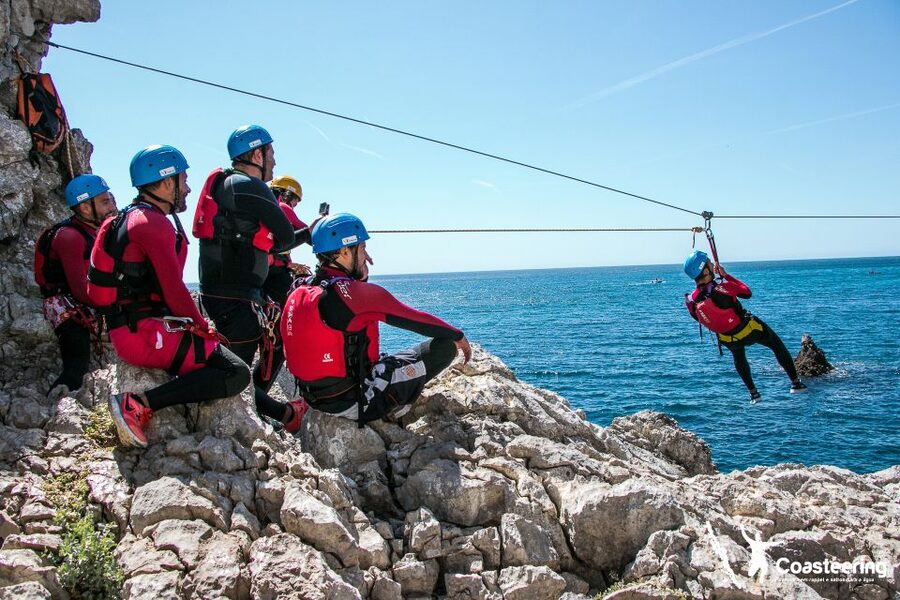
Coasteering turns the Arrábida coast into your playground. You swim between coves, scramble over rock, rappel down cliffs, and choose whether to leap from platforms that can reach about 8 meters high. The reward is a close look at cliffs and beaches that are hard to reach by land.
I like the mix of real adventure and careful guiding. Diogo, Francisco, Henrique, and the other Vertente Natural guides are repeatedly praised for calm instructions, patience, and good safety habits. I also like the return boat ride, which gives you a quiet finish after several hours of work.
The catch is simple: this is not a gentle sightseeing trip. You need to swim in the sea, climb uneven rock, and keep moving in wet gear. It can be tiring, and the mandatory shorts and sports shoes may get dirty, wet, or damaged.
Key points at a glance
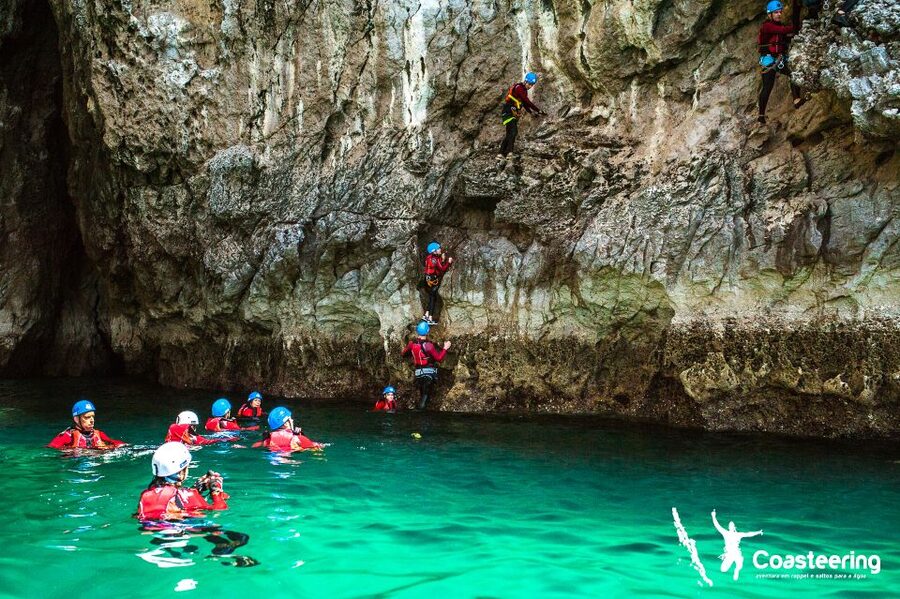
- A full-body coastal adventure: Swim, scramble, walk, rappel, climb, and jump along the Arrábida shore.
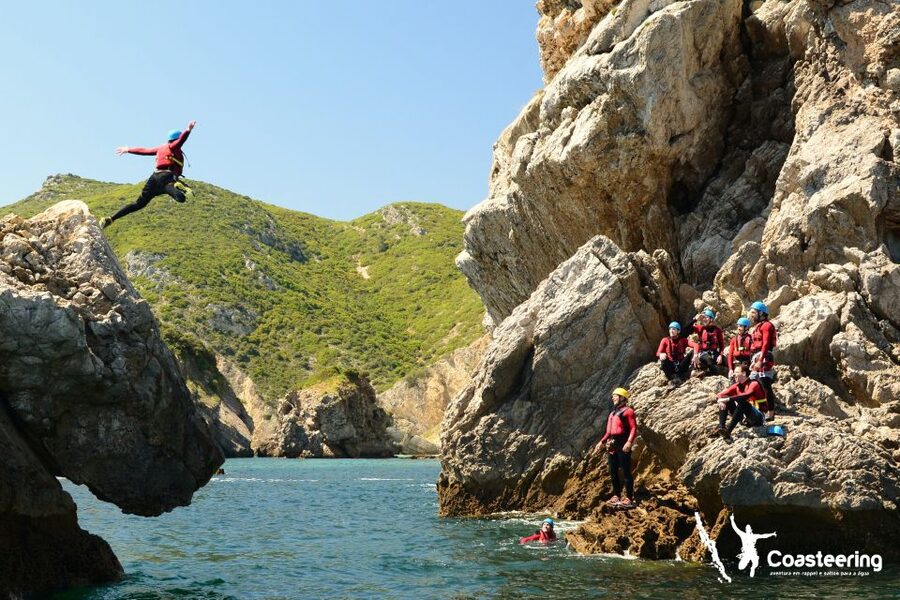
- Jumps are optional: The route can include heights from about 3 to 10 meters, with lower options for people who are not ready for the highest leap.
- Strong guide support: Guides such as Diogo, Francisco, Gabriel, Henrique, and Mariana are praised for clear instructions, humor, and steady encouragement.
- Bring the right clothing: Wear swimwear, a towel, shorts, and closed sports shoes. Open-toed shoes are not allowed.
- The scenery is a major reward: Expect massive rock walls, clear water, beaches, bays, coves, and views from sea level.
- Allow half a day: The experience lasts 4 to 5 hours, including the transfer option from Lisbon and the return by boat to Sesimbra.
What coasteering in Arrábida actually involves
Coasteering is not simply cliff jumping with a short swim between leaps. In Arrábida Natural Park, the route combines several skills into one moving coastal course. You walk over rock, scramble up ledges, traverse across exposed sections, rappel, swim, and jump into the sea.
That variety matters. You are not repeating the same stunt all morning. One section may call for careful footwork on wet rock, while the next has you lowering yourself by rope or swimming around a headland. The coast keeps changing, and so does the challenge.
The water and cliffs also give you a view that a road trip or beach stop cannot provide. You see bays from the waterline, look up at rock faces that drop toward the sea, and reach small coves tucked between larger escarpments. Several people also reported wildlife and plant information from the guides, including fish spotted in the water.
You do not have to take every jump. The guides can offer lower choices, and one of the best parts of the format is that you can test your nerve without being forced into the biggest leap. Still, you should expect some pressure to push past your comfort zone. That is part of the point.
More Coasteering Tours in Portugal
- Award Winner Premium Kayak and Coasteering Adventure with Lunch
★ 5.0 · 472 reviews - Sagres: Coasteering – Swimming, Cliff Jump & Rock Climbing
★ 4.9 · 226 reviews - Coasteering and Cliff Jumping Near Lagos
★ 5.0 · 212 reviews
Starting from Lisbon or Sesimbra
You can choose an option with pickup in Lisbon or meet the team at Porto de Abrigo in Sesimbra. The transfer from central Lisbon takes about 45 minutes, according to one detailed account, so the Lisbon option is convenient but not instant.
If you are already spending time around Sesimbra, meeting there may make more sense. You avoid the city transfer and can pair the activity with a meal or time on the beach. If you book pickup, confirm the exact meeting point because it can vary by option.
The activity itself lasts roughly 4 to 5 hours, though one account described the active portion as close to 3 hours after transport and setup were separated out. Plan for a half-day rather than trying to squeeze it between two tightly timed Lisbon sights.
There can also be a wait before the return transfer to Lisbon. One person had about an hour to spare and used the time for a small lunch near the harbor. That is not necessarily a problem, but it is worth knowing if you have evening plans.
Getting fitted with wetsuit and safety gear
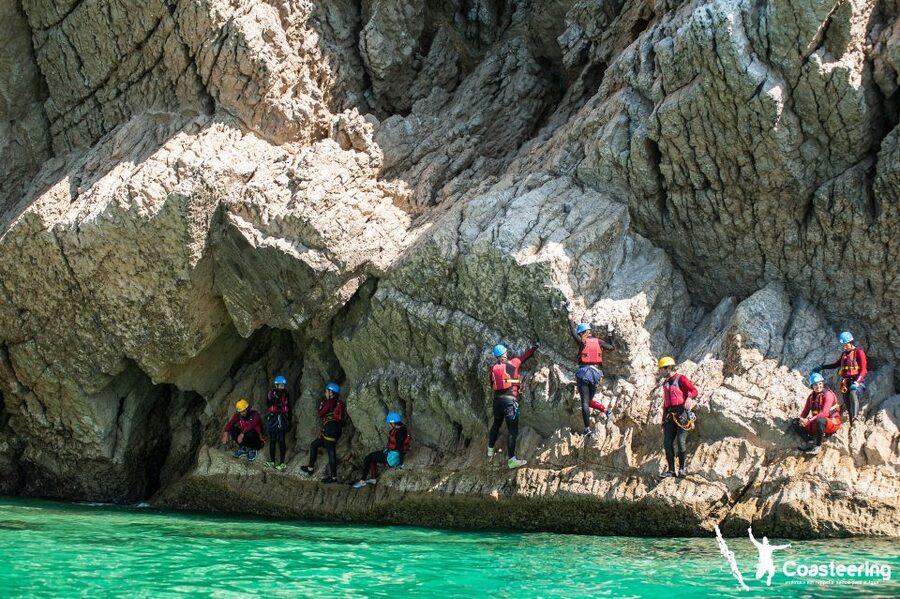
At the base, you receive the coasteering equipment, including a helmet, buoyancy aid, wetsuit, harness, and rappel gear. A professional guide stays with the group throughout the route, and personal accident insurance is included.
The equipment is not just formal protection. The helmet helps with the close rock work, the buoyancy aid supports you during swims, and the harness and ropes make the rappelling sections manageable. You still need to move carefully, but you are not expected to tackle the coast without technical support.
Bring swimwear and a towel. You also need shorts and sports shoes. The supplied information says shorts and running shoes are mandatory and can be rented on site, while several people strongly recommended renting them rather than risking your own clothing and footwear.
Use closed shoes with laces and a secure fit. Open-toed shoes are not allowed, and loose footwear would be a poor choice on wet rock. Your shoes will go into the sea, so rental footwear may be the sensible option if you want to keep your own pair clean and dry.
You cannot count on wearing glasses or sunglasses during the activity. If you need vision correction, ask the operator about your options before arriving. A waterproof camera can be useful, but protect it well and do not let photography distract you from handholds, footing, or guide instructions.
The route: swimming, scrambling, and cliff work
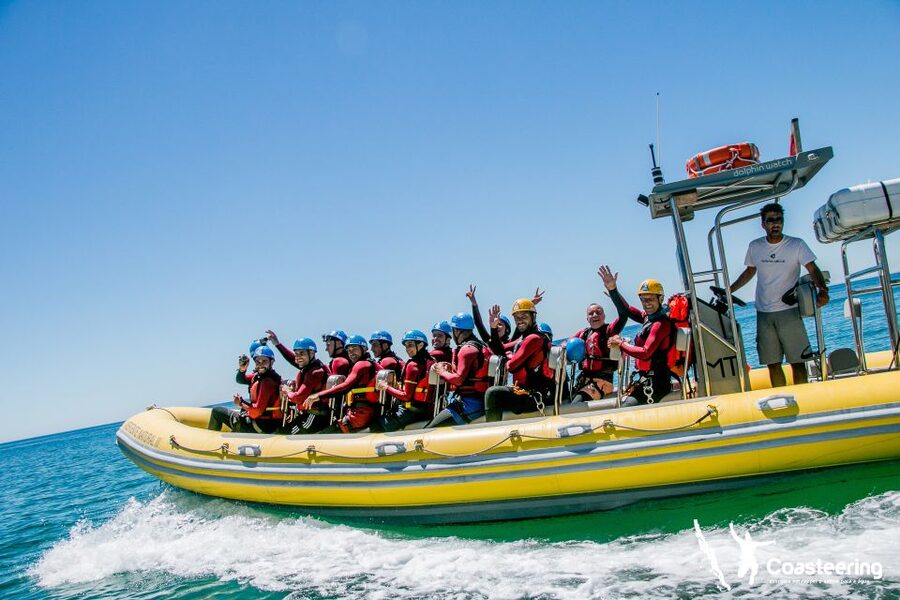
The route follows the rugged coastline around Sesimbra, using natural rock features as its course. You may walk across flatter sections, scramble up rock, and traverse ledges above bays and coves. The climbing is not presented as a formal climbing lesson, but it can be surprisingly demanding.
One athletic participant found the rock work harder than expected, even after doing cliff jumps and strenuous hikes before. That is a useful warning. Jumping takes a moment; moving over uneven rock can tax your arms and legs for much longer.
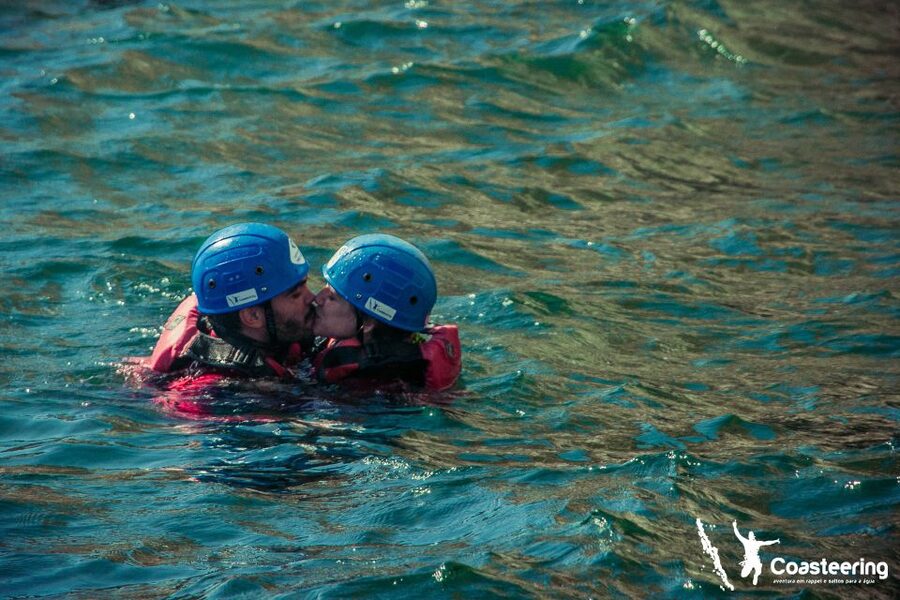
Swimming is another key part of the day. You may swim from the rocky coast toward the boat or between sections of shore. The buoyancy aid helps, but you should be comfortable in the ocean and ready to swim while wearing a wetsuit, helmet, and footwear.
The experience suits people with moderate fitness and some determination. One person in their early fifties completed it with a son who enjoyed bouldering, while another described it as cardio-heavy. At the same time, routes and jumps can be adjusted, and several guides are praised for changing the pace to suit the group.
That flexibility helps, but it does not turn the activity into a low-effort outing. If you have a physical condition, are a weak swimmer, or feel uneasy on exposed rock, ask specific questions before booking. A 12-year-old completed a trip with a patient guide, but the available information does not provide an official minimum age, so families should confirm suitability directly.
Same rock and river, another way down:
- Canyoning Madeira Island – Level One
★ 5.0 · 1,362 reviews - Canyoning in Madeira Island- Level 1
★ 5.0 · 1,125 reviews - From Funchal: Intermediate (Level 2) Canyoning Adventure
★ 4.9 · 1,111 reviews - Madeira: Beginner Canyoning – Level 1
★ 5.0 · 1,072 reviews
The jumps, rappels, and possible zipline
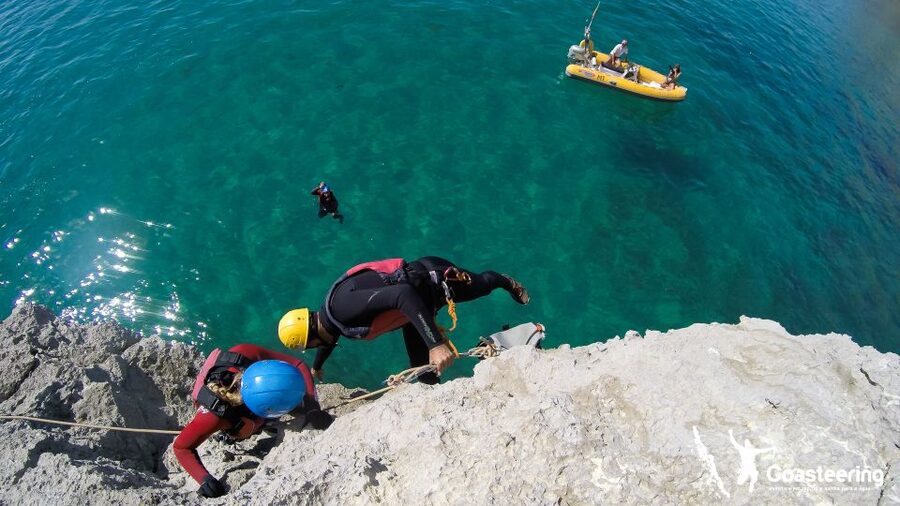
The jumps are the emotional center of the outing. Reported heights range from about 3 to 8 meters, with one description referring to jumps as high as 10 meters. The exact sequence depends on the route, conditions, and the choices you make.
You usually approach a jump, receive instructions, and decide how high you want to go. Lower alternatives allow you to take part without committing to the largest leap. The guides encourage you, but the repeated emphasis on choice is important: you can skip a jump if it is not right for you.
Rappelling adds a different kind of challenge. Instead of a quick burst of courage, you must trust the harness and follow the rope technique as you lower yourself along the rock. The combination of climbing and rappelling gives the outing more substance than a simple series of water jumps.
Some routes may also include a zipline. It is mentioned as part of the experience by several people, but it should not be treated as guaranteed for every departure. The same applies to wildlife sightings, such as dolphins. Enjoy those extras if they happen, but book for the coast and the coasteering itself.
The guides are crucial here. Francisco is praised for humor and patience, Diogo for calm support and clear explanations, Henrique for safety and local information, and Gabriel for matching the route to the group’s ability. Names and guide assignments vary, but the consistent pattern is attentive supervision rather than a rushed race through the course.
The scenery from sea level
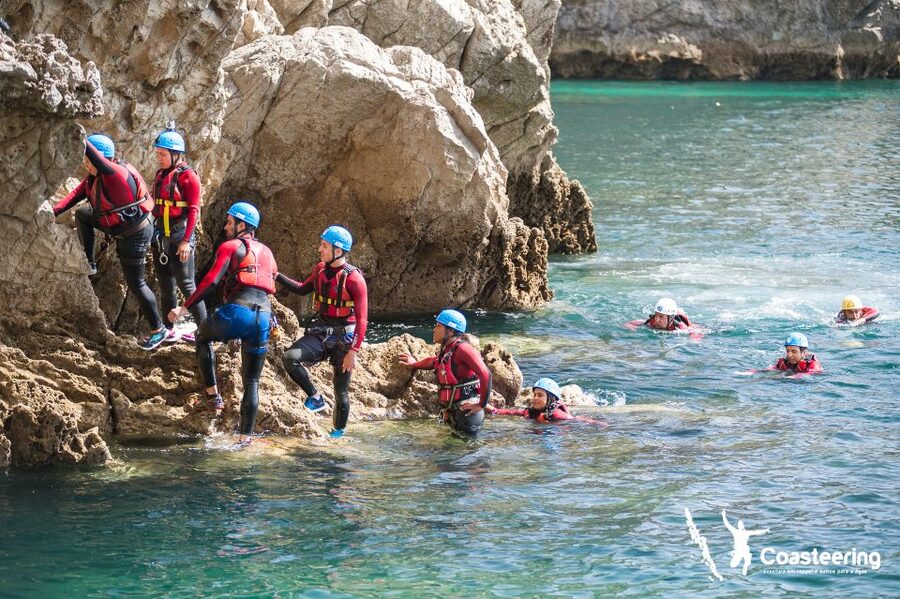
Arrábida is worth visiting even if you never jump. The coasteering route gives you a particularly good way to see it because you move through the scenery instead of simply looking at it from a road or viewpoint.
Massive cliffs rise above small bays, and rocky walls frame clear water and secluded beaches. From the shore, you see the coast as a line. From the water, you notice caves, ledges, folds in the rock, and small places where the sea meets the cliffs.
This is also where the activity earns its price. You are paying for instruction and equipment, but you are also reaching parts of the coast that are difficult to experience independently. A normal beach visit may show you the water and sand. Coasteering adds the cliff face, the coves, and the changing angle of the shoreline.
Guides may point out fish, plants, and details about local history during calmer moments. Francisco has been praised for sharing information about Portugal, while another guide explained elements of the natural setting. These pauses help break up the physical effort and give the outing a sense of place.
The boat ride back to Sesimbra
After the coastal section, you return by boat. This is a welcome change of pace. You have spent the earlier part of the day moving through water and rock under your own power, so sitting back as the boat carries you toward Sesimbra feels well earned.
The boat also gives you a final view of the cliffs from offshore. You can see the route in reverse, now with a little distance from the rock faces. The breeze and open water make this a pleasant finish, though the ride is not a substitute for the active part of the trip.
If you meet in Sesimbra, you finish near the harbor. If you are returning to Lisbon, allow extra time for the transfer and any waiting period. A meal in Sesimbra can fit well before the drive back, but do not schedule a critical evening reservation too tightly.
Is $76 a fair price?
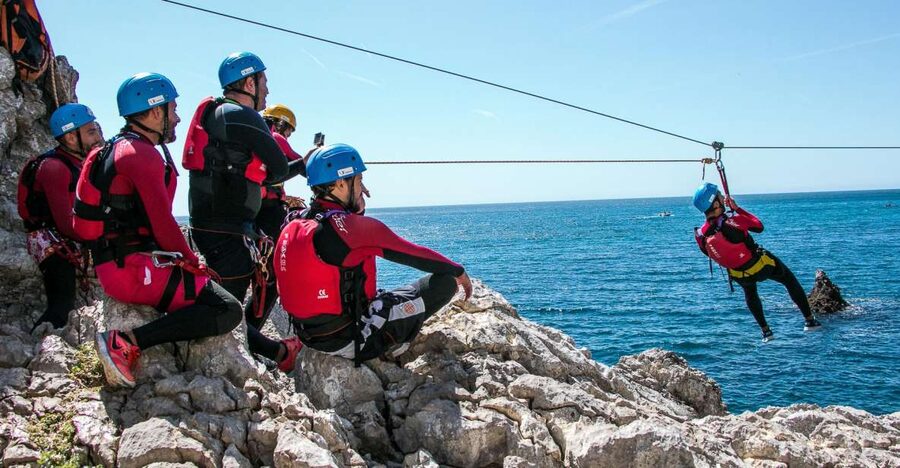
At $76 per person, this is not a cheap beach activity. The price makes more sense when you count the wetsuit, helmet, buoyancy aid, harness, rappel equipment, guide service, accident insurance, and boat return.
You could visit Sesimbra for far less by walking along the shore or spending time on a beach. You could not easily reproduce this particular combination of rope work, guided rock travel, sea swimming, controlled jumps, and boat support without specialist equipment and local knowledge.
The value is strongest if you want an active half-day and would otherwise pay for several separate experiences. It is weaker if you mainly want scenery, dislike getting wet, or plan to avoid climbing and jumping. In that case, a simple coastal visit gives you better value.
The high rating of 4.9 from 345 reviews supports the idea that the experience delivers what it promises, but you should read that number alongside the physical demands. Nearly universal enthusiasm does not mean it is easy. The best match is someone who wants a challenge and accepts that a few hours of exertion are part of the cost.
Who should book this experience?
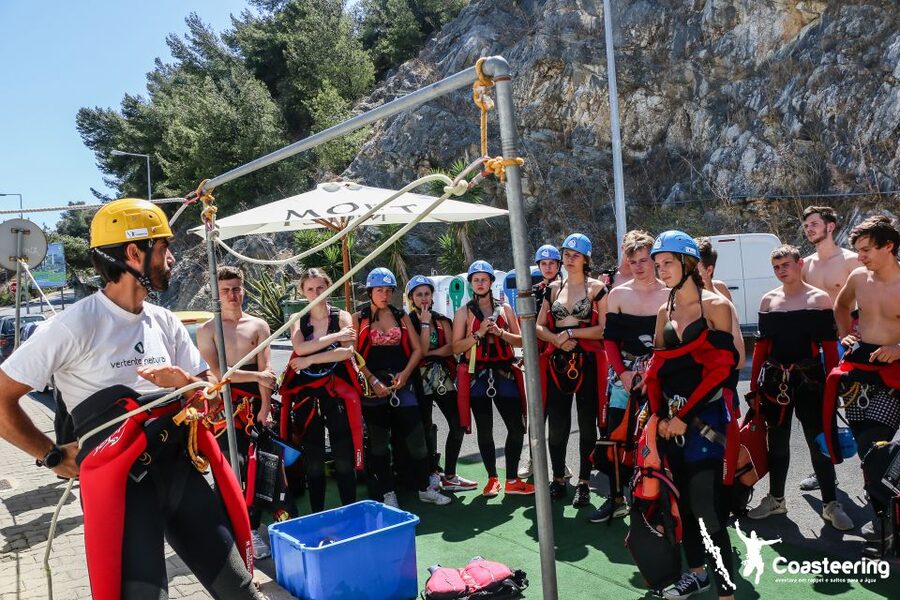
I would choose this for an active couple, a small group of friends, an adventurous family that confirms age requirements first, or anyone looking for something more memorable than a standard Lisbon day trip. It also works well for people who enjoy climbing, bouldering, hiking, or water sports.
You do not need to be an expert climber. The guides provide instruction, stay close, and offer easier choices. But you should be comfortable with ocean swimming and have enough fitness for repeated climbing, scrambling, and walking in a wetsuit.
I would not choose it for a relaxed sightseeing day, a person who cannot swim confidently, or someone with a condition that makes climbing and swimming unsafe. You may skip the highest jump, but you cannot remove the basic physical nature of the outing.
Book with a little flexibility in your day. Free cancellation is available up to 24 hours before the activity, and reserve-now, pay-later booking can help if your Lisbon plans are still shifting. Check availability for the starting time and confirm whether you are choosing Lisbon pickup or the Sesimbra meeting point.
Final verdict: an active way to see Arrábida
I recommend the Sesimbra coasteering adventure if you want to experience the Arrábida coast with your hands and feet, not just from a lookout. The scenery is excellent, the boat return is a pleasant finish, and the guides have a strong record of keeping people calm and safe while still making the jumps exciting.
Just arrive ready to work. Rent the shoes and shorts if available, bring a towel, protect your camera, and do not pretend this is an easy swim-and-sun outing. If you are comfortable with water, rock, heights, and a little fear, $76 buys one of the more distinctive half-day adventures near Lisbon.
FAQ
Where does the coasteering adventure take place?
The activity takes place along the coast of Arrábida Natural Park near Sesimbra, in Portugal’s Lisbon District.
Can I start from Lisbon?
Yes. Some options include pickup from Lisbon. You can also meet the guides at Porto de Abrigo in Sesimbra, depending on the option booked.
How long does the activity last?
The listed duration is 4 to 5 hours. The active coasteering portion may take about 3 hours, with additional time for transport, setup, and the boat return.
What equipment is included?
Coasteering equipment, a guided tour, and personal accident insurance are included. Equipment includes items such as a helmet, buoyancy aid, wetsuit, harness, and rappel gear.
What should I bring?
Bring swimwear, a towel, sports shoes, and shorts. Closed shoes are required, and open-toed shoes are not allowed.
Are the cliff jumps mandatory?
No. Lower jumps or alternative choices may be available, and you can choose not to take a jump. The route still involves swimming, climbing, scrambling, and walking along the coast.
Which languages are available for the guides?
Guided tours are available in English, French, Portuguese, and Spanish.
Newly roped up around Portugal
- Kids Version – Coasteering with snorkeling: Algarve★ 5.0 · 12 reviews
- Canyoning from Porto★ 5.0 · 23 reviews
- Private Canyoning Adventure from Porto★ 5.0 · 25 reviews
- Serra D’Arga Canyoning★ 5.0 · 21 reviews
- Madeira: Coasteering Adventure with Snorkeling, w/pick-up★ 5.0 · 103 reviews
- From Porto: Canyoning – Adventure Tour★ 5.0 · 10 reviews
- CANYONING DISCOVERY★ 4.8 · 3 reviews
- From Arouca: Canyoning Discovery – Adventure Tour★ 4.5 · 5 reviews
Portugal Canyoning Tours, descent by descent.
From Funchal: Intermediate (Level 2) Canyoning Adventure
Read our review →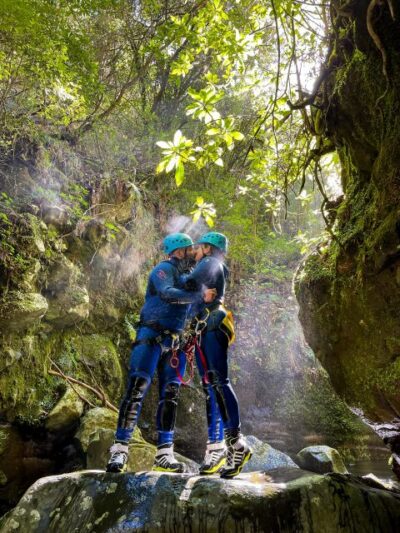
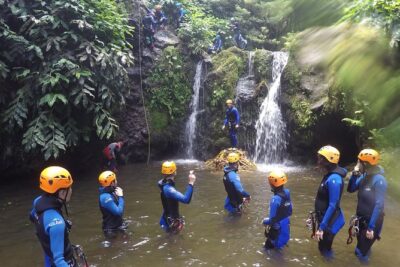
São Miguel: WaterPark Canyoning Ribeira dos Caldeirões
Read our review →
Madeira Canyoning Beginners – Easy & Fun Waterfall Adventure
Read our review →This trip also sits on these lists